Species

128 freshwater and 88 saltwater plants, corals, fish and invertebrates.

216 shown

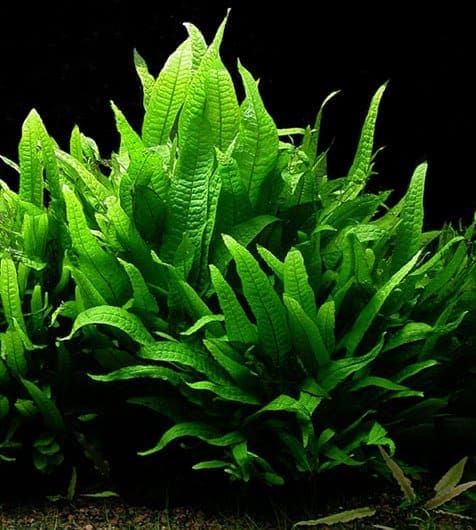
Java Fern (Leptochilus pteropus (syn. Microsorum pteropus))

Java Fern

Leptochilus pteropus (syn. Microsorum pteropus)
freshwatereasyEpiphyte (on hardscape)low light
Height
6–13 in
Growth
slow
Temp
68–82 °F
pH
6–7.5

Tie or glue the rhizome to wood or rock; burying it causes rot. Black spots under the leaves are normal spore patches and plantlets.
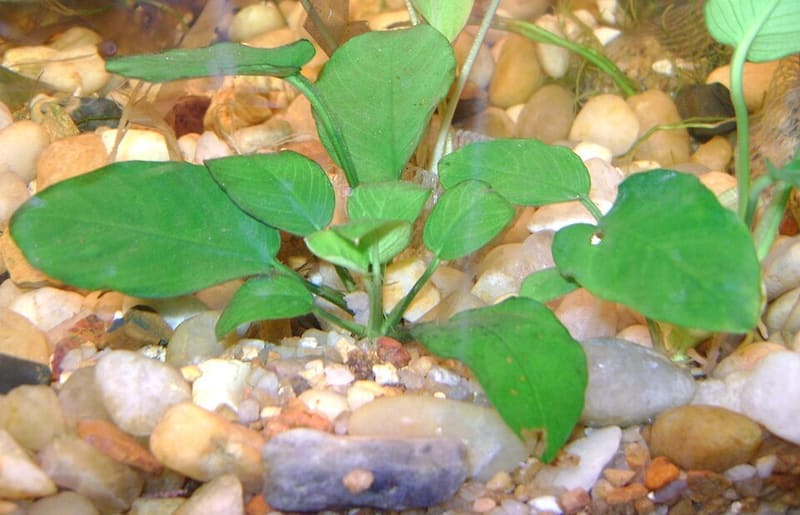
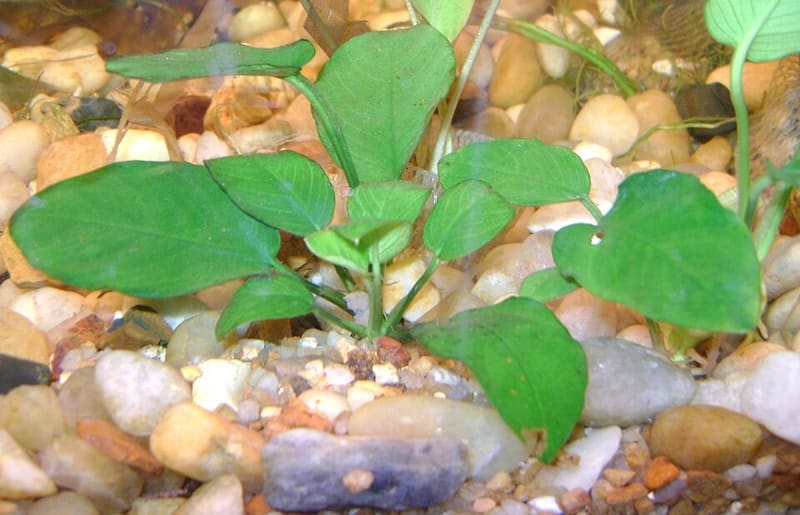
Anubias Nana (Anubias barteri var. nana)

Anubias Nana

Anubias barteri var. nana
freshwatereasyEpiphyte (on hardscape)low light
Height
2–4 in
Growth
slow
Temp
72–82 °F
pH
6–7.5

Attach the rhizome to hardscape and keep it uncovered. Slow leaves can collect spot algae, so avoid placing it under strong light.
Anubias Nana Petite (Anubias barteri var. nana 'Petite')

Anubias Nana Petite

Anubias barteri var. nana 'Petite'
freshwatereasyEpiphyte (on hardscape)low light
Height
1–2 in
Growth
slow
Temp
72–82 °F
pH
6–7.5

A miniature form ideal for nano tanks and tucking into rock crevices. Glue or wedge the rhizome in place rather than burying it.
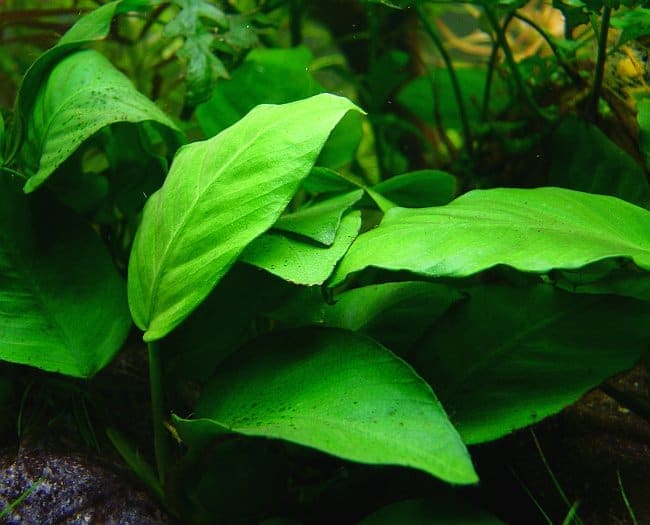
Anubias Barteri (Anubias barteri var. barteri)

Anubias Barteri

Anubias barteri var. barteri
freshwatereasyEpiphyte (on hardscape)low light
Height
6–16 in
Growth
slow
Temp
72–82 °F
pH
6–7.5

Large, tough leaves suit tanks with plant-nibbling fish. Mount on wood toward the back or midground; divide the rhizome to propagate.
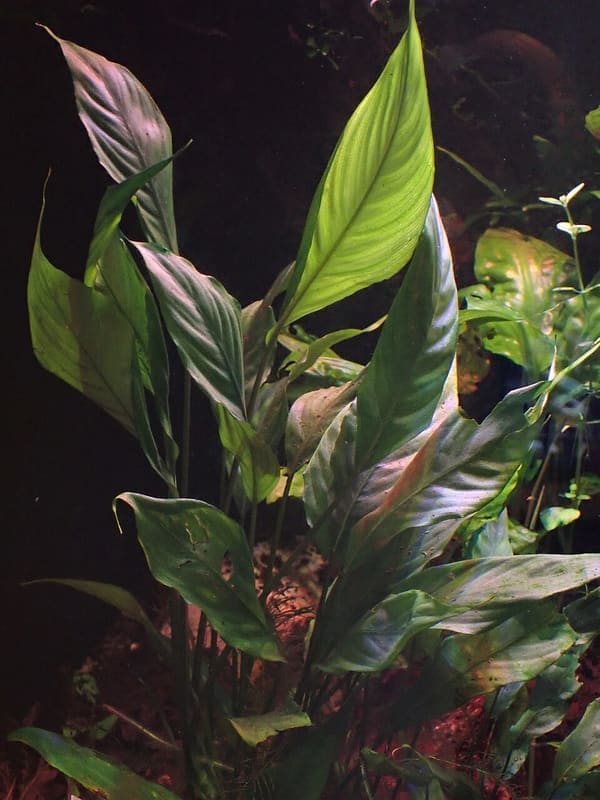
Bucephalandra (Bucephalandra spp.)

Bucephalandra

Bucephalandra spp.
freshwatereasyEpiphyte (on hardscape)low lightCO₂ helpful
Height
2–4 in
Growth
slow
Temp
72–82 °F
pH
6–7.5

Attach the rhizome to rock or wood; many varieties show blue or purple sheen in moderate light. Very slow, so keep leaves clean of algae.
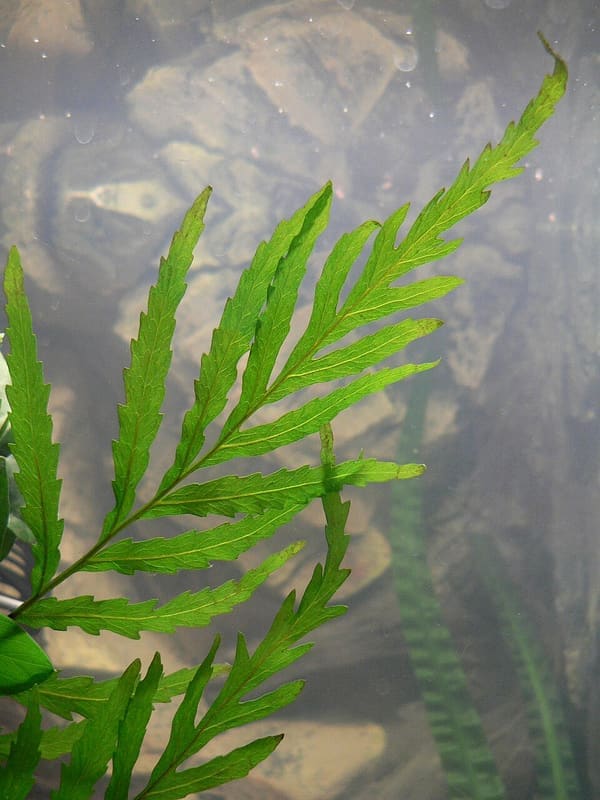
African Water Fern (Bolbitis heudelotii)

African Water Fern

Bolbitis heudelotii
freshwatermediumEpiphyte (on hardscape)low lightCO₂ helpful
Height
6–16 in
Growth
slow
Temp
72–82 °F
pH
6–7

Mount the rhizome on wood in an area with good water flow. Can be slow to settle in and dislikes frequent moving.
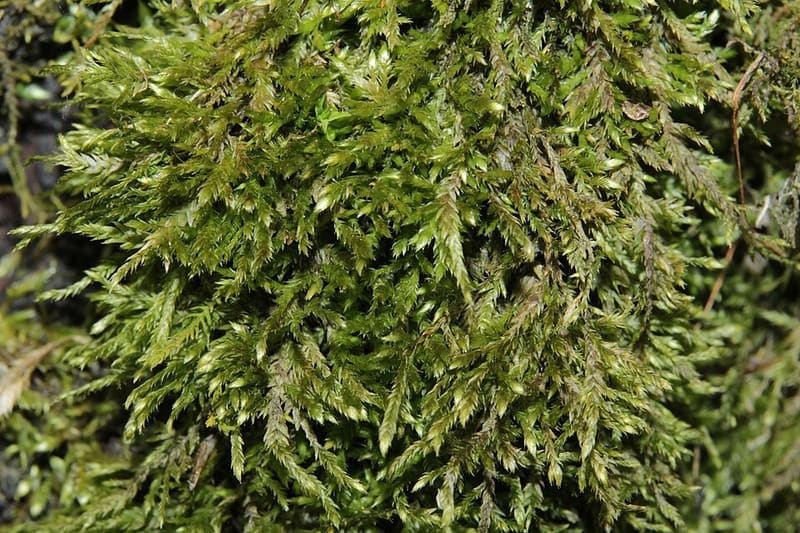
Java Moss (Taxiphyllum barbieri)

Java Moss

Taxiphyllum barbieri
freshwatereasyEpiphyte (on hardscape)low light
Height
1–4 in
Growth
medium
Temp
64–82 °F
pH
5.5–8

Tie thinly with thread or mesh to hardscape. Trim regularly so lower layers do not brown and trap debris.
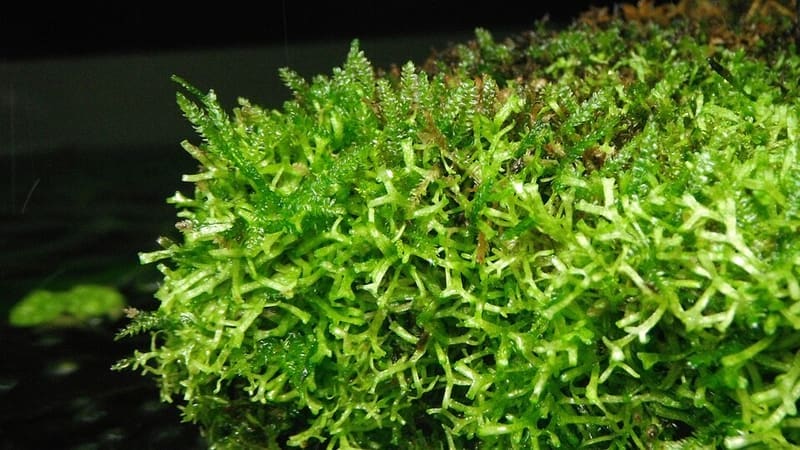
Christmas Moss (Vesicularia montagnei)

Christmas Moss

Vesicularia montagnei
freshwatereasyEpiphyte (on hardscape)low lightCO₂ helpful
Height
1–3 in
Growth
slow
Temp
68–80 °F
pH
5.5–7.5

Forms layered, triangular fronds that look best with moderate light and cooler water. Spread thinly when attaching.
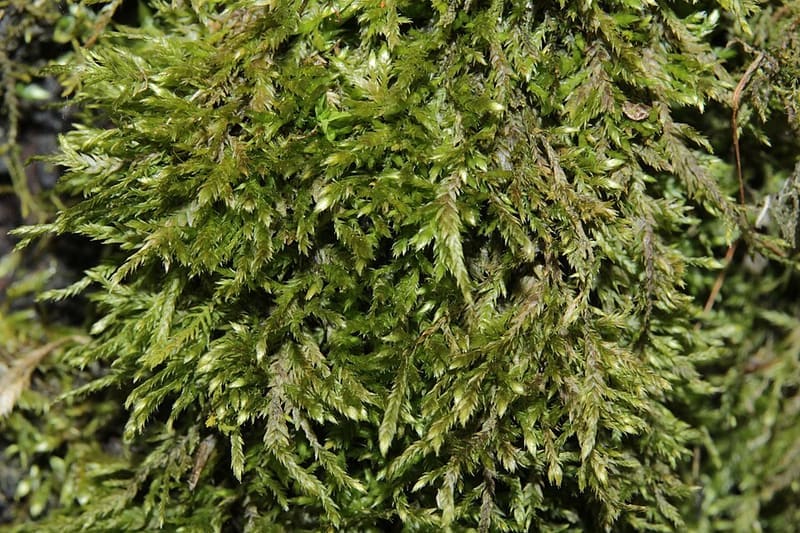
Flame Moss (Taxiphyllum sp. 'Flame')

Flame Moss

Taxiphyllum sp. 'Flame'
freshwatereasyEpiphyte (on hardscape)low lightCO₂ helpful
Height
1–4 in
Growth
slow
Temp
68–80 °F
pH
5.5–7.5

Grows in upright, twisting flame-like tufts. Attach small portions to wood or rock and trim tips to keep it dense.
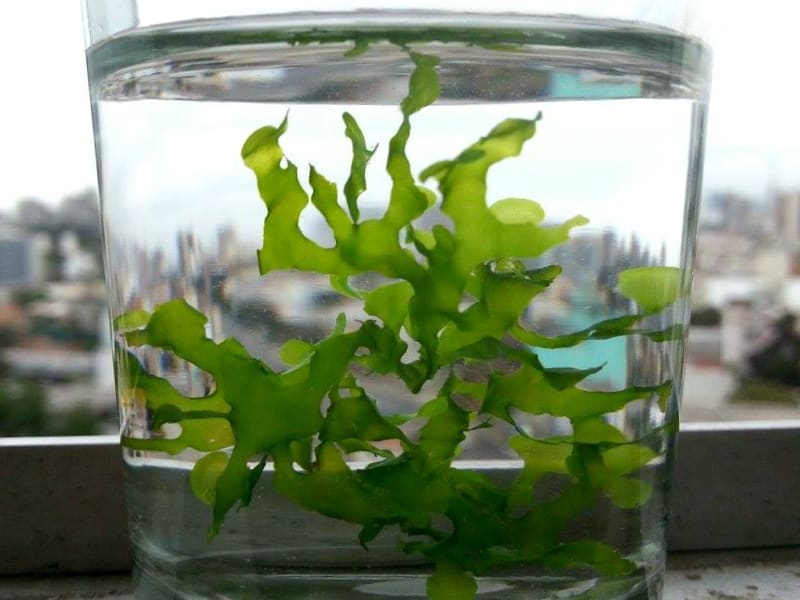
Subwassertang (Lomariopsis lineata)

Subwassertang

Lomariopsis lineata
freshwatereasyEpiphyte (on hardscape)low light
Height
1–3 in
Growth
slow
Temp
68–82 °F
pH
5.5–8

A fern gametophyte with no roots; wedge or tie it onto hardscape. Pieces that break off will grow into new clumps.
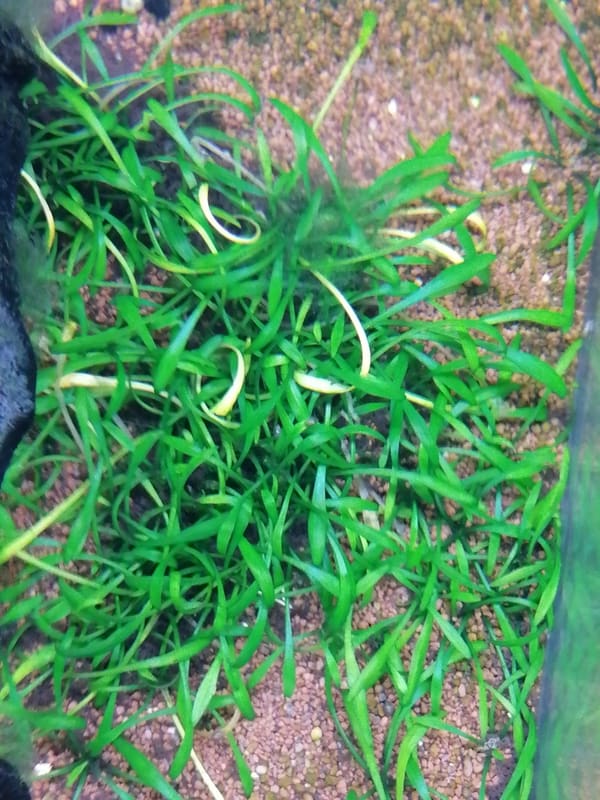
Cryptocoryne Parva (Cryptocoryne parva)

Cryptocoryne Parva

Cryptocoryne parva
freshwatereasyForegroundmedium lightCO₂ helpful
Height
1–2 in
Growth
slow
Temp
72–82 °F
pH
6–7.5

The smallest common crypt; plant separately and give it time to spread by runners. Needs more light than most crypts to stay compact.
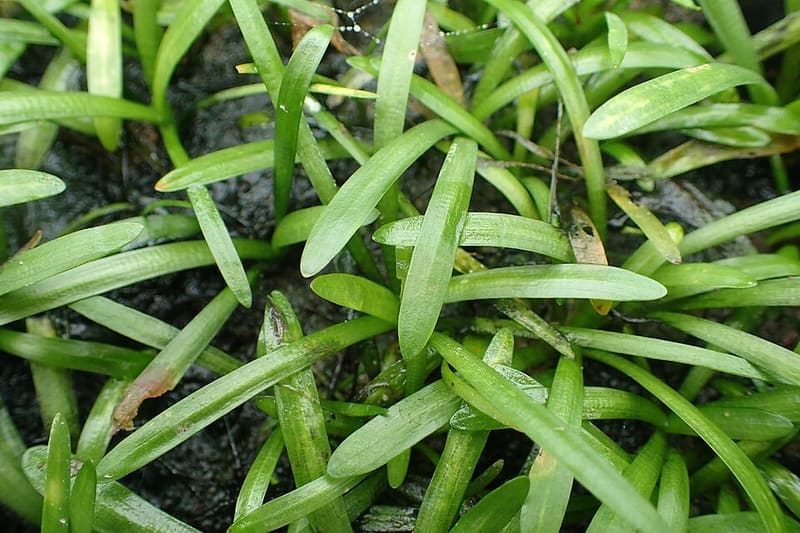
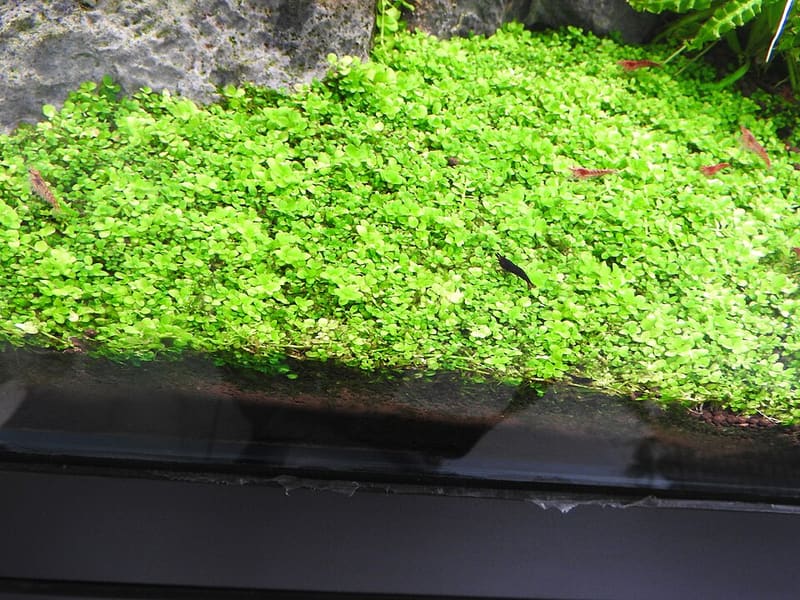
Monte Carlo (Micranthemum tweediei)

Monte Carlo

Micranthemum tweediei
freshwatermediumForegroundmedium lightCO₂ helpful
Height
0.5–1.5 in
Growth
medium
Temp
68–82 °F
pH
6–7.5

Plant small portions close together in fine substrate. Can carpet without CO2 but grows much faster and flatter with it.
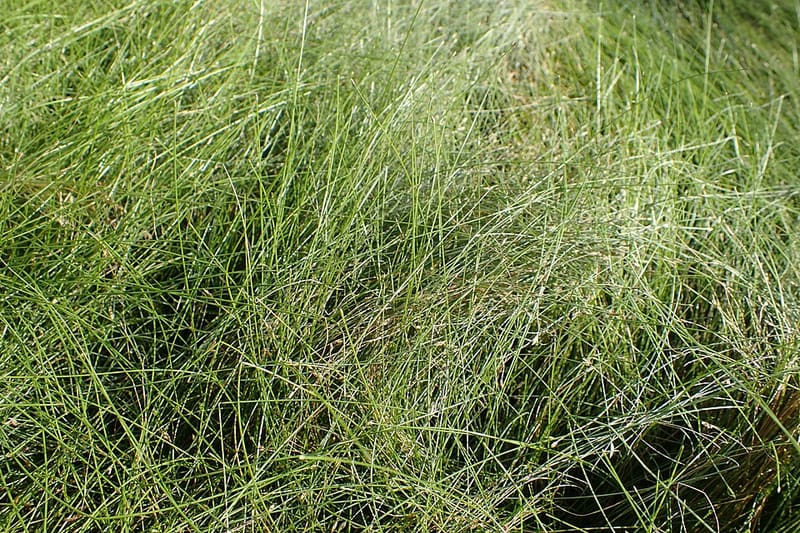
Dwarf Hairgrass (Eleocharis acicularis)

Dwarf Hairgrass

Eleocharis acicularis
freshwatermediumForegroundmedium lightCO₂ helpful
Height
2–6 in
Growth
medium
Temp
64–82 °F
pH
6–7.5

Split into small plugs and plant them about an inch apart. Trim to encourage runners and a denser lawn.
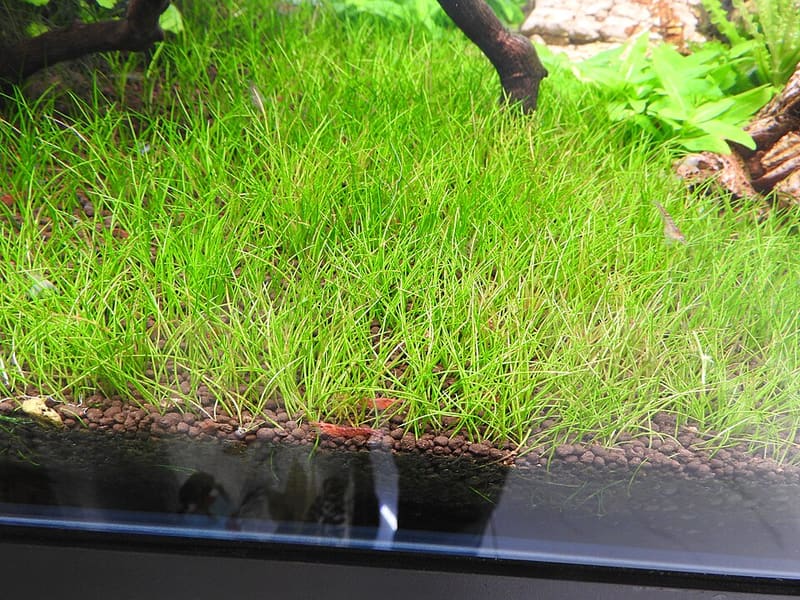
Mini Hairgrass (Eleocharis sp. 'Mini')

Mini Hairgrass

Eleocharis sp. 'Mini'
freshwatermediumForegroundmedium lightCO₂ helpful
Height
1–2 in
Growth
slow
Temp
68–82 °F
pH
6–7.5

A very short hairgrass that forms a fine turf with little trimming. Plant tiny clumps densely; spreads slowly at first.
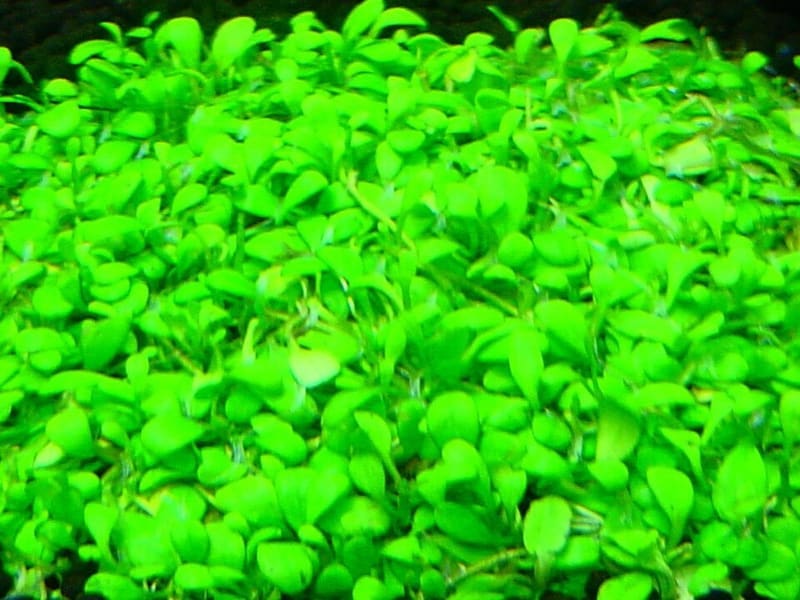
Glossostigma (Glossostigma elatinoides)

Glossostigma

Glossostigma elatinoides
freshwaterhardForegroundhigh lightCO₂ required
Height
0.5–1 in
Growth
fast
Temp
68–80 °F
pH
5.5–7.5

Needs strong light and CO2 or it grows upward instead of creeping. Plant single stems deep in nutrient-rich substrate.
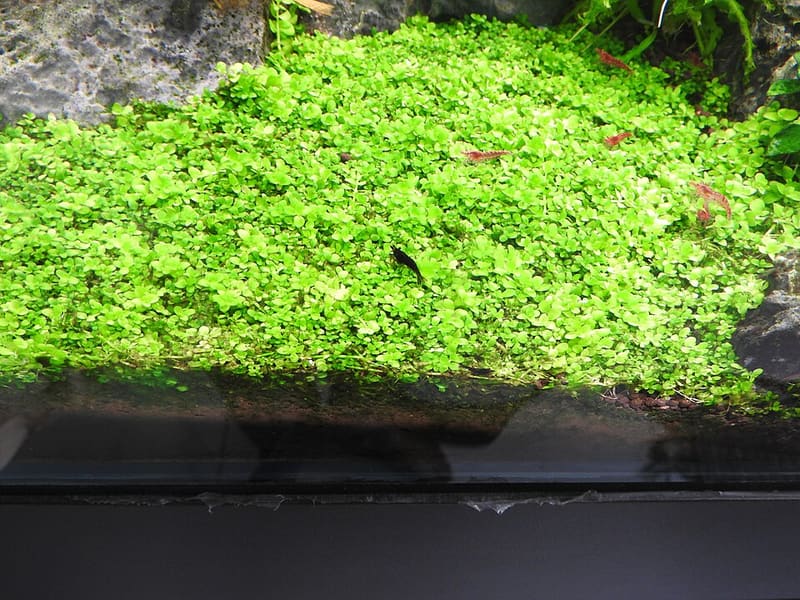
HC Cuba (Dwarf Baby Tears) (Hemianthus callitrichoides 'Cuba')

HC Cuba (Dwarf Baby Tears)

Hemianthus callitrichoides 'Cuba'
freshwaterhardForegroundhigh lightCO₂ required
Height
0.5–1 in
Growth
medium
Temp
68–80 °F
pH
5.5–7.5

One of the smallest carpeting plants; plant tiny portions in aqua soil with CO2 and strong light. Trim thick carpets so lower layers do not rot and lift.
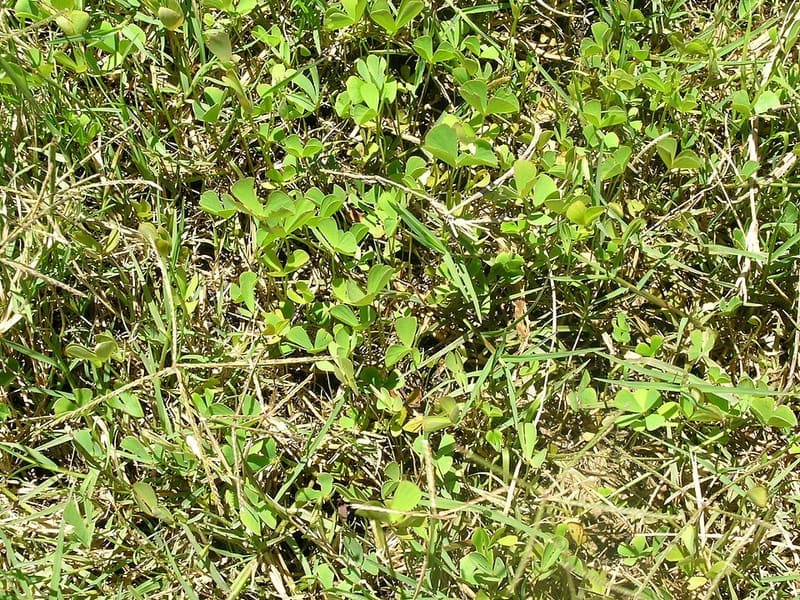
Dwarf Four-Leaf Clover (Marsilea hirsuta)

Dwarf Four-Leaf Clover

Marsilea hirsuta
freshwatereasyForegroundlow light
Height
0.5–2 in
Growth
slow
Temp
64–82 °F
pH
6–7.5

A slow but undemanding carpet that stays lower in brighter light. Mostly forms single leaves submerged rather than four-leaf clovers.
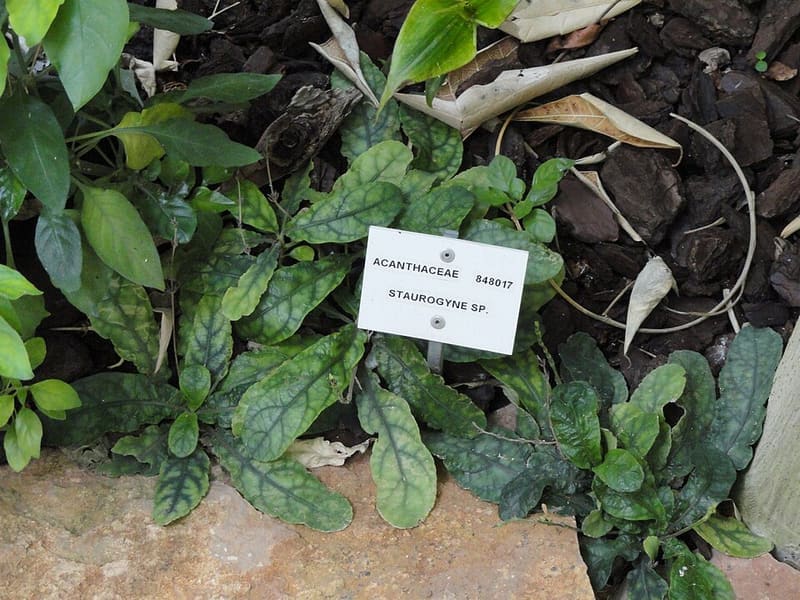
Staurogyne Repens (Staurogyne repens)

Staurogyne Repens

Staurogyne repens
freshwatereasyForegroundmedium lightCO₂ helpful
Height
2–4 in
Growth
slow
Temp
68–82 °F
pH
5.5–7.5

Plant individual stems and trim the tops to push side shoots for a bushy foreground. Benefits from root tabs.
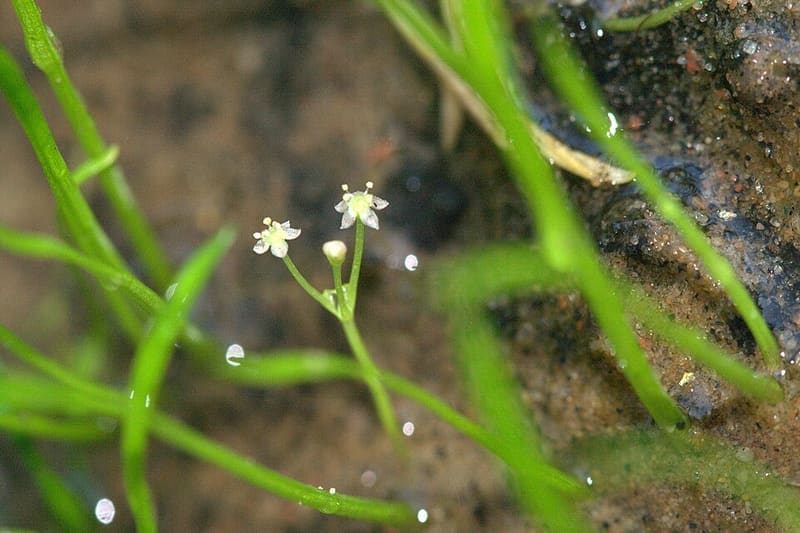
Micro Sword (Lilaeopsis brasiliensis)

Micro Sword

Lilaeopsis brasiliensis
freshwatermediumForegroundmedium lightCO₂ helpful
Height
1–3 in
Growth
slow
Temp
64–82 °F
pH
6–7.5

Plant small clumps spaced apart and allow time to spread by runners. Keep it clear of debris and algae while it establishes.
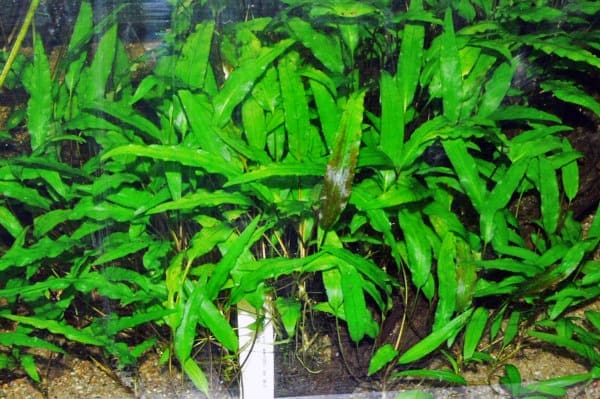
Cryptocoryne Wendtii (Cryptocoryne wendtii)

Cryptocoryne Wendtii

Cryptocoryne wendtii
freshwatereasyMidgroundlow light
Height
4–10 in
Growth
slow
Temp
72–82 °F
pH
6–8

Often melts after planting but regrows from the roots; do not dig it up. A heavy root feeder that benefits from root tabs.
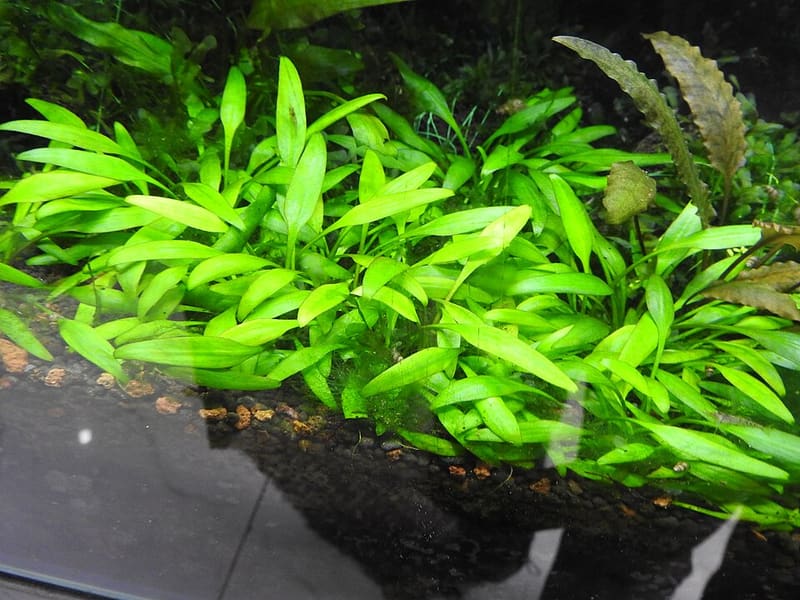
Cryptocoryne Lutea (Cryptocoryne walkeri 'Lutea')

Cryptocoryne Lutea

Cryptocoryne walkeri 'Lutea'
freshwatereasyMidgroundlow light
Height
4–8 in
Growth
slow
Temp
72–82 °F
pH
6–8

A hardy, bright green crypt that tolerates a wide range of conditions. Expect some melt after planting.
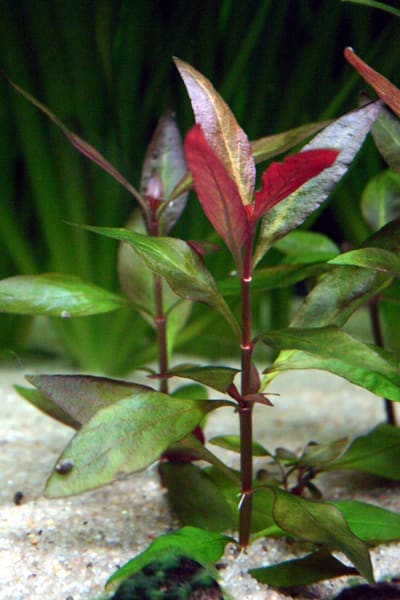
Alternanthera Reineckii Mini (Alternanthera reineckii 'Mini')

Alternanthera Reineckii Mini

Alternanthera reineckii 'Mini'
freshwatermediumMidgroundhigh lightCO₂ helpful
Height
2–4 in
Growth
slow
Temp
72–82 °F
pH
6–7.5

Compact red stem plant for foreground-to-midground bushes. Needs strong light and good iron dosing for deep red color; grows without CO₂ but stays greener.
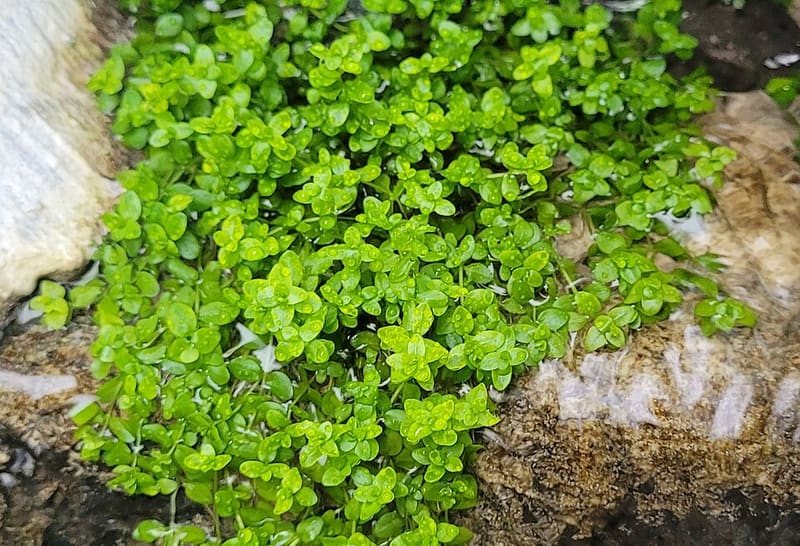
Pearlweed (Micranthemum glomeratum (syn. Hemianthus micranthemoides))

Pearlweed

Micranthemum glomeratum (syn. Hemianthus micranthemoides)
freshwatereasyMidgroundmedium lightCO₂ helpful
Height
2–8 in
Growth
fast
Temp
68–82 °F
pH
6–7.5

Trim often to shape into dense mounds or let it creep. Replant the cuttings to fill in quickly.
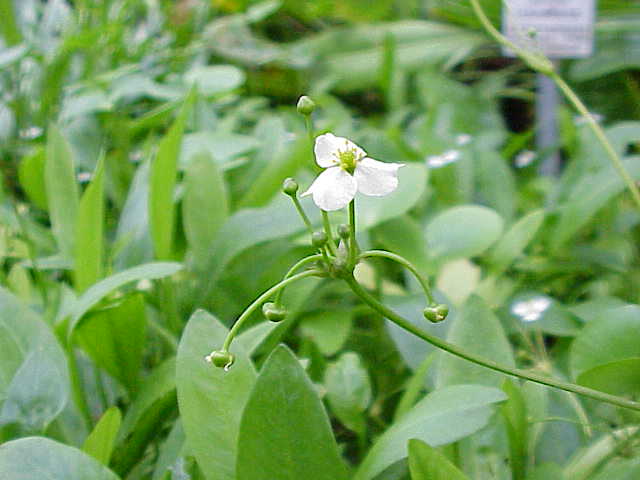
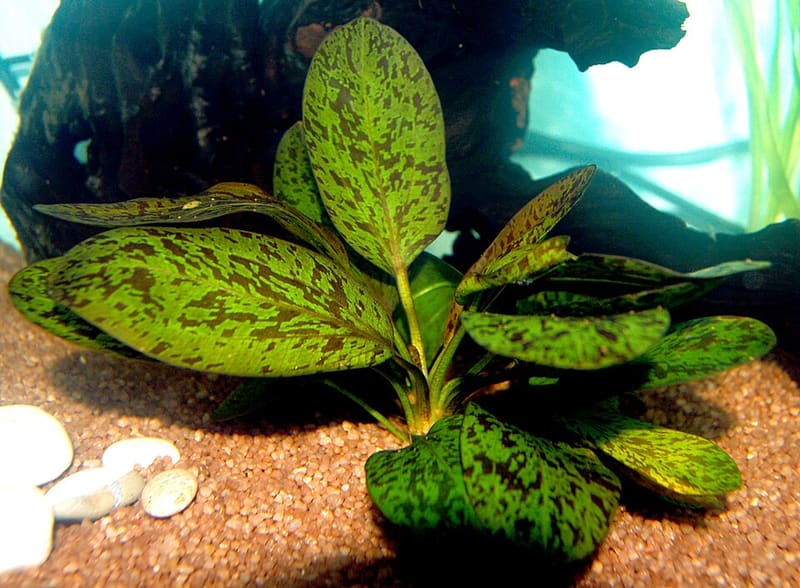
Ozelot Sword (Echinodorus 'Ozelot')

Ozelot Sword

Echinodorus 'Ozelot'
freshwatereasyMidgroundmedium light
Height
8–16 in
Growth
medium
Temp
72–82 °F
pH
6.5–7.5

A spotted hybrid sword that stays more compact than the Amazon sword. Feed with root tabs and give it room to spread.
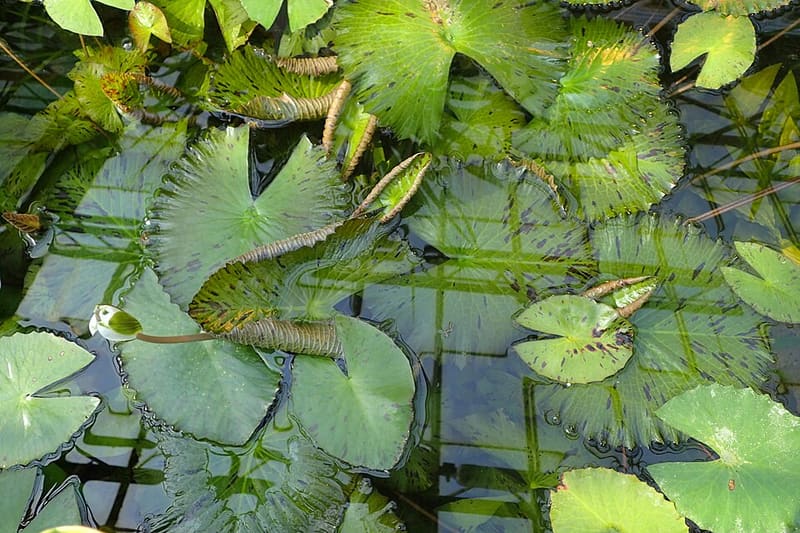
Dwarf Aquarium Lily (Nymphaea zenkeri)

Dwarf Aquarium Lily

Nymphaea zenkeri
freshwatereasyMidgroundmedium light
Height
6–20 in
Growth
medium
Temp
72–82 °F
pH
6–7.5

Plant the bulb only halfway into the substrate. Trim lily pads that reach the surface to keep the compact underwater leaves.
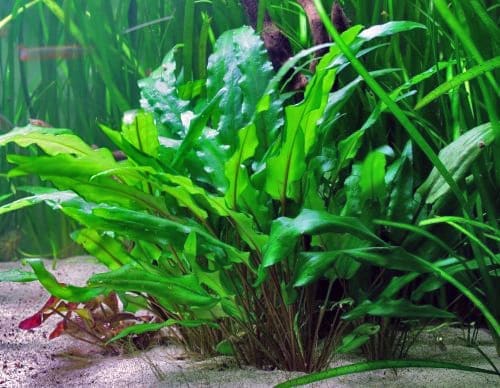
Cryptocoryne Balansae (Cryptocoryne crispatula var. balansae)

Cryptocoryne Balansae

Cryptocoryne crispatula var. balansae
freshwatereasyBackgroundmedium lightCO₂ helpful
Height
12–20 in
Growth
slow
Temp
68–82 °F
pH
6–8

Long, crinkled strap leaves make a background that needs little trimming. Tolerates harder water; root tabs help.
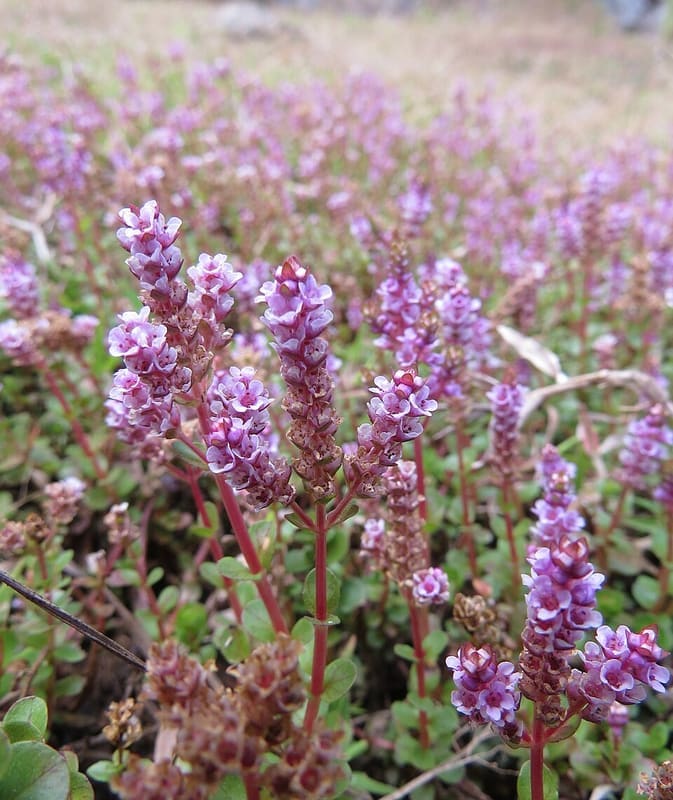
Rotala H'ra (Rotala sp. 'H'ra')

Rotala H'ra

Rotala sp. 'H'ra'
freshwatermediumBackgroundmedium lightCO₂ helpful
Height
6–16 in
Growth
fast
Temp
68–82 °F
pH
6–7.5

A redder Rotala that colors best with high light and lean nitrate. Trim regularly to keep stems bushy.
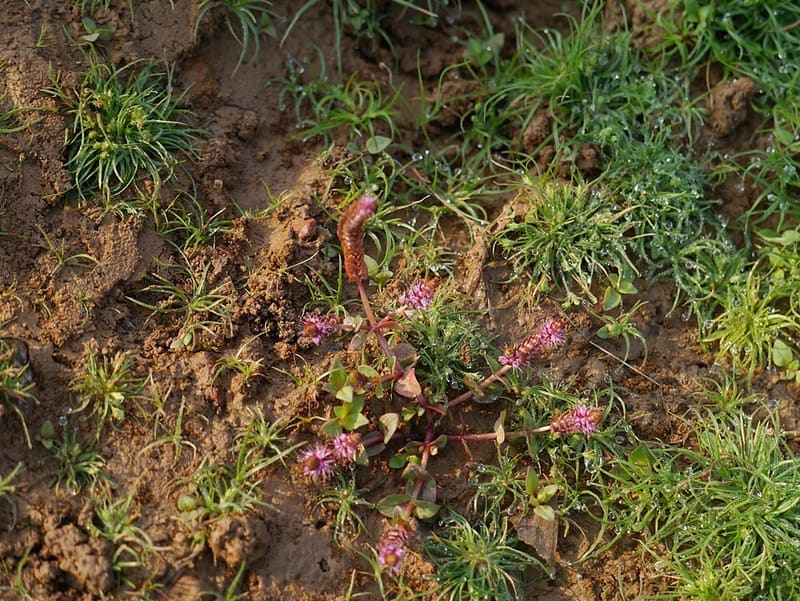
Rotala Macrandra (Rotala macrandra)

Rotala Macrandra

Rotala macrandra
freshwaterhardBackgroundhigh lightCO₂ required
Height
8–16 in
Growth
medium
Temp
72–82 °F
pH
5.5–7

Delicate leaves are easily damaged, so handle gently. Needs stable CO2, strong light and good nutrients.
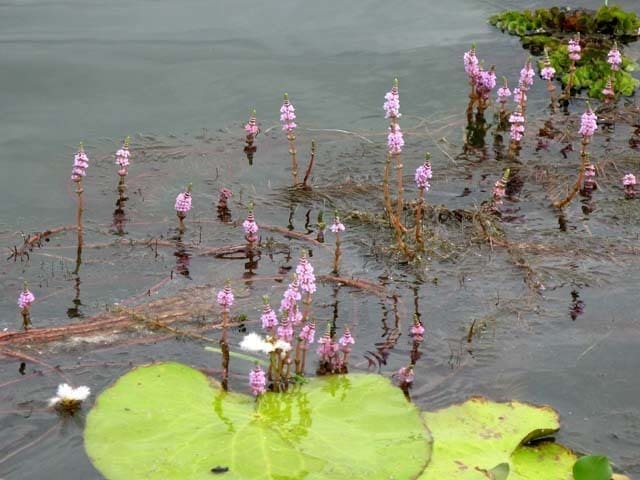
Rotala Wallichii (Rotala wallichii)

Rotala Wallichii

Rotala wallichii
freshwaterhardBackgroundhigh lightCO₂ required
Height
6–16 in
Growth
fast
Temp
72–82 °F
pH
5–6.5

Fine, needle-like leaves turn pink to red in soft, acidic water with strong light. Stunts quickly if CO2 or iron is low.
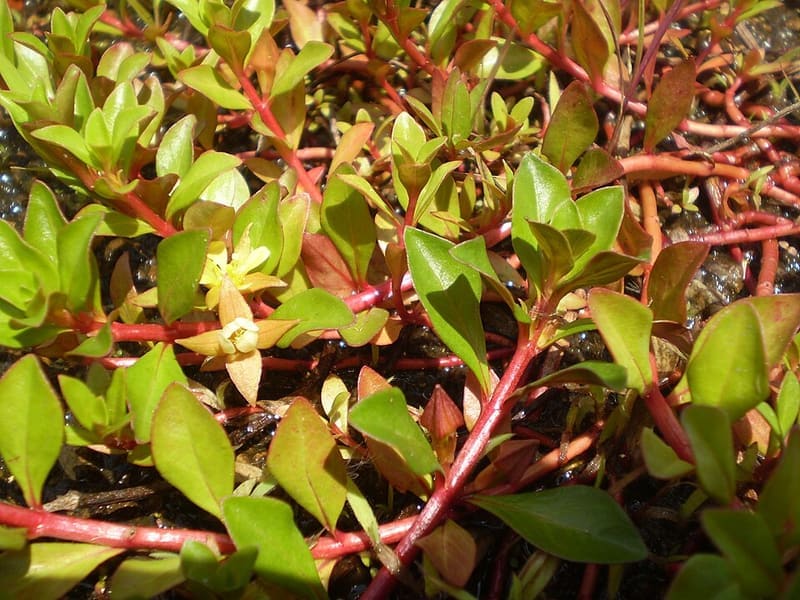
Ludwigia Repens (Ludwigia repens)

Ludwigia Repens

Ludwigia repens
freshwatereasyBackgroundmedium lightCO₂ helpful
Height
8–20 in
Growth
fast
Temp
68–82 °F
pH
6–7.5

An adaptable stem plant whose leaves turn redder under strong light. Replant trimmed tops for a fuller group.
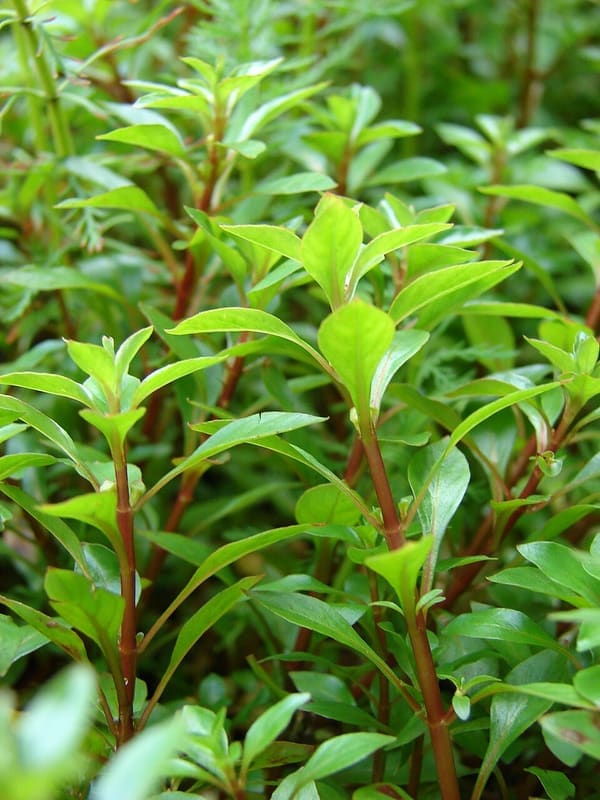
Ludwigia Palustris (Ludwigia palustris)

Ludwigia Palustris

Ludwigia palustris
freshwatereasyBackgroundmedium lightCO₂ helpful
Height
6–16 in
Growth
fast
Temp
64–82 °F
pH
6–7.5

Shows deep red color with high light and iron. Trim tops and replant to keep the group dense.
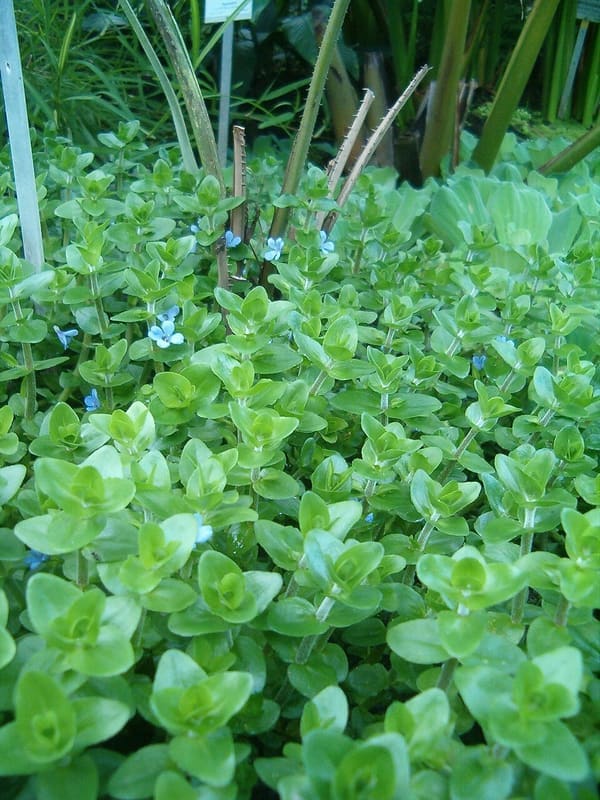
Bacopa Caroliniana (Bacopa caroliniana)

Bacopa Caroliniana

Bacopa caroliniana
freshwatereasyBackgroundmedium light
Height
8–16 in
Growth
slow
Temp
68–82 °F
pH
6–7.5

Thick, upright stems that tolerate a wide range of conditions. Tops can take on a bronze tint under strong light.
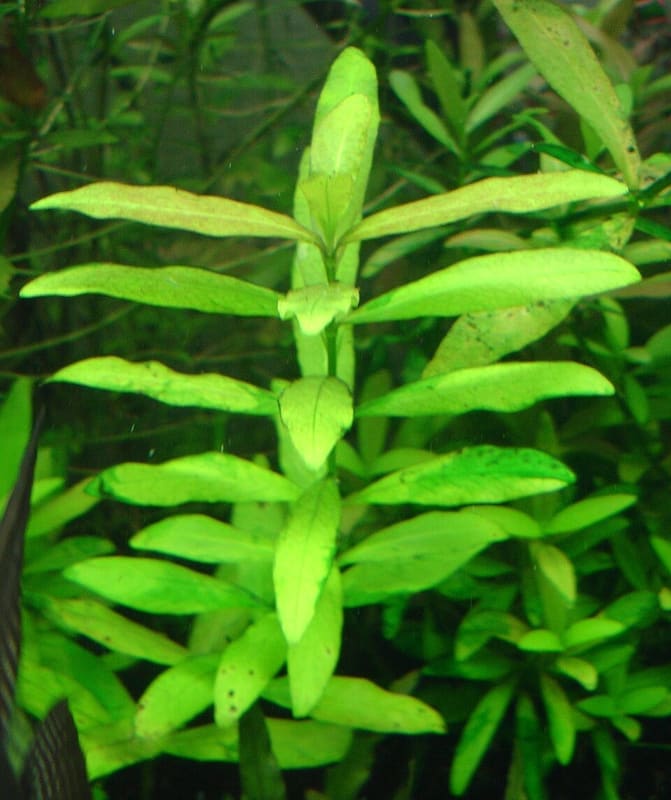
Dwarf Hygrophila (Hygrophila polysperma)

Dwarf Hygrophila

Hygrophila polysperma
freshwatereasyBackgroundlow lightUS noxious weed
Height
8–20 in
Growth
fast
Temp
68–82 °F
pH
6–7.5

A very fast, forgiving stem plant that helps outcompete algae. Never release it.

On the US federal noxious weed list; selling or moving it across state lines needs a permit. Check your state's rules before buying.
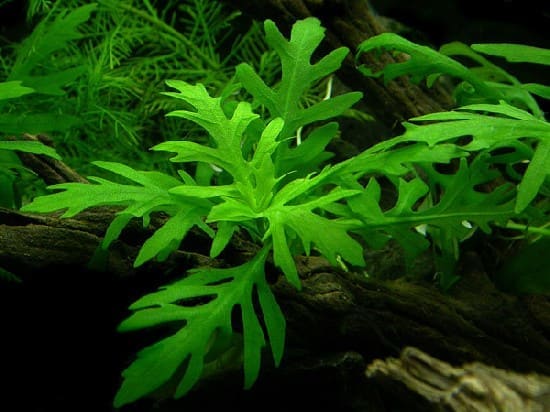
Water Wisteria (Hygrophila difformis)

Water Wisteria

Hygrophila difformis
freshwatereasyBackgroundlow light
Height
8–20 in
Growth
fast
Temp
70–82 °F
pH
6.5–7.5

Leaf shape becomes more finely divided under stronger light. Trim often; cuttings root easily.
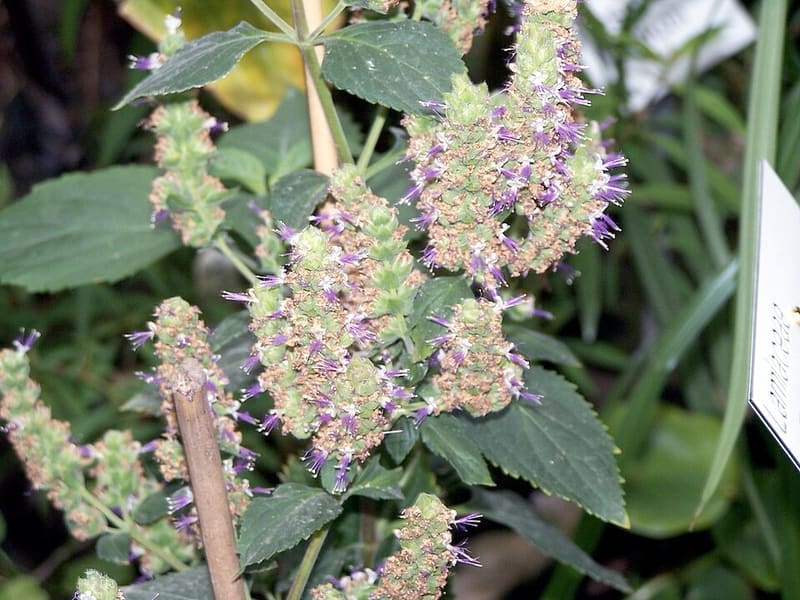
Pogostemon Erectus (Pogostemon erectus)

Pogostemon Erectus

Pogostemon erectus
freshwatermediumBackgroundmedium lightCO₂ helpful
Height
6–16 in
Growth
medium
Temp
72–82 °F
pH
6–7.5

Stiff stems with needle-like leaves give a bright, bushy accent. Plant stems a little apart so lower leaves get light.
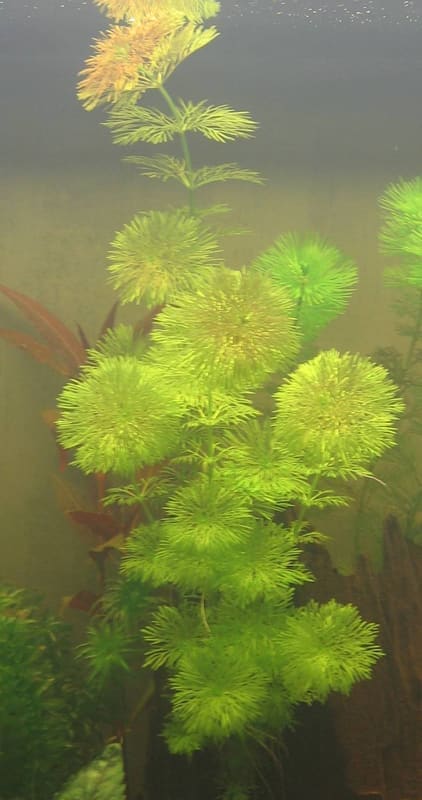
Ambulia (Limnophila sessiliflora)

Ambulia

Limnophila sessiliflora
freshwatereasyBackgroundmedium lightUS noxious weed
Height
8–20 in
Growth
fast
Temp
72–82 °F
pH
6–7.5

Fast, feathery stem plant that can shade others if not trimmed.

On the US federal noxious weed list and prohibited in Texas; selling or moving it across state lines needs a permit. Check your state's rules before buying.
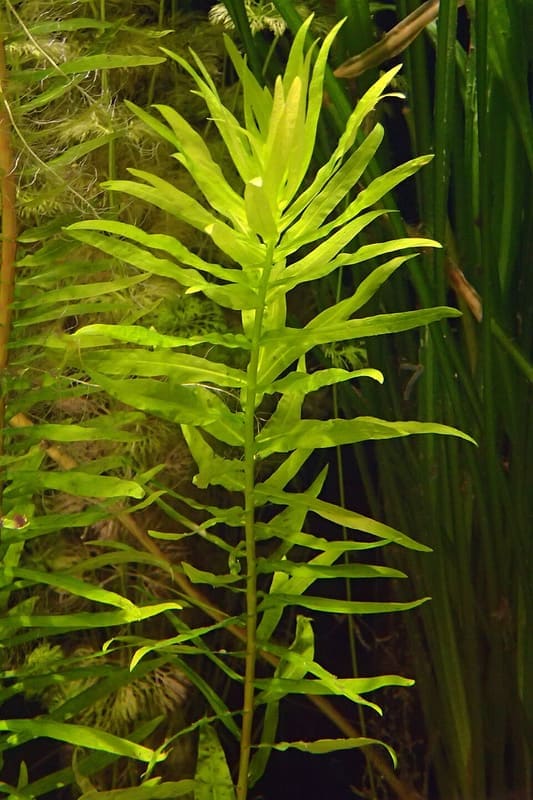
Ammannia Gracilis (Ammannia gracilis)

Ammannia Gracilis

Ammannia gracilis
freshwaterhardBackgroundhigh lightCO₂ required
Height
12–20 in
Growth
medium
Temp
72–82 °F
pH
6–7

Orange-red leaves need strong light, CO2 and steady nutrients. Lower leaves drop if shaded or if nitrate runs out.
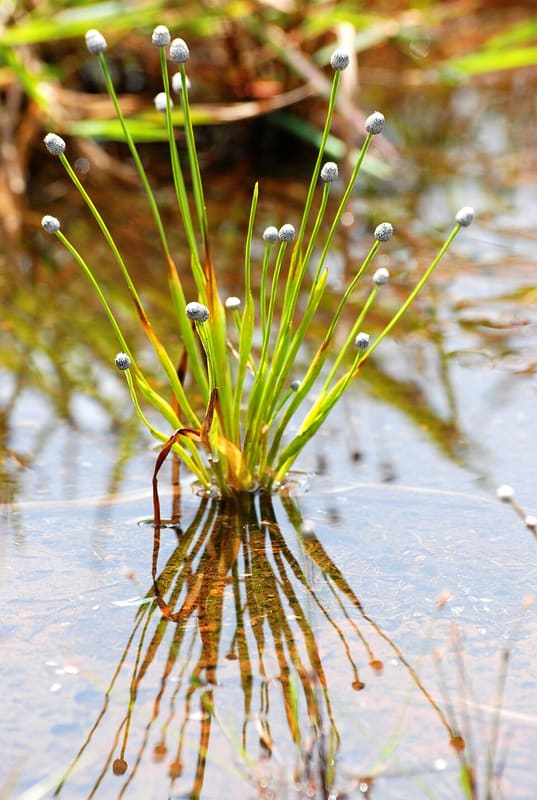
Tonina (Tonina fluviatilis)

Tonina

Tonina fluviatilis
freshwaterhardBackgroundhigh lightCO₂ required
Height
4–12 in
Growth
slow
Temp
72–82 °F
pH
5–6.5

Needs soft, acidic water, strong light and CO2 to thrive. Avoid disturbing the roots once established.
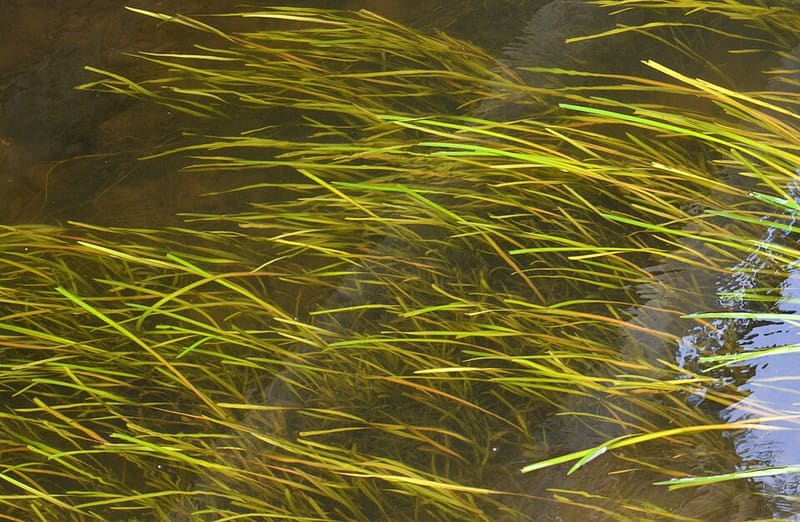
Vallisneria Spiralis (Vallisneria spiralis)

Vallisneria Spiralis

Vallisneria spiralis
freshwatereasyBackgroundlow light
Height
12–24 in
Growth
fast
Temp
64–82 °F
pH
6.5–8

Spreads quickly by runners to form a tall background screen. Keep the crown above the substrate when planting.
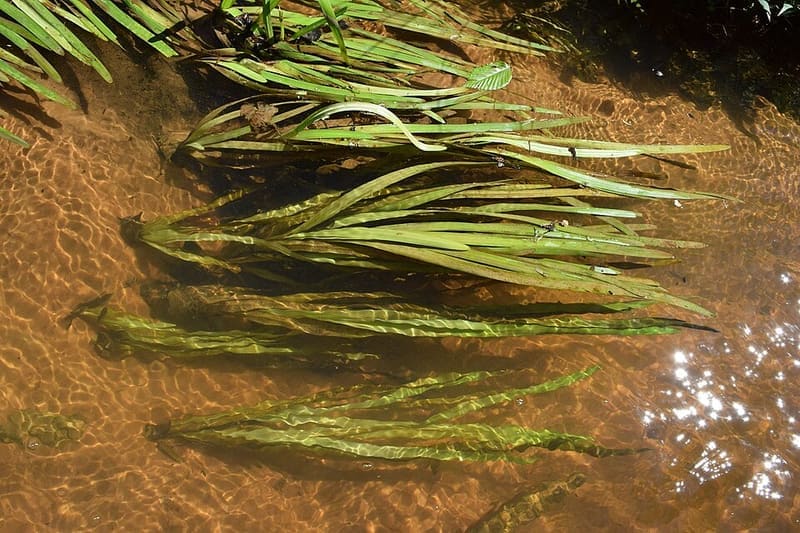
Jungle Val (Vallisneria americana 'Gigantea')

Jungle Val

Vallisneria americana 'Gigantea'
freshwatereasyBackgroundlow light
Height
20–48 in
Growth
fast
Temp
64–82 °F
pH
6.5–8

Ribbon leaves easily reach the surface of tall tanks and trail along it. Best for larger tanks; cut long leaves at the base.
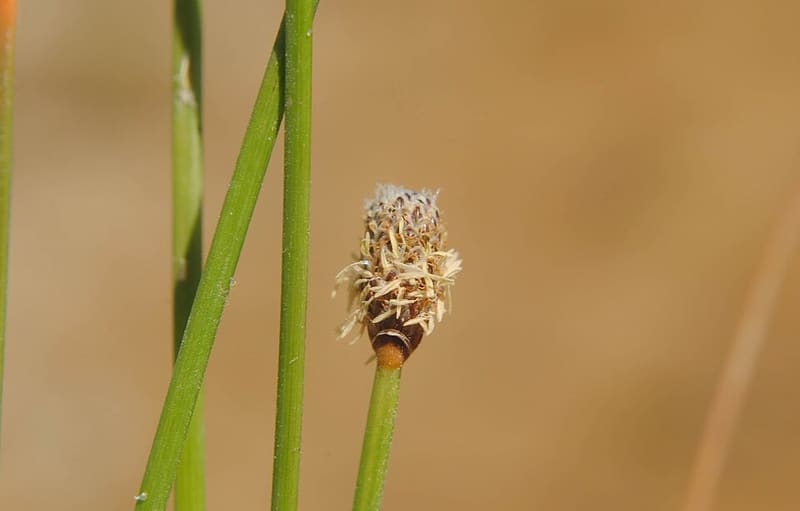
Giant Hairgrass (Eleocharis montevidensis)

Giant Hairgrass

Eleocharis montevidensis
freshwatereasyBackgroundmedium lightCO₂ helpful
Height
12–20 in
Growth
medium
Temp
68–82 °F
pH
6–7.5

Tall, needle-thin rushes that sway in flow. Plant in clumps and remove old yellowing stems at the base.
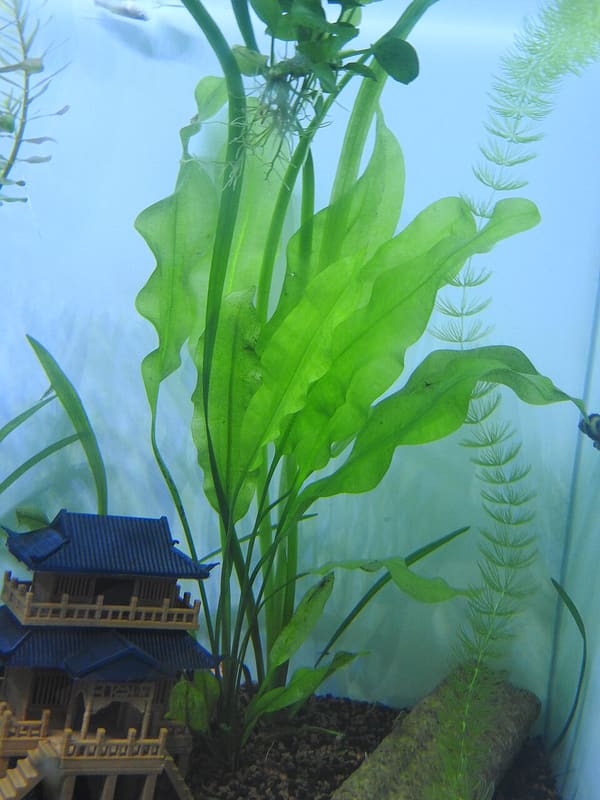
Amazon Sword (Echinodorus grisebachii 'Bleherae')

Amazon Sword

Echinodorus grisebachii 'Bleherae'
freshwatereasyBackgroundmedium light
Height
12–20 in
Growth
medium
Temp
72–82 °F
pH
6.5–7.5

A large rosette that needs space and nutrient-rich substrate or root tabs. Remove outer leaves as they age.
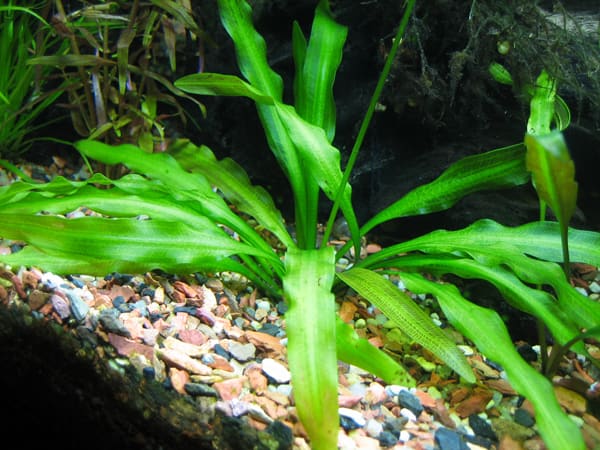
Aponogeton Ulvaceus (Aponogeton ulvaceus)

Aponogeton Ulvaceus

Aponogeton ulvaceus
freshwatermediumBackgroundmedium light
Height
12–24 in
Growth
fast
Temp
72–82 °F
pH
6–7.5

Plant the bulb just at the substrate surface. It may go dormant after months of growth; leave the bulb in place to regrow.
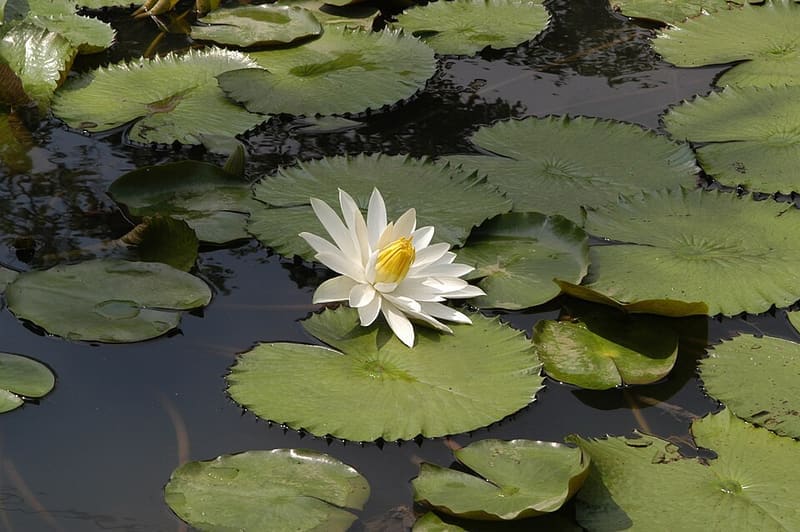
Red Tiger Lotus (Nymphaea lotus)

Red Tiger Lotus

Nymphaea lotus
freshwatereasyBackgroundmedium light
Height
8–24 in
Growth
fast
Temp
72–82 °F
pH
6–7.5

Plant the bulb halfway in the substrate and feed with root tabs. Trim surface pads to keep it bushy underwater.
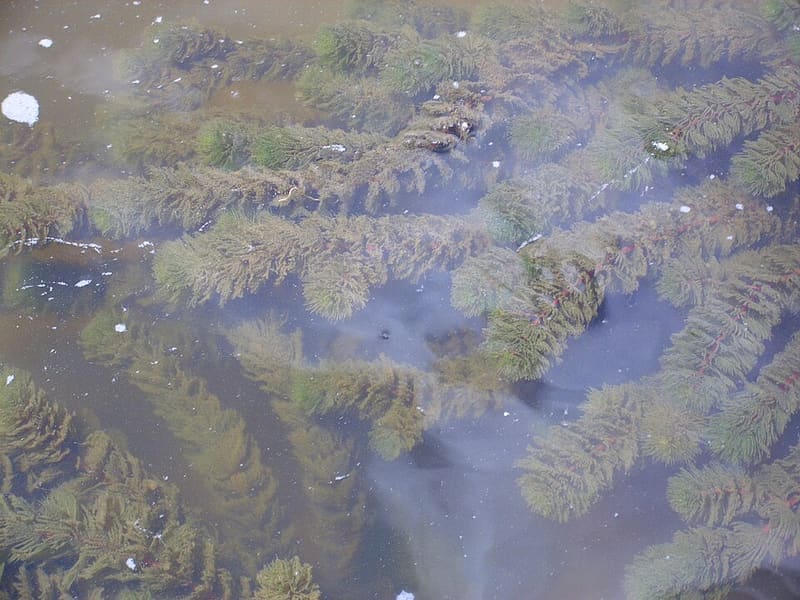
Hornwort (Ceratophyllum demersum)

Hornwort

Ceratophyllum demersum
freshwatereasyBackgroundlow light
Height
12–24 in
Growth
fast
Temp
60–82 °F
pH
6–7.5

Has no true roots; float it or weigh it down. Soaks up nutrients quickly but may shed needles after moving.
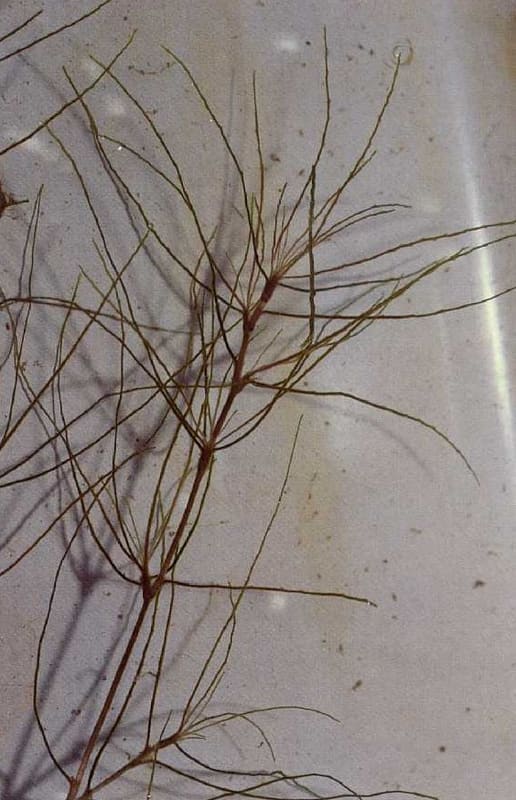
Guppy Grass (Najas guadalupensis)

Guppy Grass

Najas guadalupensis
freshwatereasyBackgroundlow light
Height
8–24 in
Growth
fast
Temp
64–82 °F
pH
6–8

Grows rapidly whether planted or floating, providing cover for fry and shrimplets. Thin it out often.
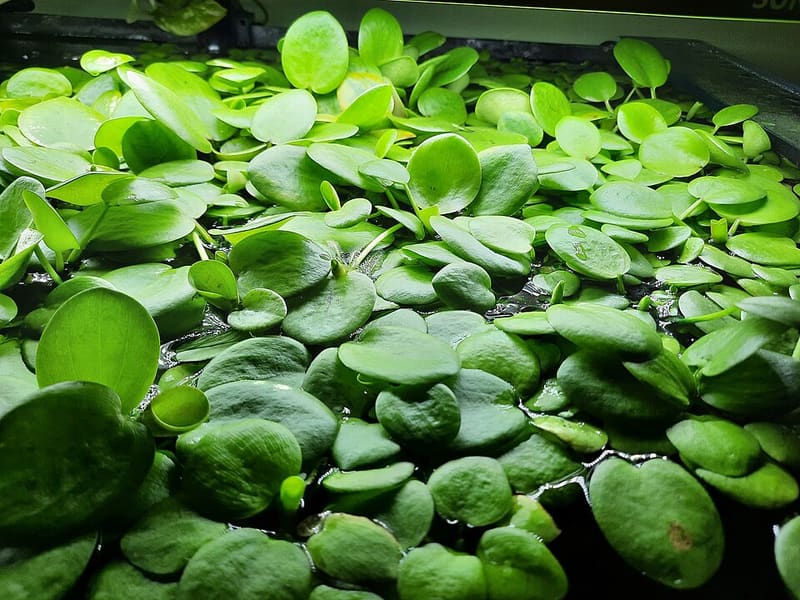
Amazon Frogbit (Hydrocharis laevigata (syn. Limnobium laevigatum))

Amazon Frogbit

Hydrocharis laevigata (syn. Limnobium laevigatum)
freshwatereasyFloatinglow lightrestricted in some states
Height
0.5–1 in
Growth
fast
Temp
64–82 °F
pH
6–7.5

Keep the tops dry and use gentle surface flow. Remove extras regularly so it does not block light; never release it outdoors.

Prohibited in California and Washington. Check your state's rules before buying.
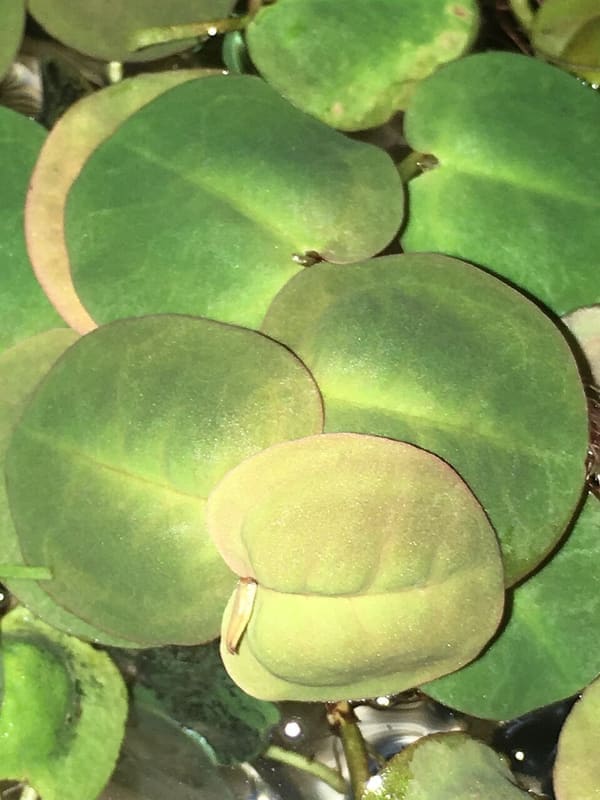
Red Root Floater (Phyllanthus fluitans)

Red Root Floater

Phyllanthus fluitans
freshwatermediumFloatingmedium light
Height
0.5–1 in
Growth
medium
Temp
70–82 °F
pH
6–7.5

Leaves and roots turn red with strong light and low nitrate. Dislikes water splashing on its leaves and strong surface agitation.
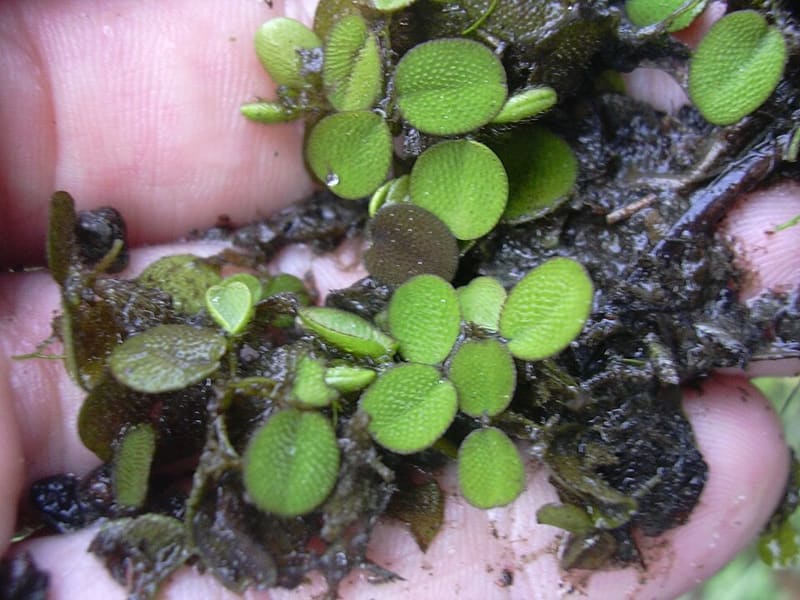
Salvinia (Salvinia minima)

Salvinia

Salvinia minima
freshwatereasyFloatinglow lightrestricted in some states
Height
0.5–1 in
Growth
fast
Temp
64–82 °F
pH
6–7.5

Hairy leaves repel water; keep surface flow calm.

Texas prohibits all Salvinia; several other Salvinia species are federal noxious weeds, so buy from a seller who labels it S. minima. Check your state's rules before buying.
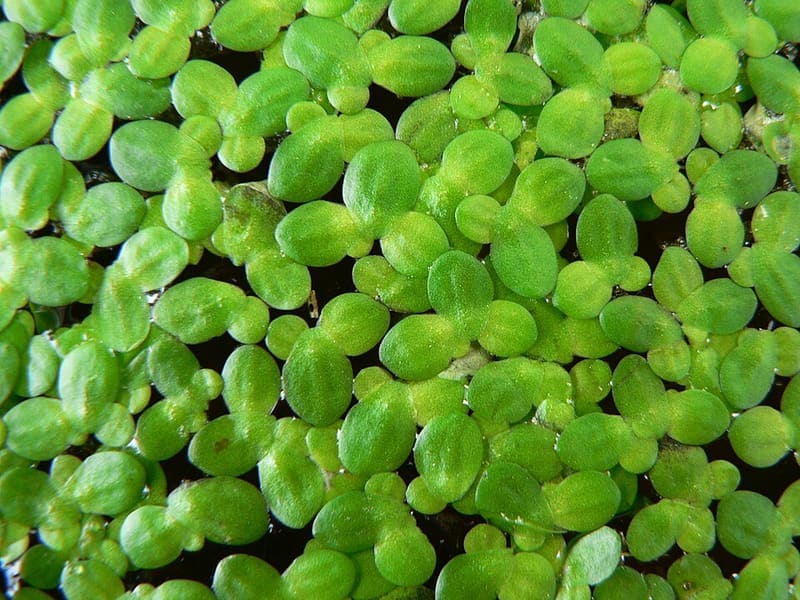
Duckweed (Lemna minor)

Duckweed

Lemna minor
freshwatereasyFloatinglow light
Height
0.1–0.5 in
Growth
fast
Temp
60–82 °F
pH
6–7.5

Multiplies extremely fast and absorbs excess nutrients. Nearly impossible to remove completely once added.
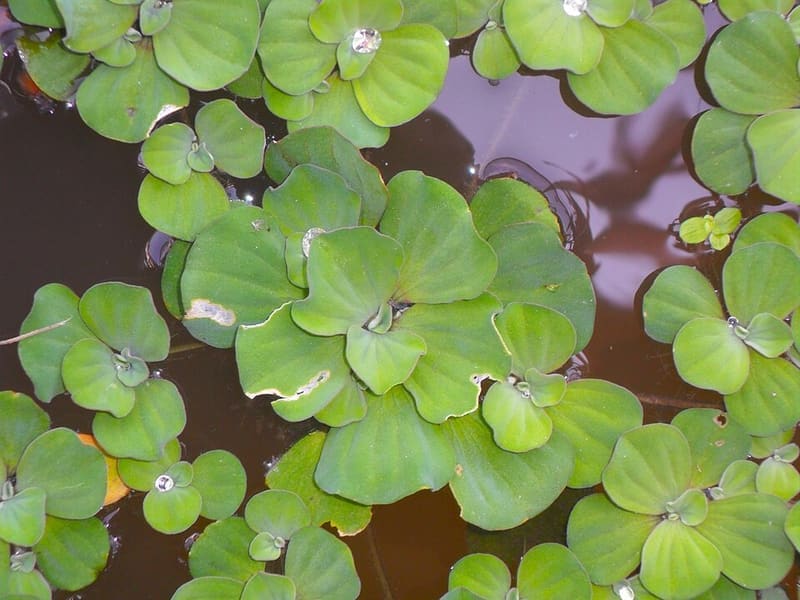
Dwarf Water Lettuce (Pistia stratiotes)

Dwarf Water Lettuce

Pistia stratiotes
freshwatereasyFloatingmedium lightrestricted in some states
Height
1–3 in
Growth
fast
Temp
70–82 °F
pH
6.5–7.5

Needs space under the lid and humid air above the water to avoid leaf burn.

Prohibited or restricted in Alabama, California, Connecticut, Florida, North Carolina, South Carolina, Texas and Wisconsin. Check your state's rules before buying.
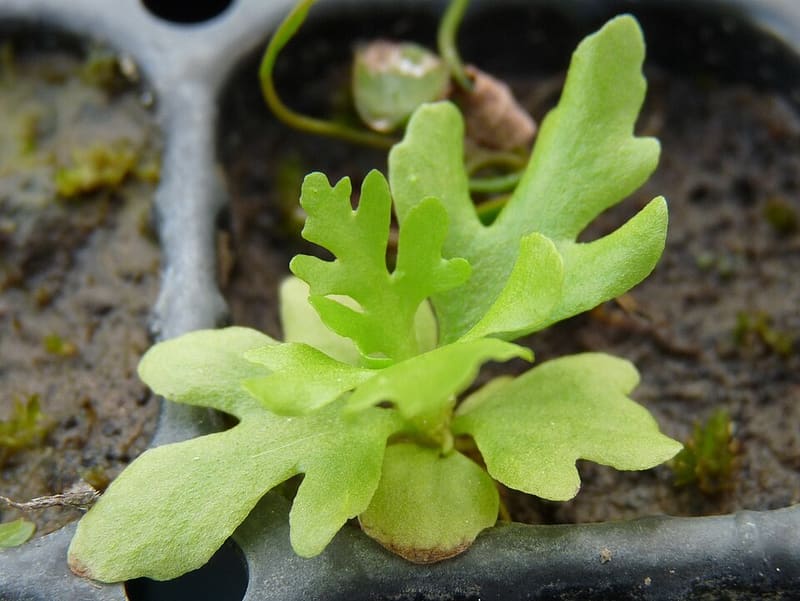
Water Sprite (Ceratopteris thalictroides)

Water Sprite

Ceratopteris thalictroides
freshwatereasyBackgroundlow light
Height
8–20 in
Growth
fast
Temp
68–82 °F
pH
6–7.5

A fast fern that grows planted or floating and soaks up nutrients. Plantlets sprout from the leaves; never release it outdoors, as it is invasive in parts of the South.
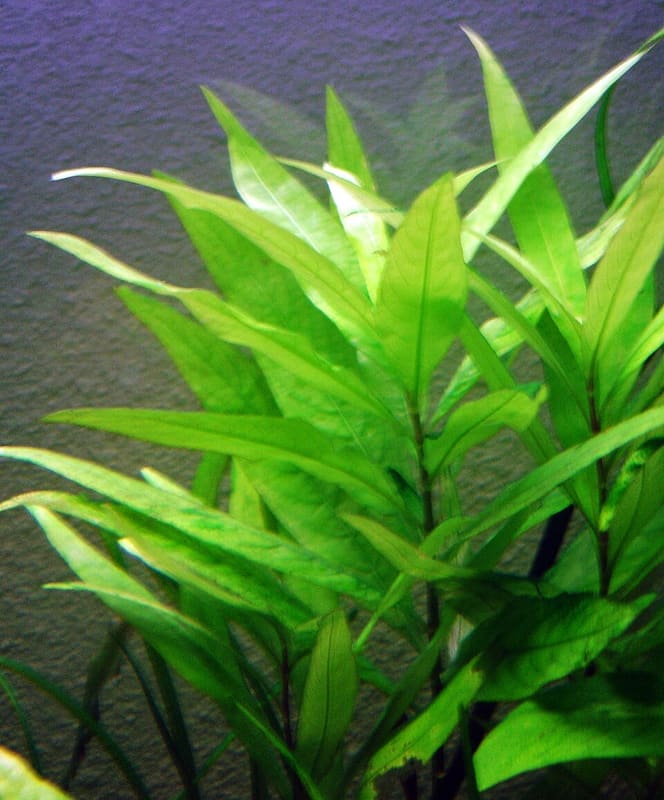
Temple Plant (Hygrophila corymbosa)

Temple Plant

Hygrophila corymbosa
freshwatereasyBackgroundmedium light
Height
12–24 in
Growth
fast
Temp
72–82 °F
pH
6.5–7.5

A tall, broad-leaved stem plant for the back of bigger tanks. Buy from a reputable seller: it is sometimes mixed up with the restricted Hygrophila polysperma.
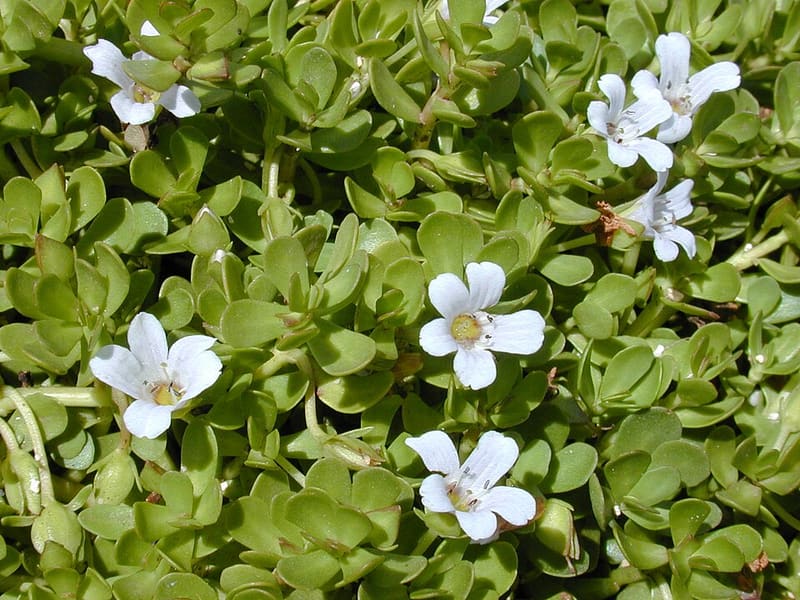
Ozelot Sword (Echinodorus 'Ozelot')

Ozelot Sword

Echinodorus 'Ozelot'
freshwatereasyMidgroundmedium light
Height
8–20 in
Growth
medium
Temp
68–82 °F
pH
6.5–7.5

A compact sword plant with red-brown spotted leaves. A heavy root feeder; give it root tabs.

Aponogeton Boivinianus

Aponogeton boivinianus
freshwatermediumBackgroundmedium lightCO₂ helpful
Height
16–24 in
Growth
medium
Temp
72–82 °F
pH
6.5–7.5

Dark, crinkled leaves from a bulb, suited to tall tanks. Often rests for a few months each year; leave the bulb in place.
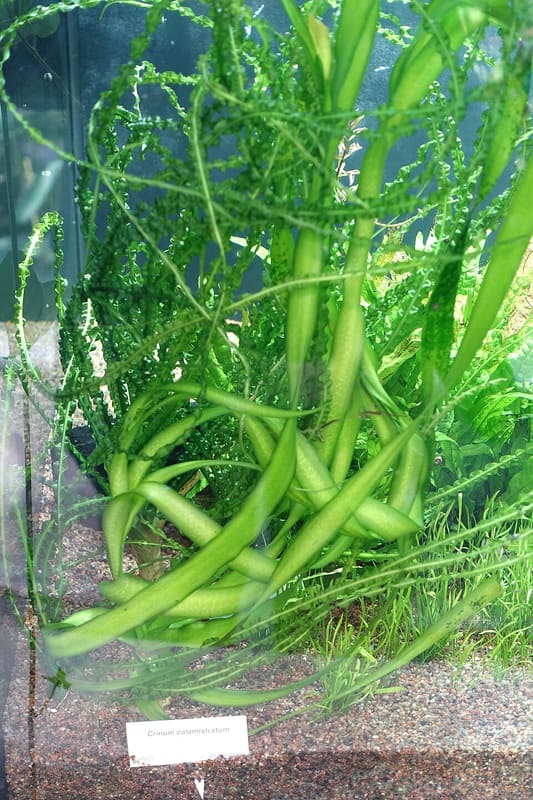
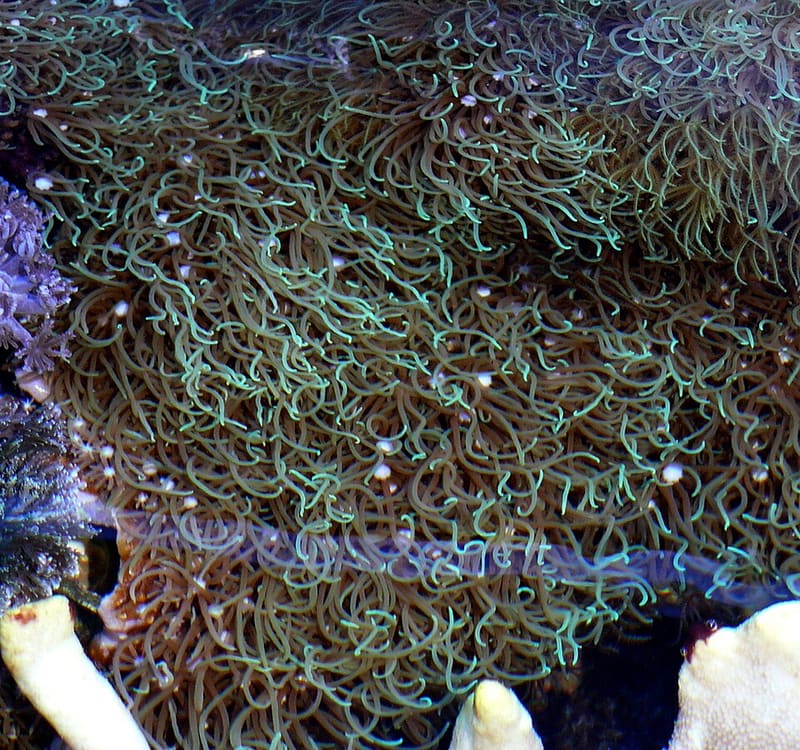
Green Star Polyps (Pachyclavularia violacea)

Green Star Polyps

Pachyclavularia violacea
saltwatereasySoft corallow light
Light
low
Flow
medium
Placement
any
Grows to
4–12 in

Nearly unkillable and spreads fast over rock and glass. Put it on an isolated rock so it cannot take over.
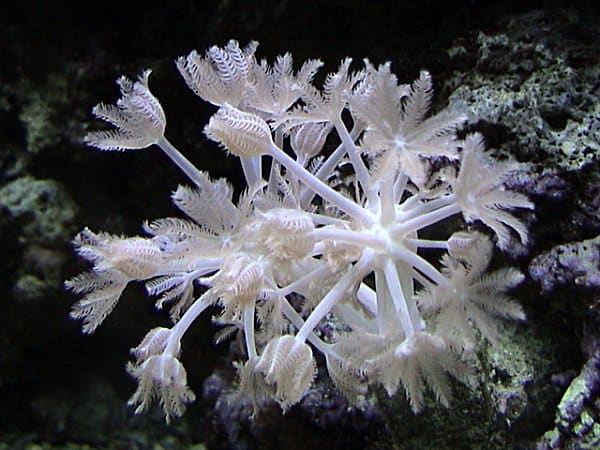
Pulsing Xenia (Xenia spp.)

Pulsing Xenia

Xenia spp.
saltwatereasySoft coralmedium light
Light
medium
Flow
low
Placement
mid
Grows to
3–8 in

Its polyps pulse like tiny hands. Grows like a weed in some tanks and not at all in others; keep it on its own rock.
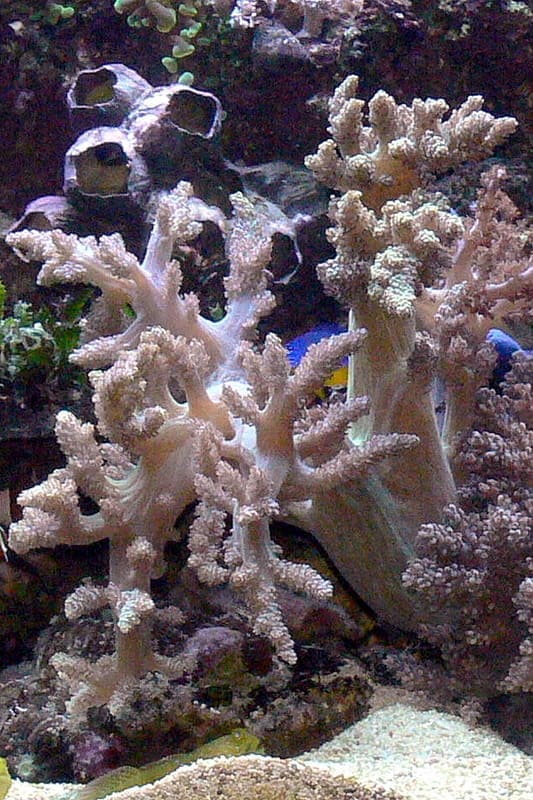
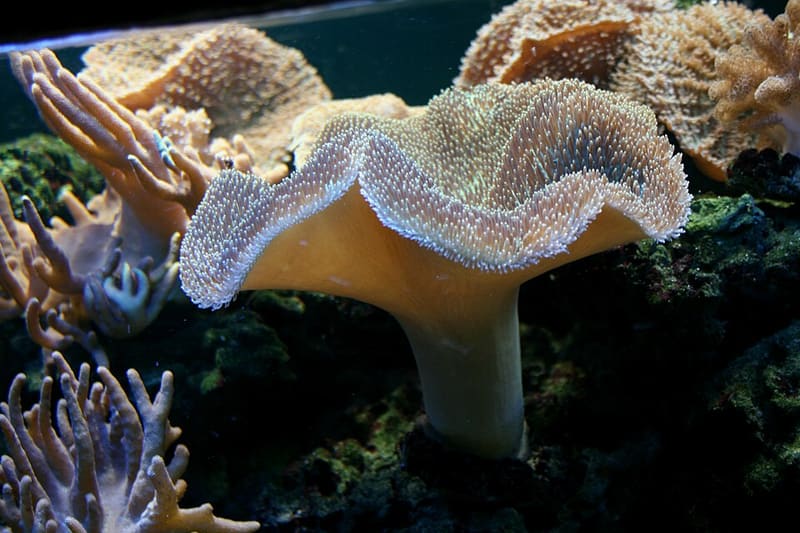
Toadstool Leather (Sarcophyton spp.)

Toadstool Leather

Sarcophyton spp.
saltwatereasySoft coralmedium light
Light
medium
Flow
medium
Placement
mid
Grows to
6–16 in

Sheds a waxy skin every few weeks and looks closed while it does. Releases chemicals that can bother stony corals; run carbon.
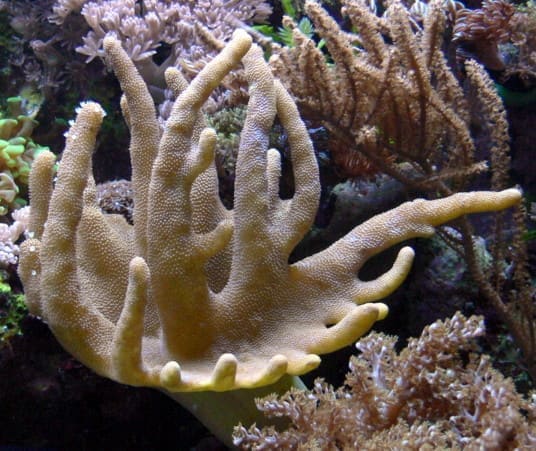
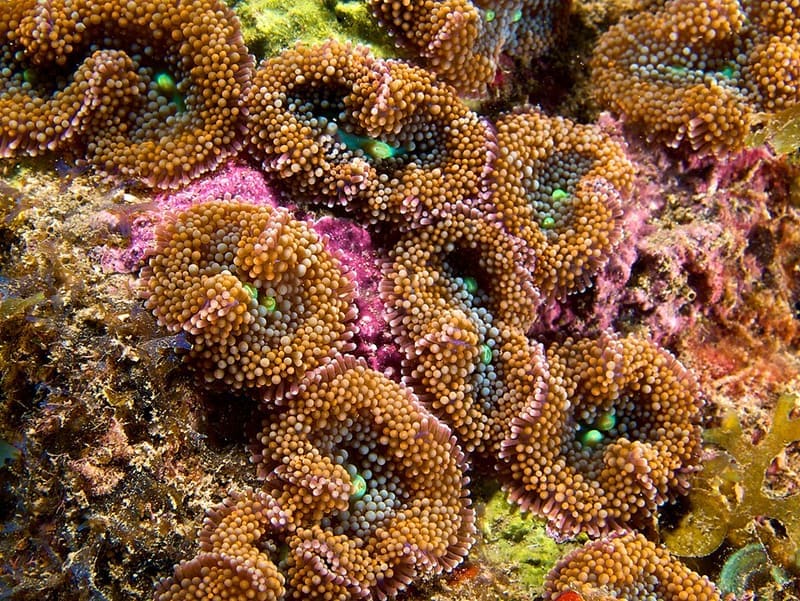
Ricordea Mushroom (Ricordea florida)

Ricordea Mushroom

Ricordea florida
saltwatermediumMushroommedium light
Light
medium
Flow
low
Placement
bottom
Grows to
1–2 in

Bright, bumpy mushrooms that are more sensitive than other mushrooms. Wait for a stable tank before adding them.
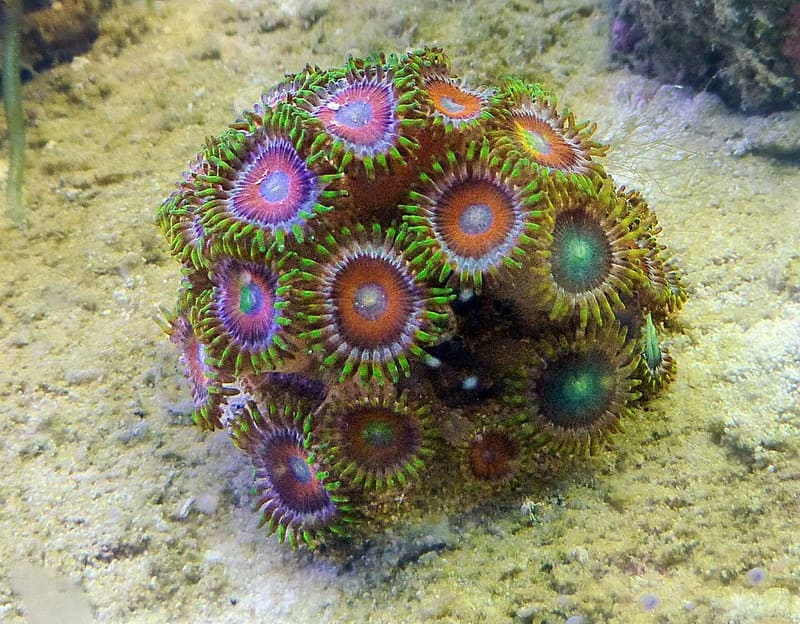
Zoanthids (Zoanthus spp.)

Zoanthids

Zoanthus spp.
saltwatereasyZoanthidmedium light
Light
medium
Flow
medium
Placement
any
Grows to
2–6 in

Colourful button polyps that spread across rock. Wear gloves and eye protection when fragging: many contain palytoxin.
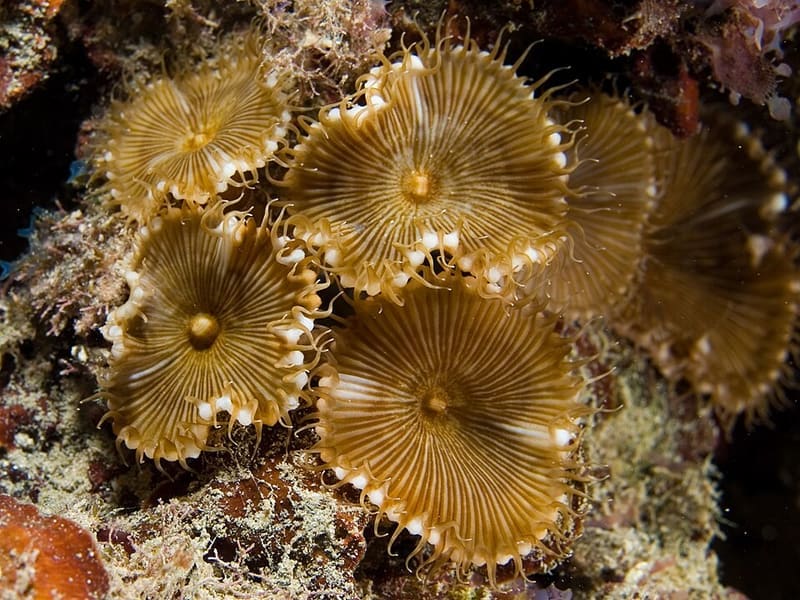
Palythoa (Palythoa spp.)

Palythoa

Palythoa spp.
saltwatereasyZoanthidmedium light
Light
medium
Flow
medium
Placement
any
Grows to
3–8 in

Larger than zoanthids and can spread aggressively. Often high in palytoxin: never boil its rock, and wear gloves and eye protection.
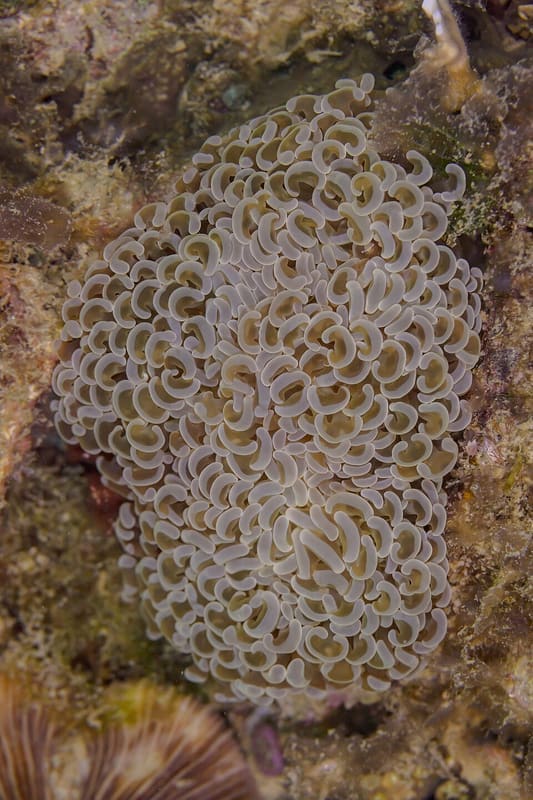
Hammer Coral (Fimbriaphyllia ancora)

Hammer Coral

Fimbriaphyllia ancora
saltwatermediumLPS (large-polyp stony)medium lightstings neighbours
Light
medium
Flow
medium
Placement
mid
Grows to
4–10 in

Sends out long sweeper tentacles at night. Give it 6 inches from other corals; it tolerates other Euphyllia better.
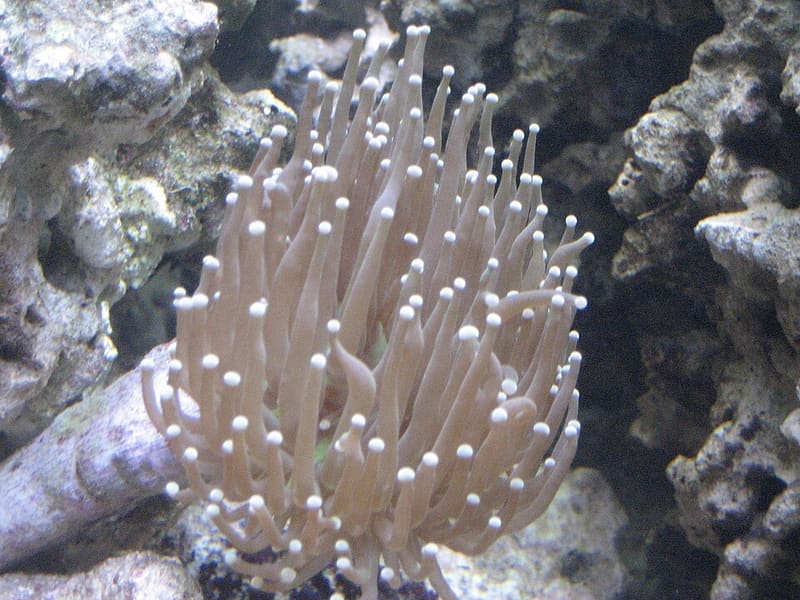
Torch Coral (Euphyllia glabrescens)

Torch Coral

Euphyllia glabrescens
saltwatermediumLPS (large-polyp stony)medium lightstings neighbours
Light
medium
Flow
medium
Placement
mid
Grows to
4–10 in

A favourite host for clownfish. Its sweepers sting hard, so space it well away from everything else.
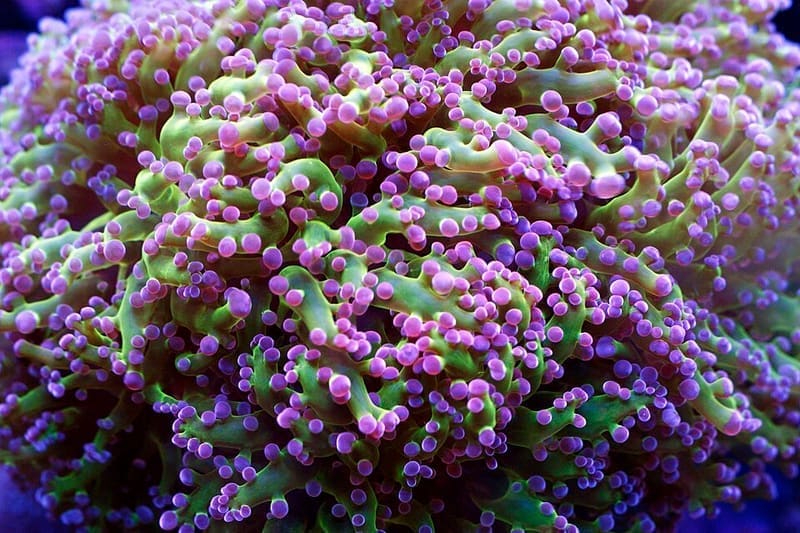
Frogspawn Coral (Fimbriaphyllia divisa)

Frogspawn Coral

Fimbriaphyllia divisa
saltwatermediumLPS (large-polyp stony)medium lightstings neighbours
Light
medium
Flow
medium
Placement
mid
Grows to
4–10 in

Branching tentacles tipped like frog eggs. Like all Euphyllia, it needs room around it for its sweepers.
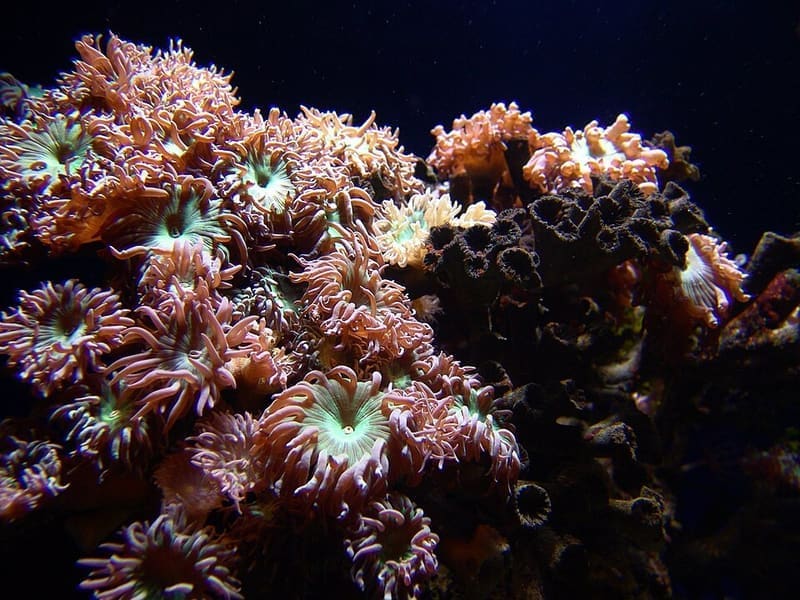
Duncan Coral (Duncanopsammia axifuga)

Duncan Coral

Duncanopsammia axifuga
saltwatereasyLPS (large-polyp stony)low light
Light
low
Flow
medium
Placement
bottom
Grows to
3–8 in

One of the easiest LPS corals. Grows faster if you feed it small meaty foods.
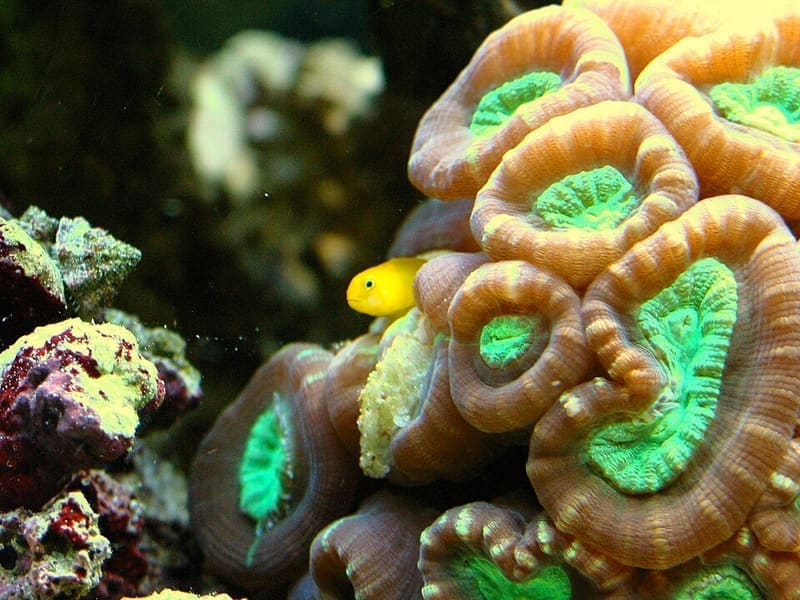
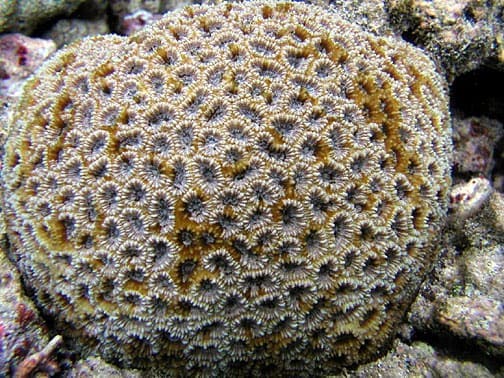
Favia Brain Coral (Dipsastraea spp.)

Favia Brain Coral

Dipsastraea spp.
saltwatereasyLPS (large-polyp stony)medium lightstings neighbours
Light
medium
Flow
medium
Placement
bottom
Grows to
3–8 in

Hardy and colourful, with long sweepers at night. Keep other corals a few inches away.
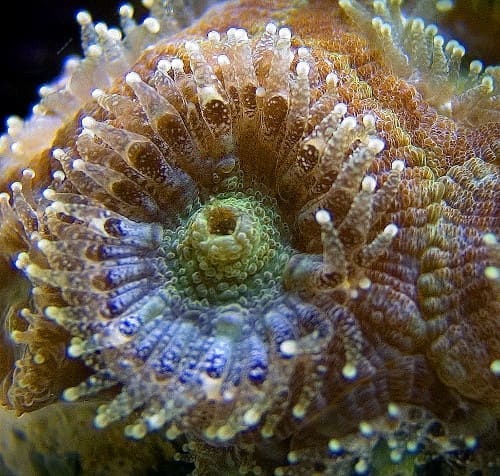
Acan Lord (Micromussa lordhowensis)

Acan Lord

Micromussa lordhowensis
saltwatereasyLPS (large-polyp stony)low light
Light
low
Flow
low
Placement
bottom
Grows to
3–6 in

Comes in striking colours and eats readily. Place it low in gentle flow.
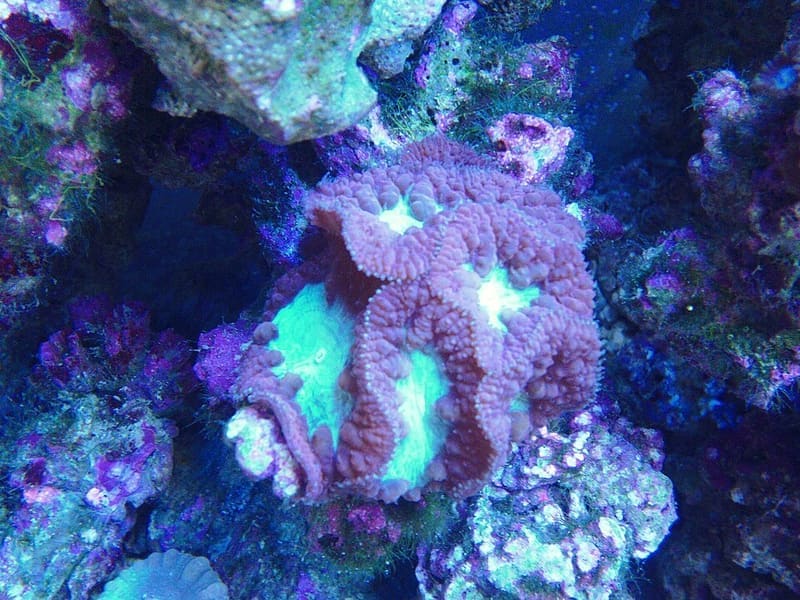
Chalice Coral (Echinophyllia spp.)

Chalice Coral

Echinophyllia spp.
saltwatermediumLPS (large-polyp stony)medium lightstings neighbours
Light
medium
Flow
medium
Placement
mid
Grows to
4–10 in

Grows as a colourful plate and fights neighbours with sweepers. Give it space to spread outward.
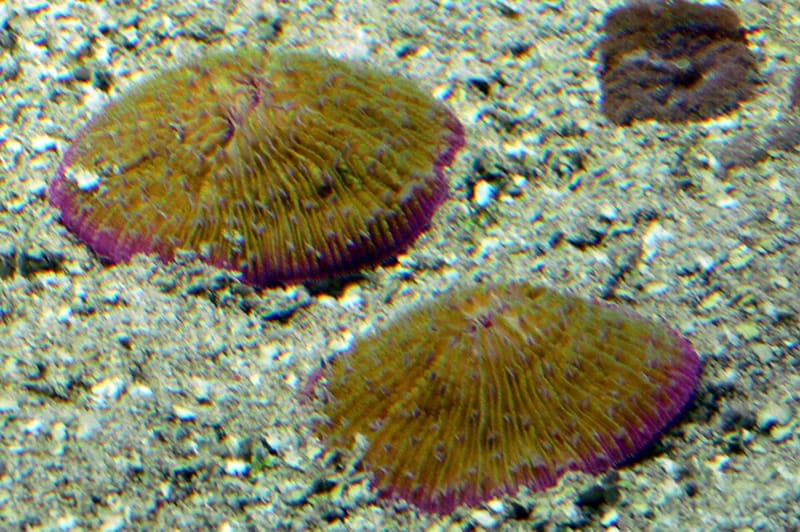
Plate Coral (Fungia spp.)

Plate Coral

Fungia spp.
saltwatermediumLPS (large-polyp stony)medium light
Light
medium
Flow
low
Placement
bottom
Grows to
4–8 in

A free-living coral that sits on the sand, not on rock. Can move and sting corals it bumps into.
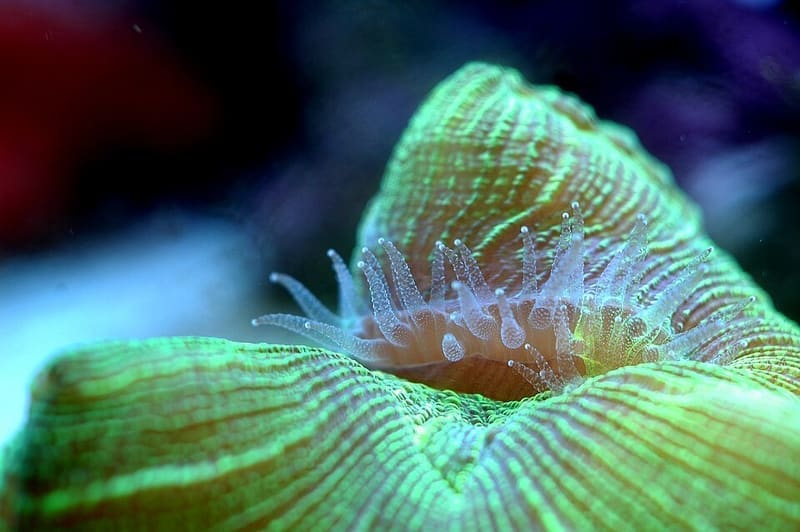
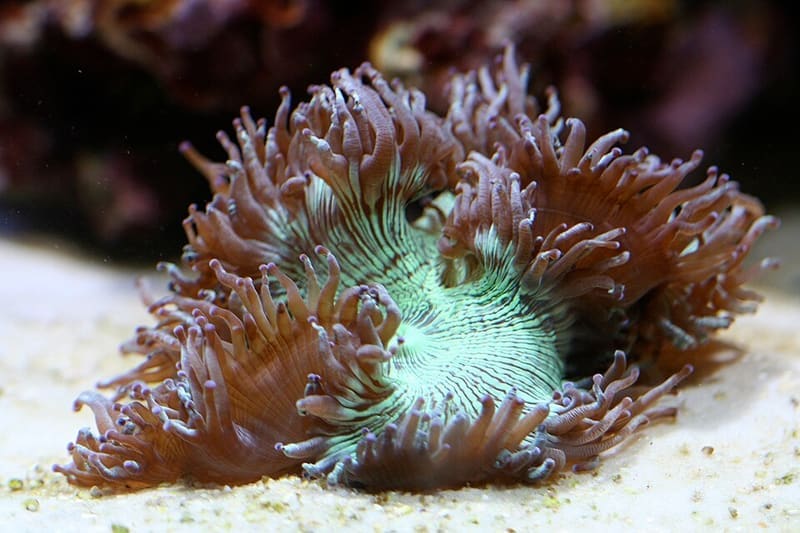
Elegance Coral (Catalaphyllia jardinei)

Elegance Coral

Catalaphyllia jardinei
saltwaterhardLPS (large-polyp stony)medium lightstings neighbours
Light
medium
Flow
low
Placement
bottom
Grows to
5–10 in

Often declines in home tanks even when everything else thrives. Not a beginner coral.
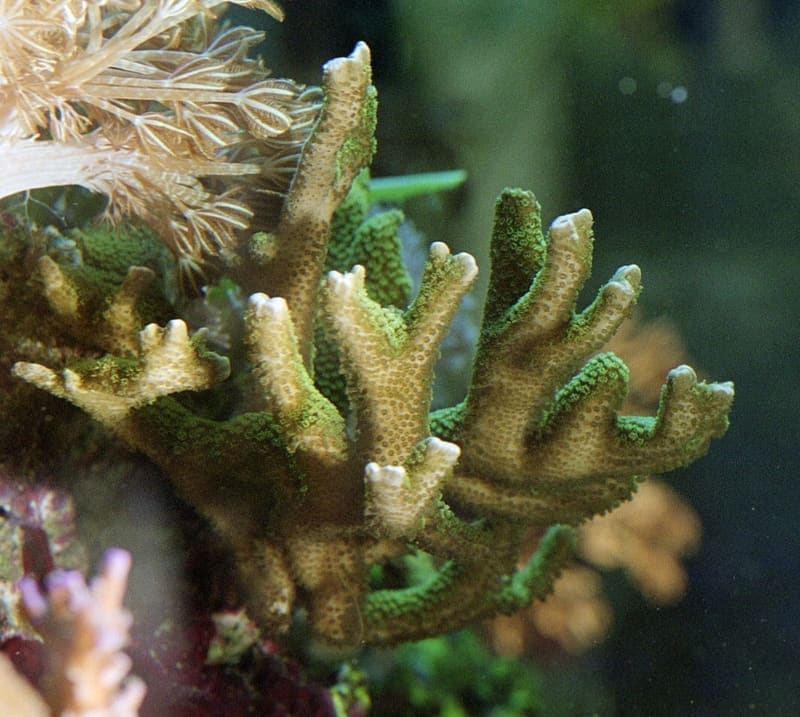
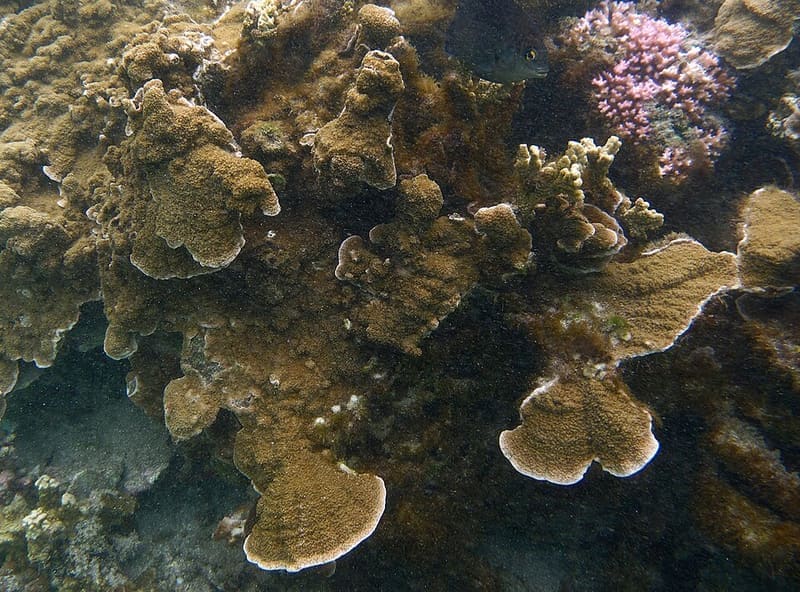
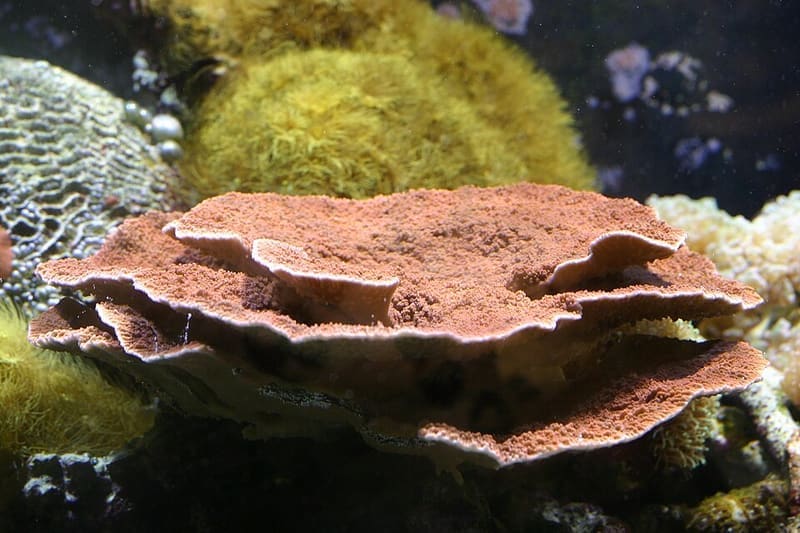
Montipora Cap (Montipora capricornis)

Montipora Cap

Montipora capricornis
saltwatermediumSPS (small-polyp stony)medium light
Light
medium
Flow
medium
Placement
mid
Grows to
5–14 in

Grows in layered plates and tolerates less light than most SPS. Plates can shade corals below them.
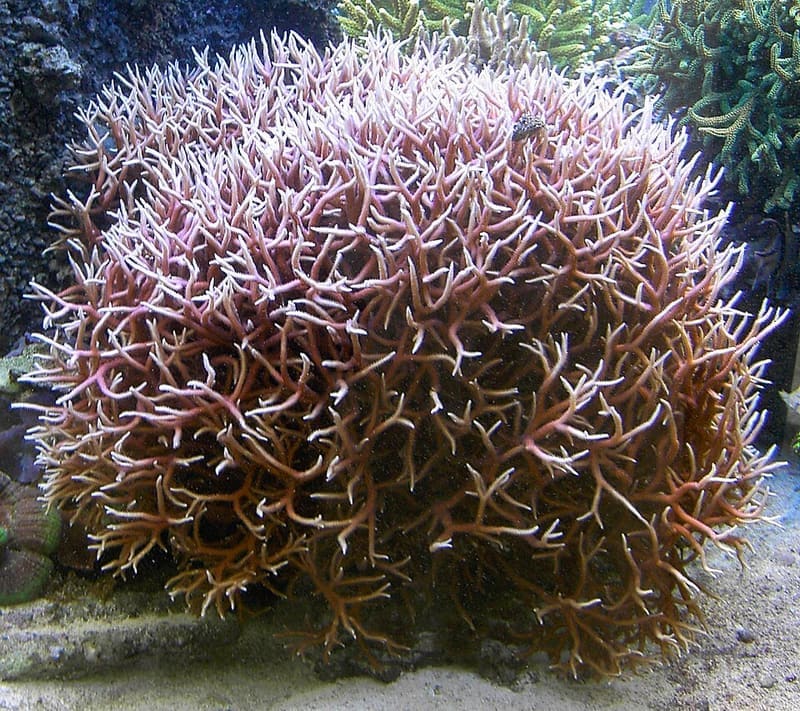
Birdsnest Coral (Seriatopora hystrix)

Birdsnest Coral

Seriatopora hystrix
saltwatermediumSPS (small-polyp stony)high light
Light
high
Flow
high
Placement
top
Grows to
4–10 in

Thin, brittle branches that break if bumped. Sensitive to swings in temperature and alkalinity.
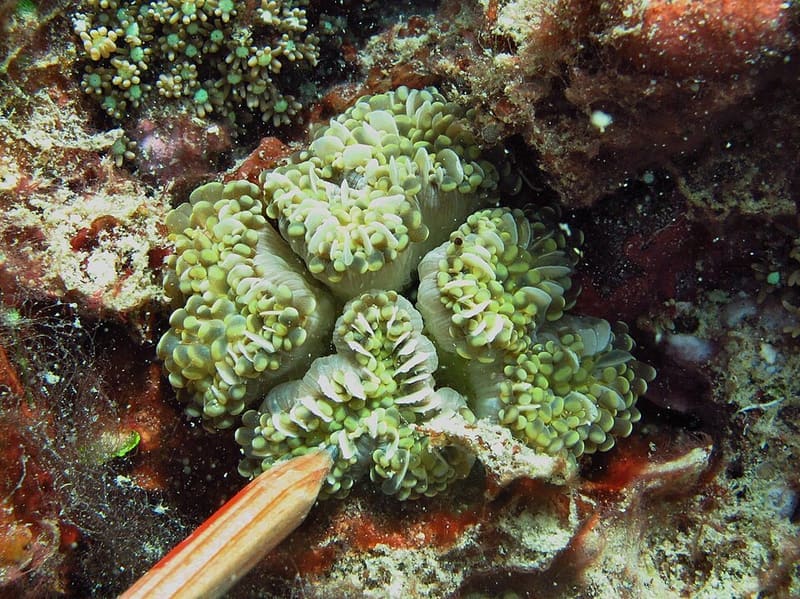
Stylophora (Stylophora pistillata)

Stylophora

Stylophora pistillata
saltwatermediumSPS (small-polyp stony)high light
Light
high
Flow
high
Placement
top
Grows to
4–8 in

Thick, stubby branches in pink and purple. A good step up from Montipora.
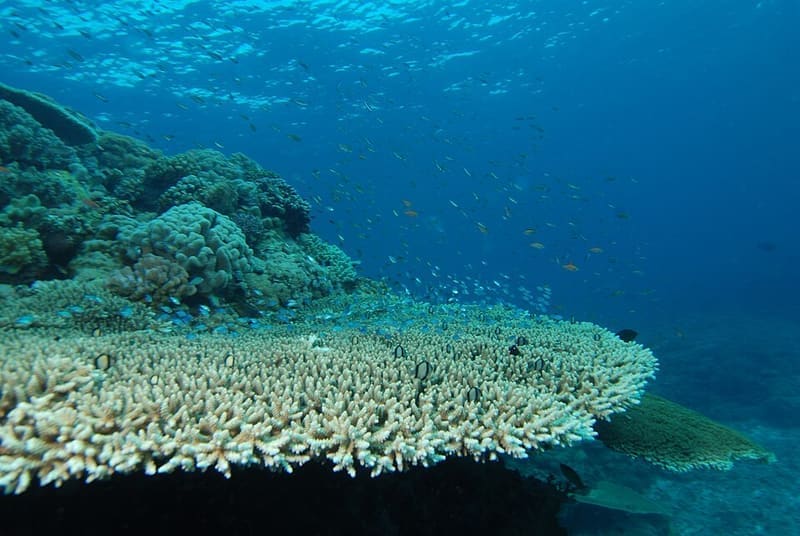
Acropora (Acropora spp.)

Acropora

Acropora spp.
saltwaterhardSPS (small-polyp stony)high light
Light
high
Flow
high
Placement
top
Grows to
4–12 in

The most demanding common coral: needs strong light, strong flow and very stable chemistry. Add only to a mature, stable tank.
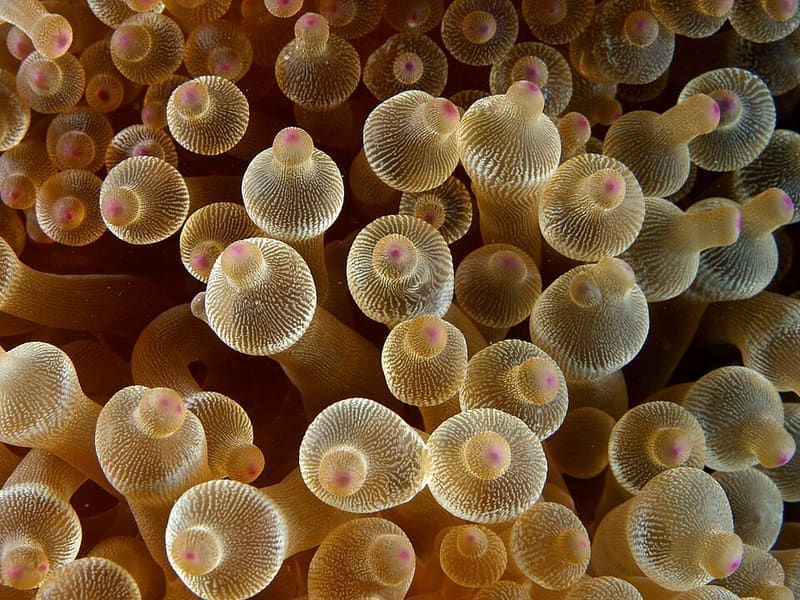
Bubble Tip Anemone (Entacmaea quadricolor)

Bubble Tip Anemone

Entacmaea quadricolor
saltwatermediumAnemonemedium lightstings neighbours
Light
medium
Flow
medium
Placement
any
Grows to
4–12 in

The easiest host anemone for clownfish. Add only to a tank six months or older, and cover powerhead intakes: it wanders.
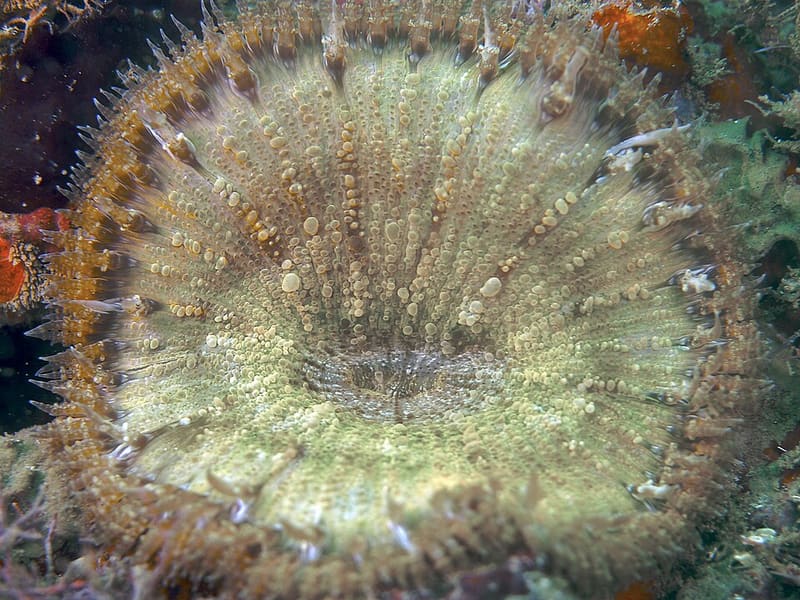
Chili Rasbora (Boraras brigittae)

Chili Rasbora

Boraras brigittae
freshwatermediumfishpeacefulshrimp-safe
Adult size
0.8 in
Min tank
5 gal
Temp
68–82 °F
pH · GH
5–7 · 1–10
Group
8+
Swims
mid

Colors best in a dense group in a planted tank with dark substrate. Leaves adult shrimp alone but will eat newborn shrimplets.

Diet: Micropredator: crushed flakes, micro pellets, baby brine shrimp
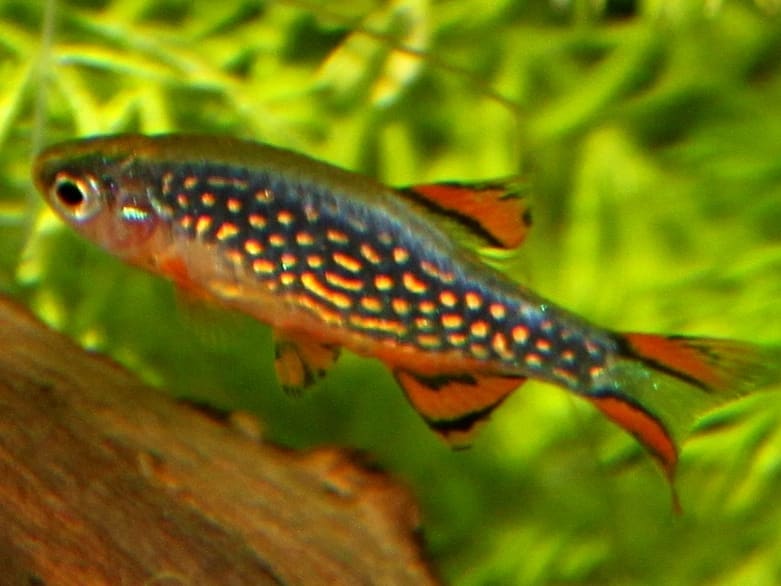
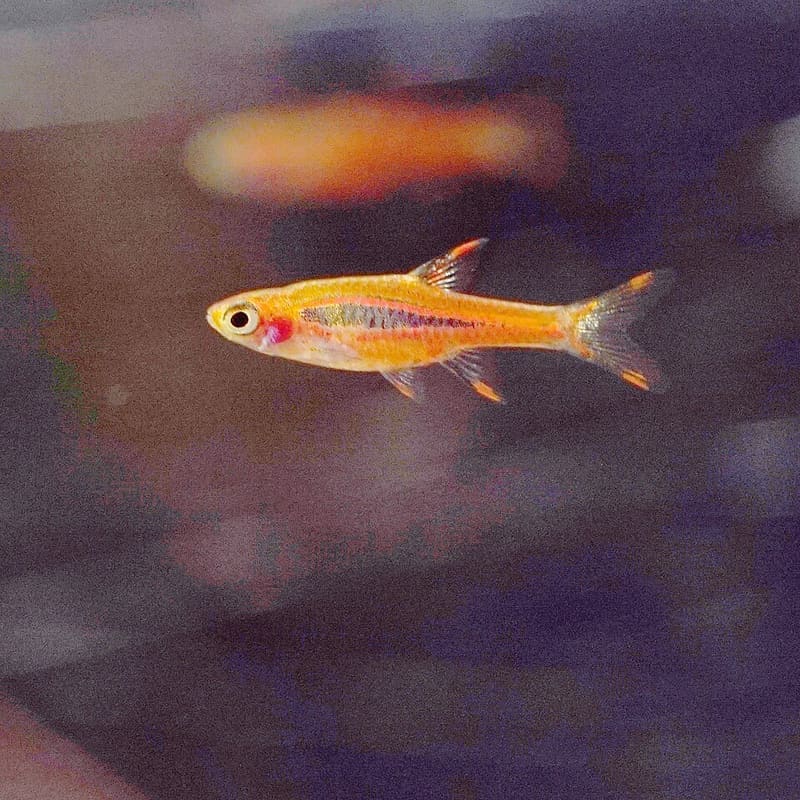
Celestial Pearl Danio (Galaxy Rasbora) (Danio margaritatus)
freshwatermediumfishpeacefulshrimp-safe
Adult size
1 in
Min tank
10 gal
Temp
68–79 °F
pH · GH
6.5–7.5 · 5–15
Group
6+
Swims
mid

Shy fish that need dense planting to feel secure; males spar but rarely cause harm. Will eat shrimplets but not adult shrimp.

Diet: Micropredator: small frozen and live foods, micro pellets
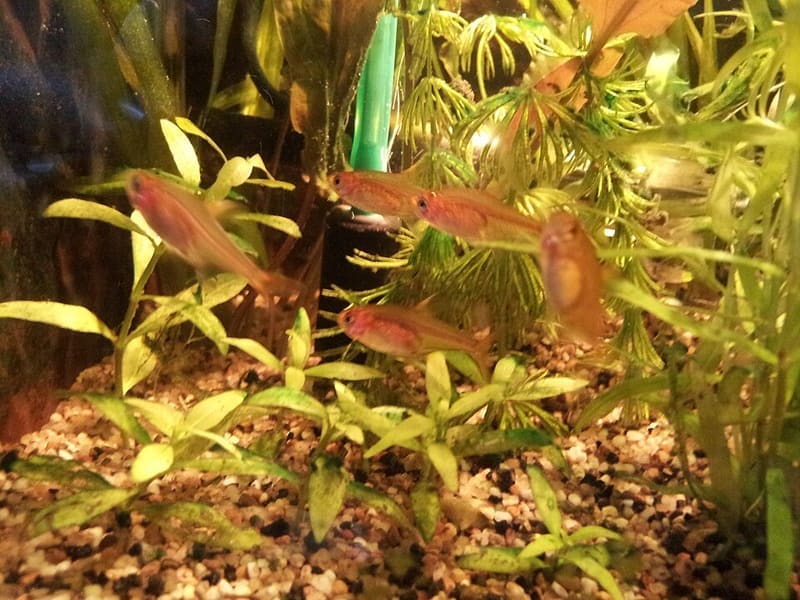
Ember Tetra (Hyphessobrycon amandae)

Ember Tetra

Hyphessobrycon amandae
freshwatereasyfishpeacefulshrimp-safe
Adult size
0.8 in
Min tank
10 gal
Temp
73–84 °F
pH · GH
5–7 · 1–12
Group
8+
Swims
mid

Borderline for shrimp: generally ignores adults but will pick off shrimplets. Best in a larger group with plenty of plants.

Diet: Omnivore: micro pellets, crushed flakes, small frozen foods
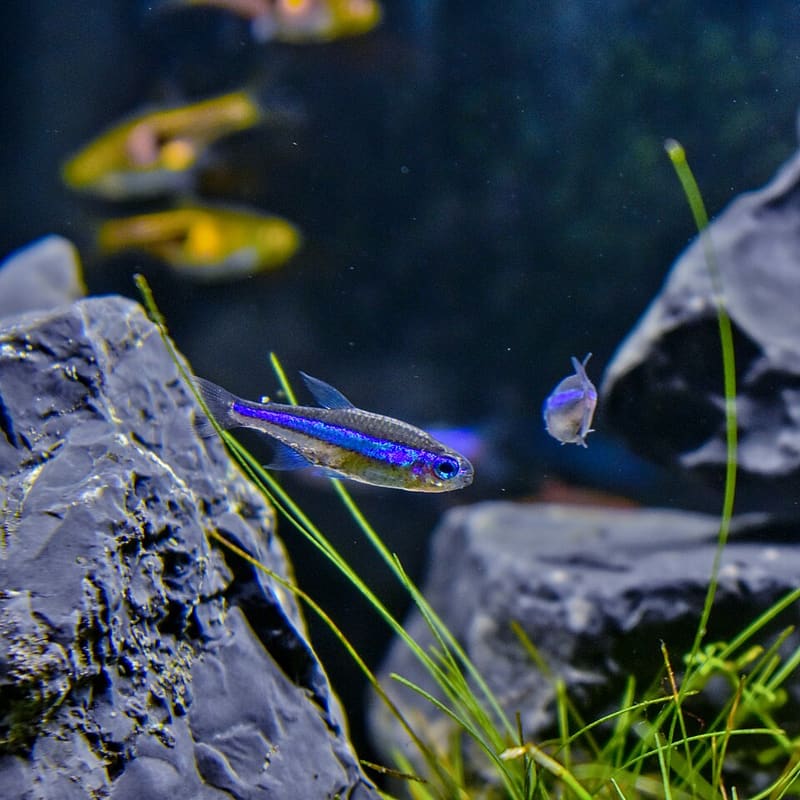
Green Neon Tetra (Paracheirodon simulans)

Green Neon Tetra

Paracheirodon simulans
freshwatermediumfishpeacefulshrimp-safe
Adult size
1 in
Min tank
10 gal
Temp
75–82 °F
pH · GH
4.5–6.5 · 1–5
Group
8+
Swims
mid

Needs soft, acidic water to do well. Usually safe with adult dwarf shrimp but will eat shrimplets.

Diet: Micropredator: small frozen foods, micro pellets, crushed flakes
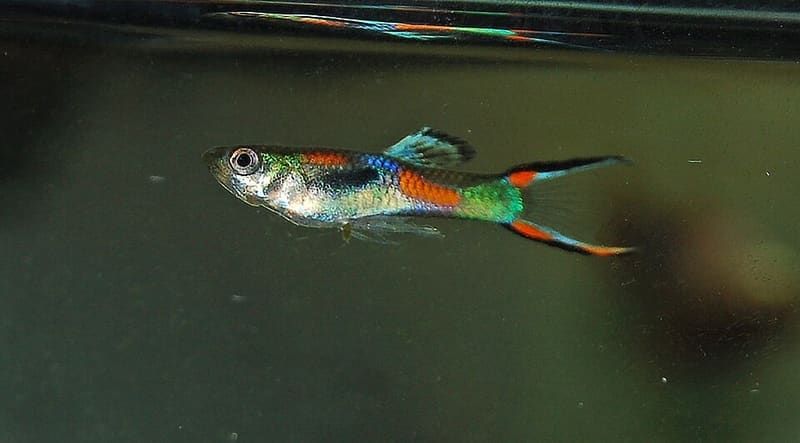
Endler's Livebearer (Poecilia wingei)

Endler's Livebearer

Poecilia wingei
freshwatereasyfishpeacefulshrimp-safe
Adult size
1 in
Min tank
10 gal
Temp
72–82 °F
pH · GH
7–8.2 · 8–20
Group
3+
Swims
top

Breeds readily, so plan for fry or keep males only. Borderline for shrimp: adults are usually left alone but shrimplets get eaten.

Diet: Omnivore: flakes, micro pellets, small frozen foods
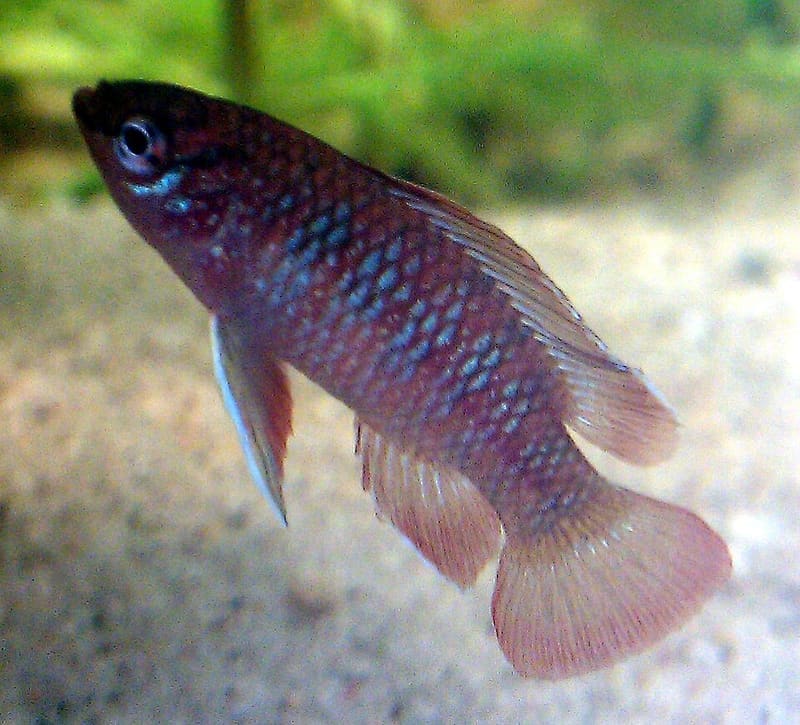
Scarlet Badis (Dario dario)

Scarlet Badis

Dario dario
freshwaterhardfishpeacefulmay eat shrimp
Adult size
0.8 in
Min tank
10 gal
Temp
68–79 °F
pH · GH
6.5–8 · 5–15
Group
1+
Swims
bottom

Keep one male with several females, as males are territorial with each other. Often refuses prepared food and will hunt shrimplets.

Diet: Carnivore: live and frozen foods; often refuses dry food
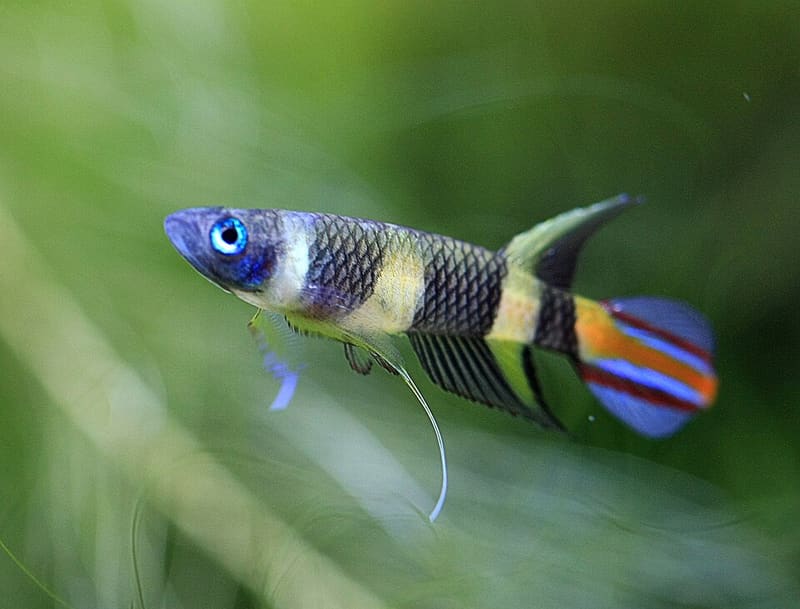
Clown Killifish (Pseudepiplatys annulatus)

Clown Killifish

Pseudepiplatys annulatus
freshwatermediumfishpeacefulmay eat shrimp
Adult size
1.4 in
Min tank
10 gal
Temp
72–79 °F
pH · GH
5–7 · 1–10
Group
3+
Swims
top

A surface dweller that jumps, so use a tight lid. Keep in a group with more females than males; eats shrimplets.

Diet: Micropredator: small live and frozen foods, floating micro pellets
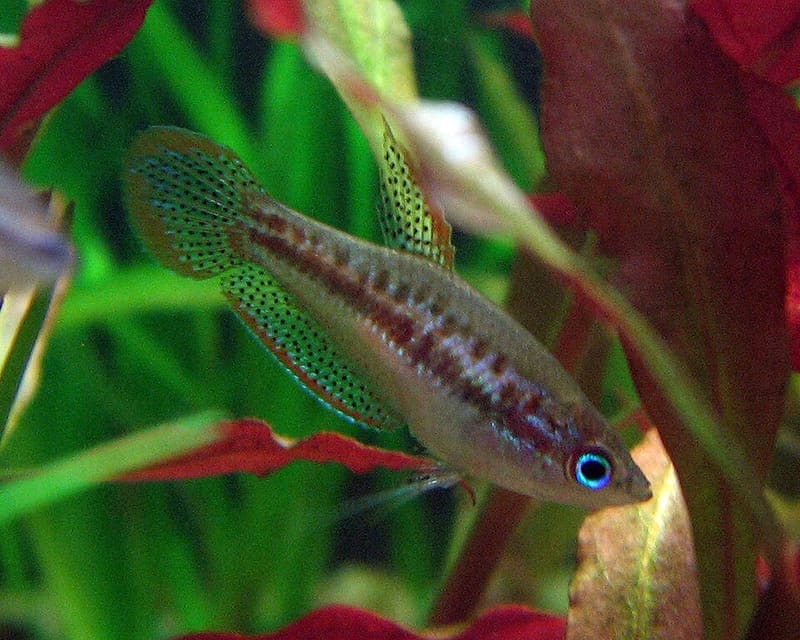
Sparkling Gourami (Trichopsis pumila)

Sparkling Gourami

Trichopsis pumila
freshwatermediumfishpeacefulmay eat shrimp
Adult size
1.5 in
Min tank
10 gal
Temp
72–82 °F
pH · GH
6–7.5 · 2–15
Group
3+
Swims
mid

Males make audible croaking sounds during displays. Prefers still water and dense plants; will hunt shrimplets.

Diet: Micropredator: small frozen foods, micro pellets, flakes
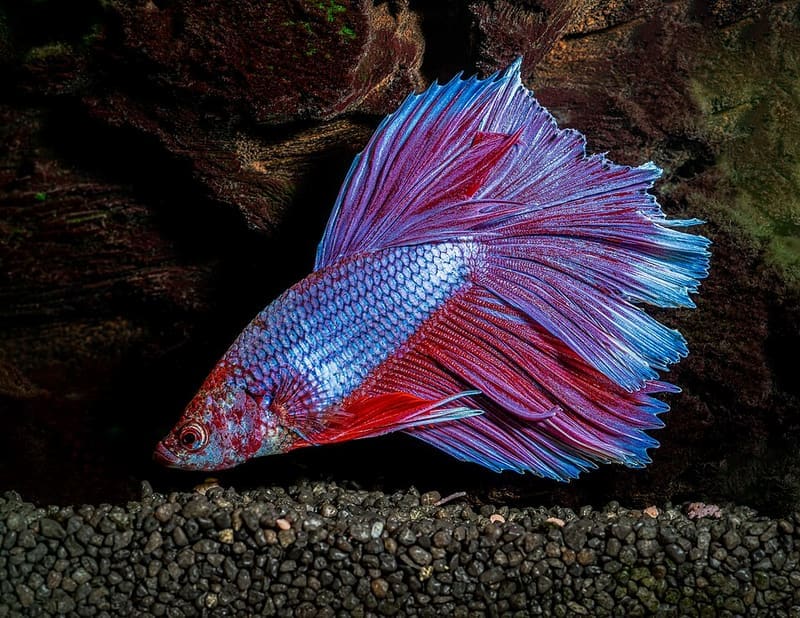
Betta (male) (Betta splendens)

Betta (male)

Betta splendens
freshwatereasyfishsemi-aggressivemay eat shrimp
Adult size
2.5 in
Min tank
5 gal
Temp
76–82 °F
pH · GH
6–7.5 · 3–15
Group
1+
Swims
top

Keep only one male per tank and avoid fin-nipping or flashy long-finned tankmates. Many bettas hunt shrimp, but individual behavior varies.

Diet: Carnivore: betta pellets, frozen bloodworms and brine shrimp
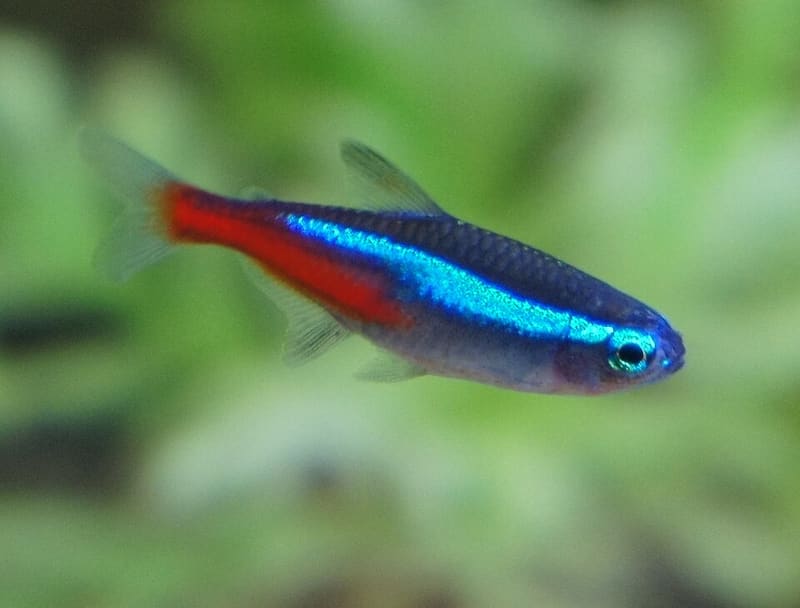
Neon Tetra (Paracheirodon innesi)

Neon Tetra

Paracheirodon innesi
freshwatereasyfishpeacefulmay eat shrimp
Adult size
1.5 in
Min tank
10 gal
Temp
70–79 °F
pH · GH
5.5–7.5 · 1–12
Group
6+
Swims
mid

Add only to a fully cycled, stable tank. Often fine with adult shrimp but will eat shrimplets, so it is marked not shrimp-safe to be cautious.

Diet: Omnivore: flakes, micro pellets, small frozen foods
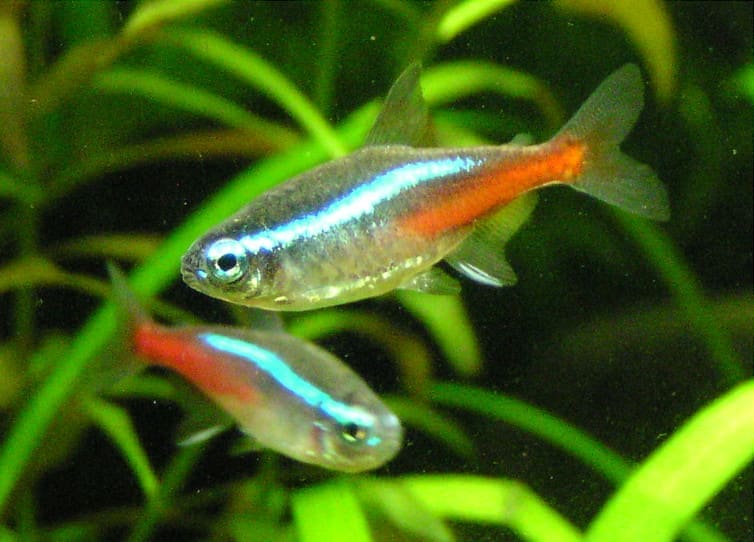
Cardinal Tetra (Paracheirodon axelrodi)

Cardinal Tetra

Paracheirodon axelrodi
freshwatermediumfishpeacefulmay eat shrimp
Adult size
2 in
Min tank
20 gal
Temp
73–81 °F
pH · GH
5–7 · 1–8
Group
8+
Swims
mid

Prefers warmer, softer water than neon tetras. Looks best in large groups under subdued light.

Diet: Omnivore: flakes, micro pellets, frozen foods
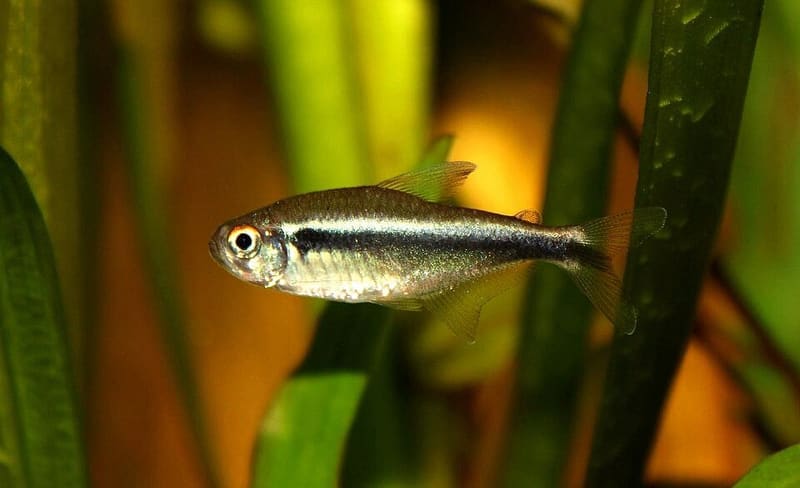
Black Neon Tetra (Hyphessobrycon herbertaxelrodi)

Black Neon Tetra

Hyphessobrycon herbertaxelrodi
freshwatereasyfishpeacefulmay eat shrimp
Adult size
1.5 in
Min tank
15 gal
Temp
73–81 °F
pH · GH
5.5–7.5 · 1–12
Group
6+
Swims
mid

Hardy and active tetra for community tanks. Keep in a group to reduce stress.

Diet: Omnivore: flakes, micro pellets, frozen foods
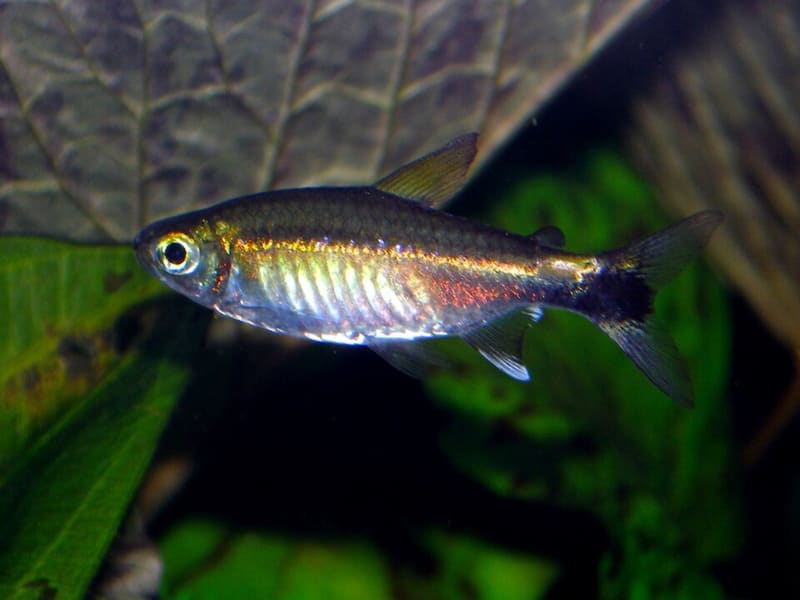
Rummy Nose Tetra (Hemigrammus bleheri)

Rummy Nose Tetra

Hemigrammus bleheri
freshwatermediumfishpeacefulmay eat shrimp
Adult size
2 in
Min tank
20 gal
Temp
75–82 °F
pH · GH
5.5–7 · 1–12
Group
8+
Swims
mid

Tight schooling behavior shows best in a long tank. A faded red nose often signals stress. H. rhodostomus and Petitella georgiae are sold under the same name.

Diet: Omnivore: flakes, micro pellets, frozen foods
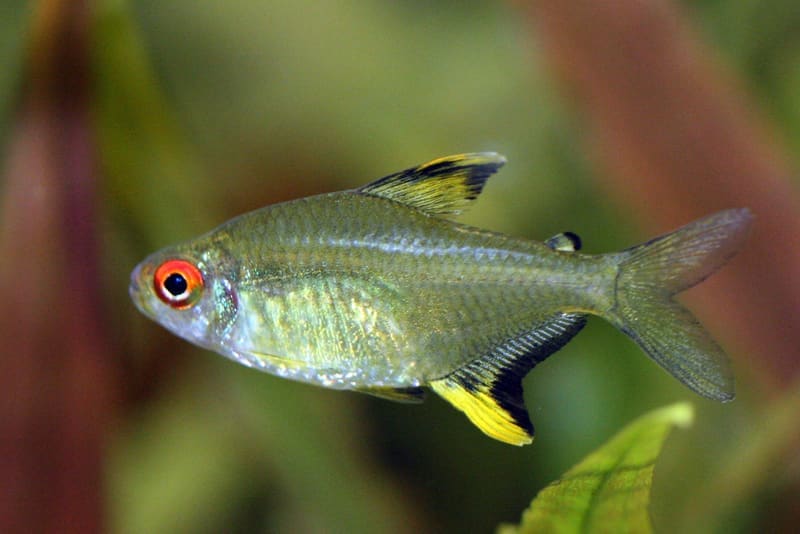
Lemon Tetra (Hyphessobrycon pulchripinnis)

Lemon Tetra

Hyphessobrycon pulchripinnis
freshwatereasyfishpeacefulmay eat shrimp
Adult size
2 in
Min tank
20 gal
Temp
73–82 °F
pH · GH
5.5–7.5 · 2–12
Group
8+
Swims
mid

Yellow color intensifies with a varied diet and dark surroundings. Keep in a group; males display to each other.

Diet: Omnivore: flakes, pellets, frozen foods
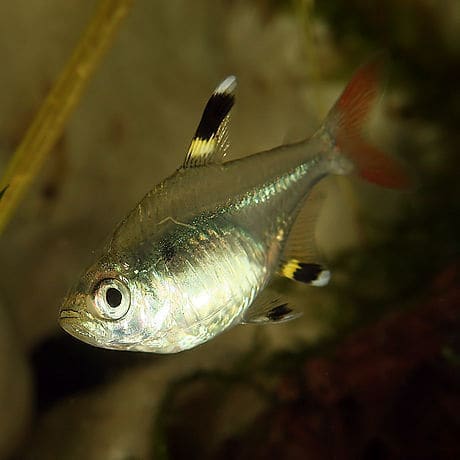
X-Ray Tetra (Pristella maxillaris)

X-Ray Tetra

Pristella maxillaris
freshwatereasyfishpeacefulmay eat shrimp
Adult size
1.8 in
Min tank
15 gal
Temp
75–82 °F
pH · GH
6–8 · 2–15
Group
6+
Swims
mid

A very hardy tetra that tolerates a wide pH range. Good for beginners.

Diet: Omnivore: flakes, pellets, frozen foods
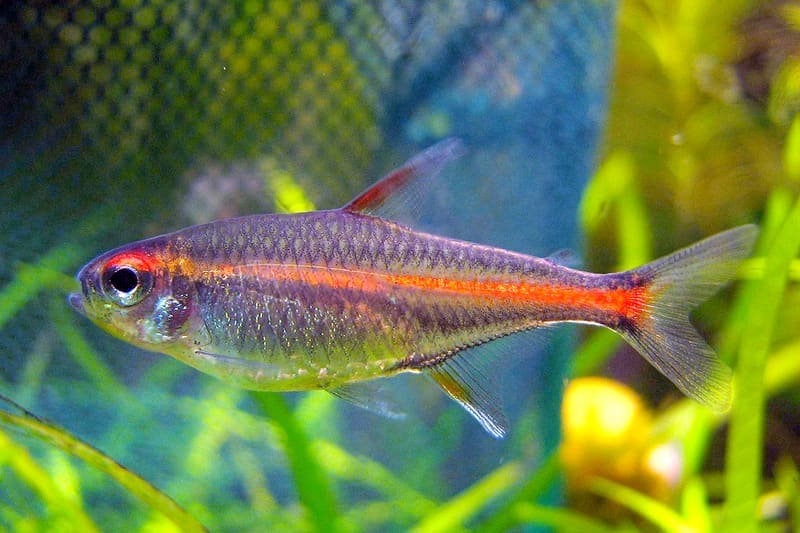
Glowlight Tetra (Hemigrammus erythrozonus)

Glowlight Tetra

Hemigrammus erythrozonus
freshwatereasyfishpeacefulmay eat shrimp
Adult size
1.5 in
Min tank
15 gal
Temp
75–82 °F
pH · GH
5.5–7.5 · 2–15
Group
6+
Swims
mid

The orange stripe glows best over dark substrate. Peaceful and hardy in a group.

Diet: Omnivore: flakes, micro pellets, frozen foods
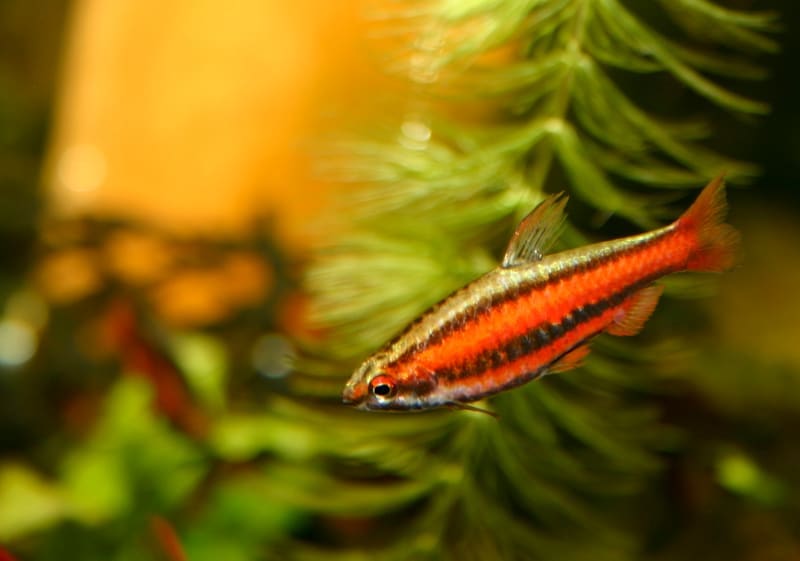
Coral Red Pencilfish (Nannostomus mortenthaleri)

Coral Red Pencilfish

Nannostomus mortenthaleri
freshwaterhardfishpeacefulmay eat shrimp
Adult size
1.4 in
Min tank
20 gal
Temp
73–82 °F
pH · GH
4.5–7 · 1–8
Group
6+
Swims
top

Needs soft, acidic water and small, frequent meals. Males spar but rarely injure each other.

Diet: Micropredator: small live and frozen foods, micro pellets
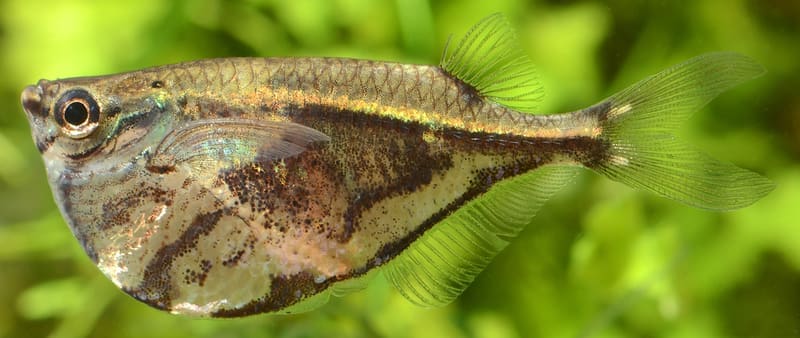
Marbled Hatchetfish (Carnegiella strigata)

Marbled Hatchetfish

Carnegiella strigata
freshwatermediumfishpeacefulmay eat shrimp
Adult size
1.4 in
Min tank
20 gal
Temp
75–82 °F
pH · GH
5.5–7 · 1–8
Group
6+
Swims
top

Excellent jumpers, so a tight lid is essential. Feeds only from the surface.

Diet: Insectivore: floating flakes, small frozen and live foods
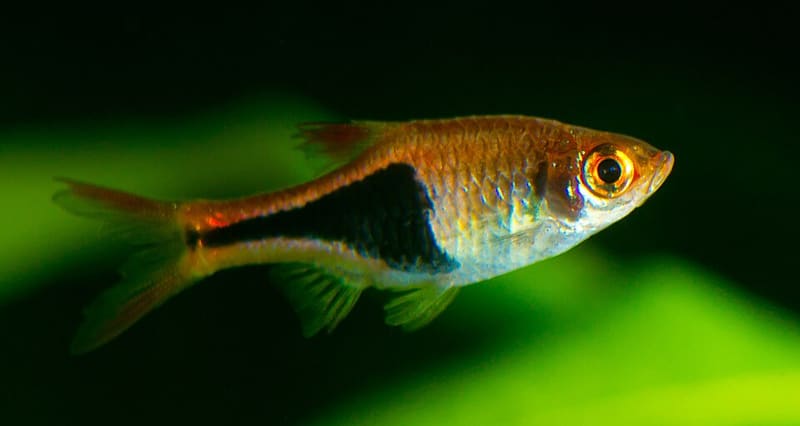
Harlequin Rasbora (Trigonostigma heteromorpha)

Harlequin Rasbora

Trigonostigma heteromorpha
freshwatereasyfishpeacefulmay eat shrimp
Adult size
1.8 in
Min tank
20 gal
Temp
72–81 °F
pH · GH
6–7.5 · 2–12
Group
8+
Swims
mid

Spawns on the underside of broad leaves such as crypts. Keep in a group to show natural schooling.

Diet: Omnivore: flakes, micro pellets, frozen foods
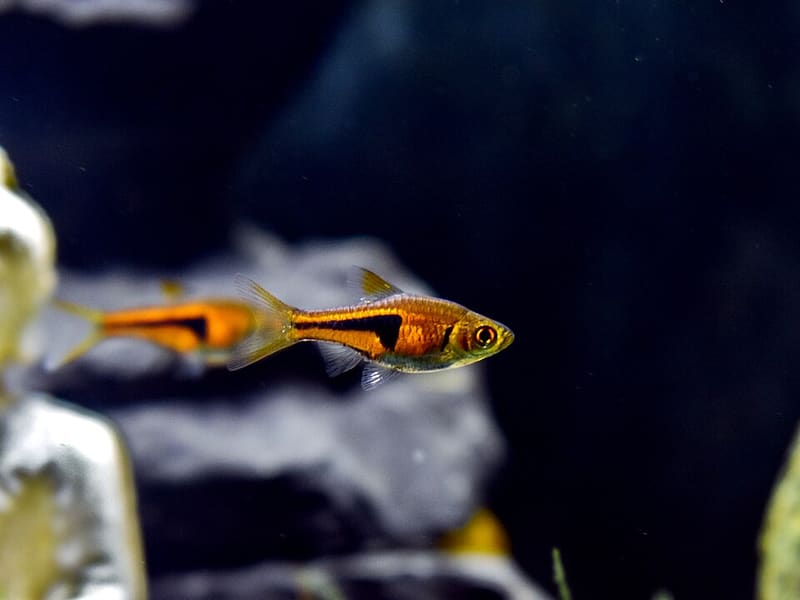
Lambchop Rasbora (Trigonostigma espei)

Lambchop Rasbora

Trigonostigma espei
freshwatermediumfishpeacefulmay eat shrimp
Adult size
1.2 in
Min tank
10 gal
Temp
73–82 °F
pH · GH
6–7.5 · 2–12
Group
8+
Swims
mid

A smaller relative of the harlequin rasbora suited to planted tanks. Keep in groups for confidence and color.

Diet: Omnivore: micro pellets, flakes, small frozen foods
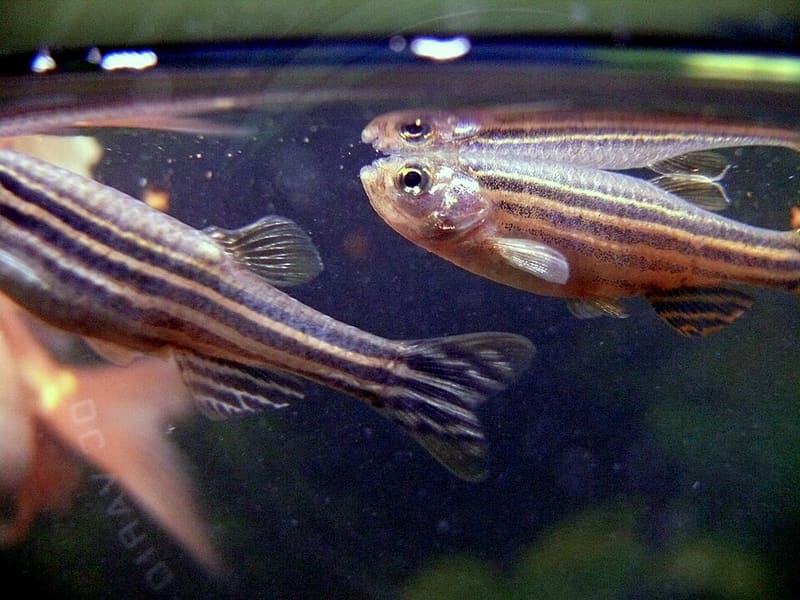
Zebra Danio (Danio rerio)

Zebra Danio

Danio rerio
freshwatereasyfishpeacefulmay eat shrimp
Adult size
2 in
Min tank
20 gal
Temp
64–78 °F
pH · GH
6.5–8 · 5–19
Group
6+
Swims
top

Very active and needs swimming length and a lid. Can nip fins of slow, long-finned fish if kept in small groups.

Diet: Omnivore: flakes, pellets, frozen foods
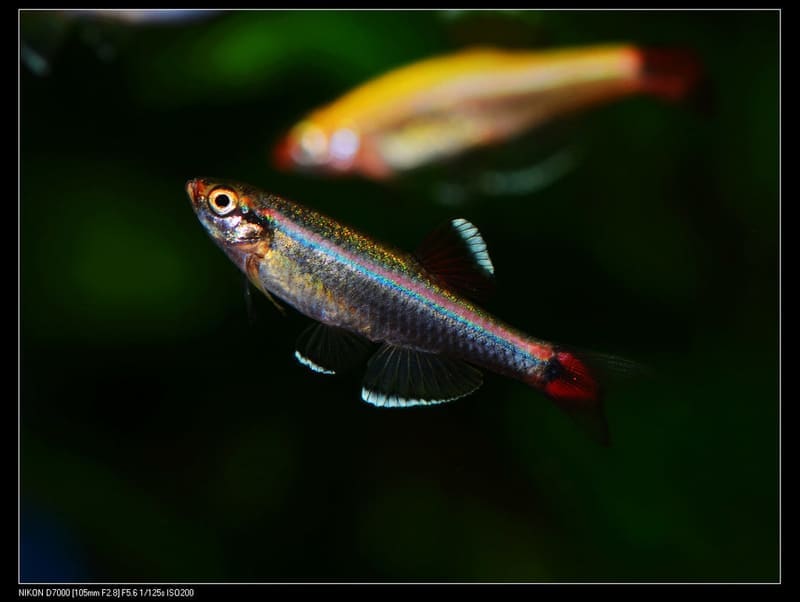
White Cloud Mountain Minnow (Tanichthys albonubes)

White Cloud Mountain Minnow

Tanichthys albonubes
freshwatereasyfishpeacefulmay eat shrimp
Adult size
1.5 in
Min tank
10 gal
Temp
60–72 °F
pH · GH
6–8 · 5–19
Group
6+
Swims
mid

A cool-water fish that does well in unheated rooms. Avoid pairing with tropical species that need warmer water.

Diet: Omnivore: flakes, micro pellets, frozen foods
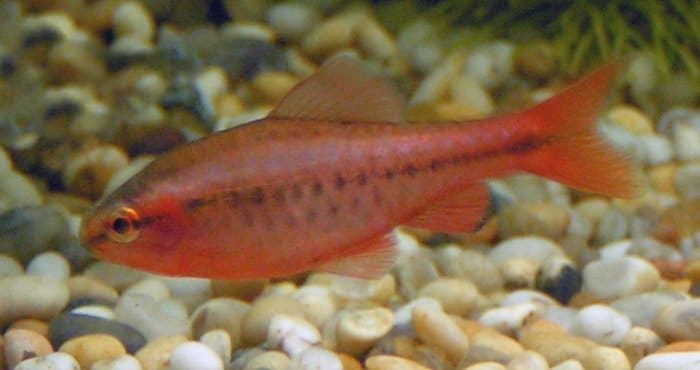
Cherry Barb (Puntius titteya)

Cherry Barb

Puntius titteya
freshwatereasyfishpeacefulmay eat shrimp
Adult size
2 in
Min tank
20 gal
Temp
73–81 °F
pH · GH
6–7.5 · 4–15
Group
6+
Swims
mid

One of the most peaceful barbs; males turn deep red. Keep more females than males.

Diet: Omnivore: flakes, pellets, frozen foods, some vegetable matter
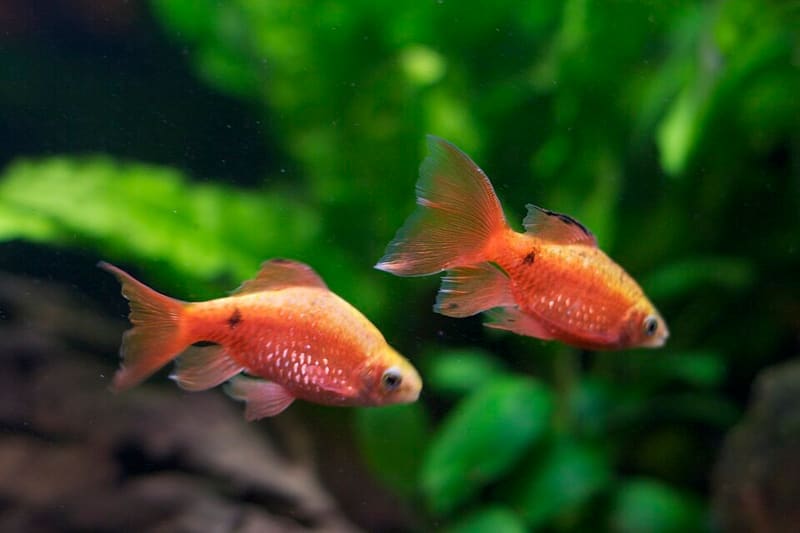
Rosy Barb (Pethia conchonius)

Rosy Barb

Pethia conchonius
freshwatereasyfishpeacefulmay eat shrimp
Adult size
4 in
Min tank
30 gal
Temp
64–77 °F
pH · GH
6–8 · 5–19
Group
6+
Swims
mid

Active and may nibble soft or fine-leaved plants. Prefers cooler water and a large group to limit fin-nipping.

Diet: Omnivore: flakes, pellets, vegetables, frozen foods
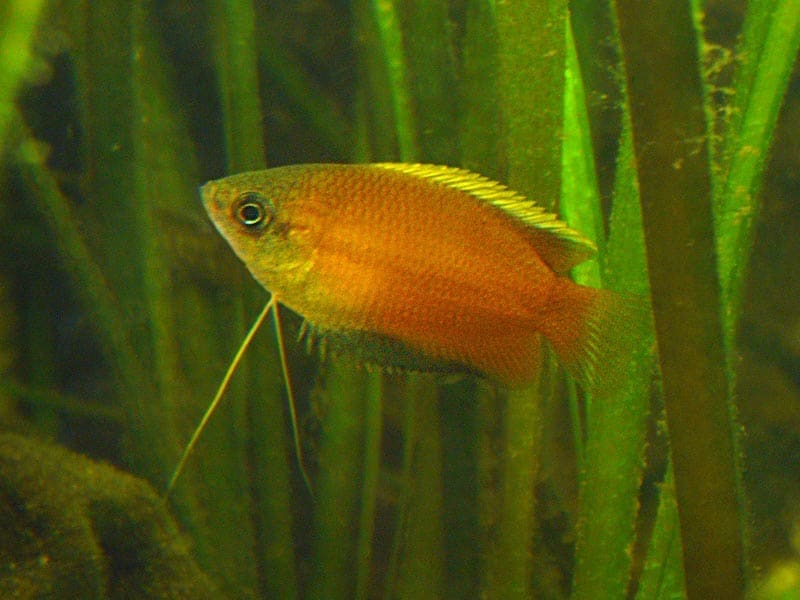
Honey Gourami (Trichogaster chuna)

Honey Gourami

Trichogaster chuna
freshwatereasyfishpeacefulmay eat shrimp
Adult size
2 in
Min tank
10 gal
Temp
72–82 °F
pH · GH
6–7.5 · 4–15
Group
1+
Swims
top

A gentle gourami that can be kept singly, in a pair or in a small group. Appreciates floating plants and calm water.

Diet: Omnivore: flakes, micro pellets, frozen foods
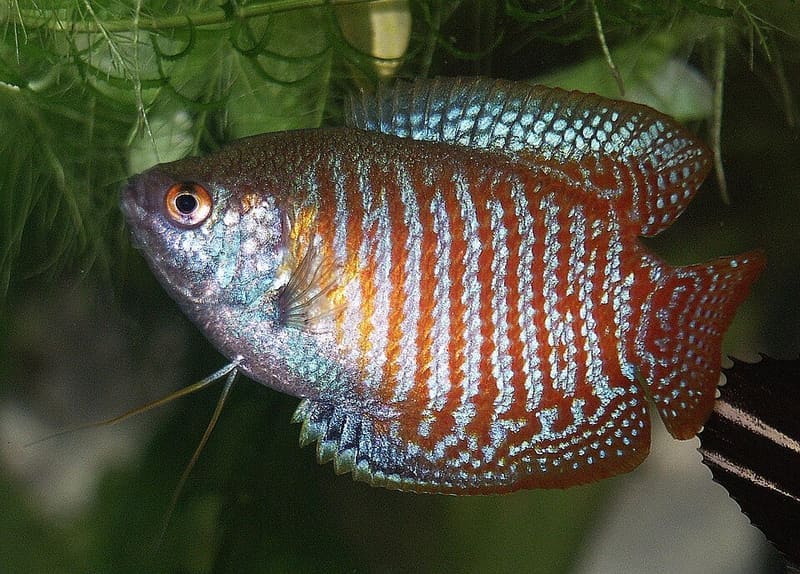
Dwarf Gourami (Trichogaster lalius)

Dwarf Gourami

Trichogaster lalius
freshwatermediumfishsemi-aggressivemay eat shrimp
Adult size
3 in
Min tank
15 gal
Temp
72–82 °F
pH · GH
6–7.5 · 4–15
Group
1+
Swims
top

Keep only one male per tank, as males are territorial. Buy from a reputable source because this species is prone to dwarf gourami iridovirus.

Diet: Omnivore: flakes, pellets, frozen foods
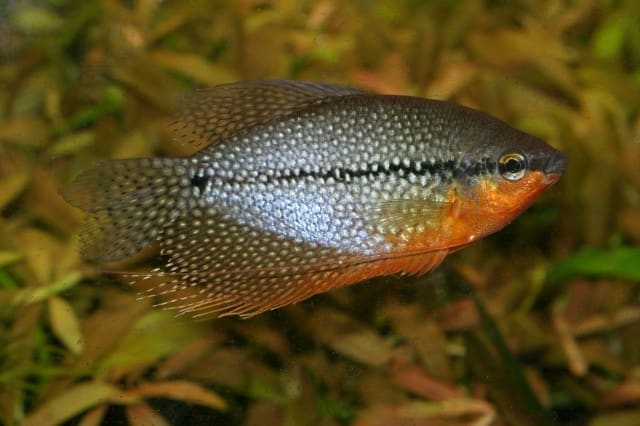
Pearl Gourami (Trichopodus leerii)

Pearl Gourami

Trichopodus leerii
freshwatereasyfishpeacefulmay eat shrimp
Adult size
4.5 in
Min tank
30 gal
Temp
77–82 °F
pH · GH
6–7.5 · 2–15
Group
1+
Swims
top

A calm centerpiece fish; keep one male or a male with females. Will eat shrimp and very small fish.

Diet: Omnivore: flakes, pellets, frozen foods
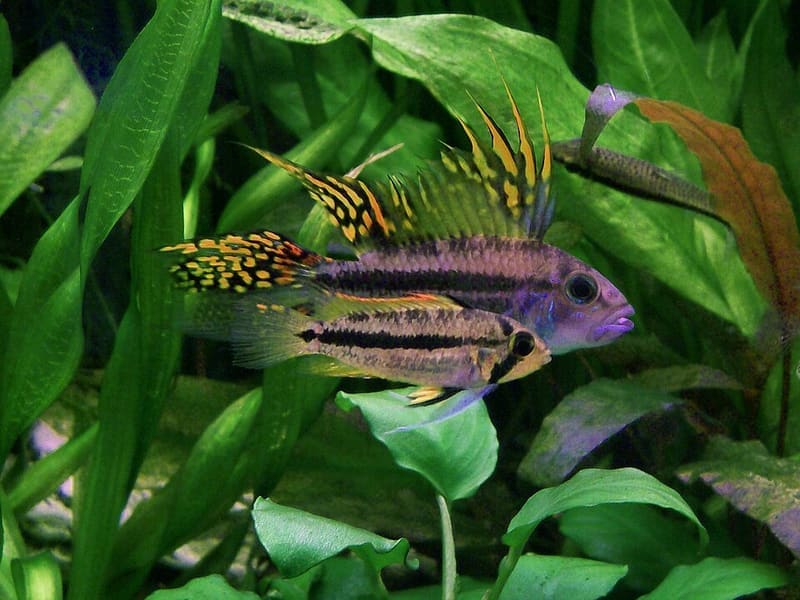
Cockatoo Dwarf Cichlid (Apistogramma cacatuoides)

Cockatoo Dwarf Cichlid

Apistogramma cacatuoides
freshwatermediumfishsemi-aggressivemay eat shrimp
Adult size
3.5 in
Min tank
20 gal
Temp
75–82 °F
pH · GH
6–7.5 · 2–15
Group
1+
Swims
bottom

Keep as a pair or one male with females, with caves for each. Becomes territorial when breeding and will eat shrimp.

Diet: Carnivore: frozen foods, quality pellets
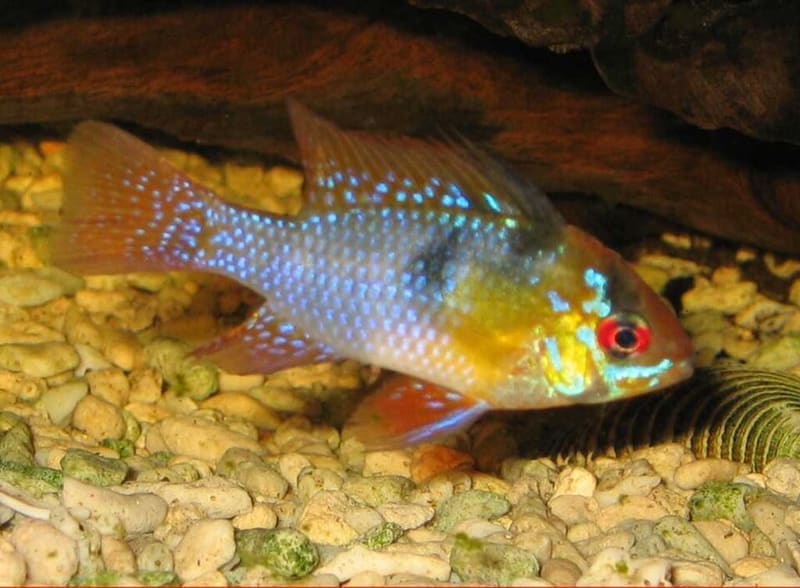
German Blue Ram (Mikrogeophagus ramirezi)

German Blue Ram

Mikrogeophagus ramirezi
freshwaterhardfishpeacefulmay eat shrimp
Adult size
2.5 in
Min tank
20 gal
Temp
80–86 °F
pH · GH
5–7 · 1–6
Group
1+
Swims
bottom

Needs warm, soft, very clean water, so check that tankmates tolerate the heat. Territorial when spawning.

Diet: Omnivore: frozen foods, small sinking pellets
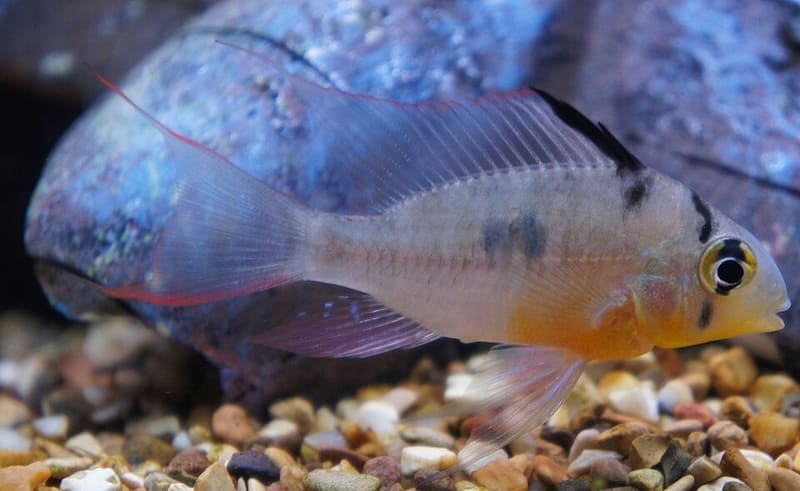
Bolivian Ram (Mikrogeophagus altispinosus)

Bolivian Ram

Mikrogeophagus altispinosus
freshwatereasyfishpeacefulmay eat shrimp
Adult size
3.5 in
Min tank
30 gal
Temp
72–79 °F
pH · GH
6–7.5 · 2–15
Group
1+
Swims
bottom

Hardier than the German blue ram and peaceful for a cichlid. Sifts sand for food.

Diet: Omnivore: sinking pellets, frozen foods
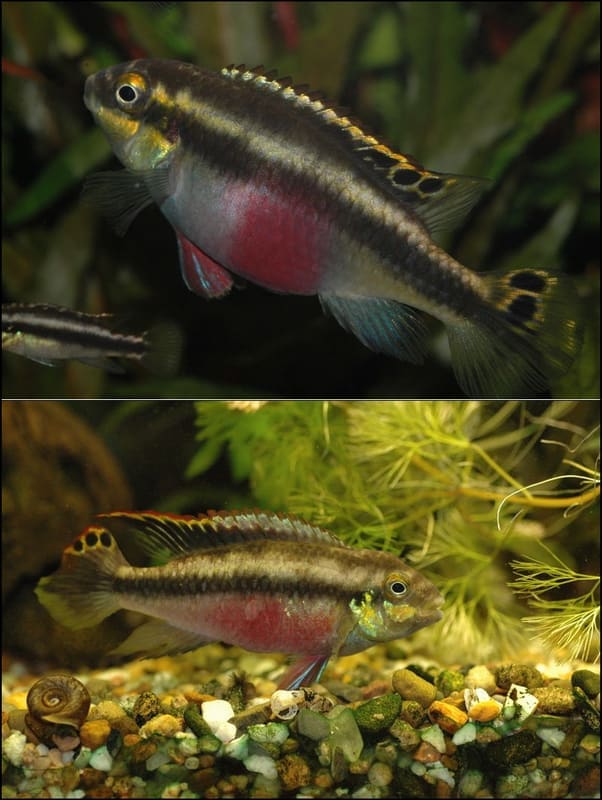
Kribensis (Pelvicachromis pulcher)

Kribensis

Pelvicachromis pulcher
freshwatereasyfishsemi-aggressivemay eat shrimp
Adult size
4 in
Min tank
30 gal
Temp
75–82 °F
pH · GH
6–7.5 · 2–15
Group
1+
Swims
bottom

Provide caves; pairs become aggressive while guarding fry. Digs around plant bases, so anchor plants well.

Diet: Omnivore: sinking pellets, flakes, frozen foods
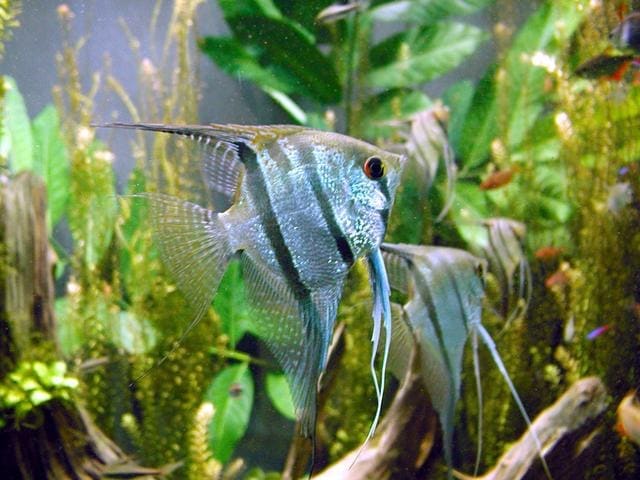
Freshwater Angelfish (Pterophyllum scalare)

Freshwater Angelfish

Pterophyllum scalare
freshwatermediumfishsemi-aggressivemay eat shrimp
Adult size
6 in
Min tank
30 gal
Temp
75–84 °F
pH · GH
6–7.5 · 3–15
Group
1+
Swims
mid

Needs a tall tank; grows taller than it is long. Adults will eat neon tetras and other small fish as well as shrimp.

Diet: Omnivore: flakes, pellets, frozen foods
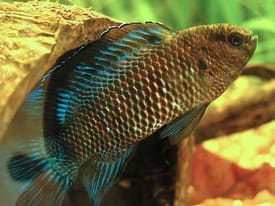
Blue Badis (Badis badis)

Blue Badis

Badis badis
freshwatermediumfishsemi-aggressivemay eat shrimp
Adult size
3 in
Min tank
20 gal
Temp
68–79 °F
pH · GH
6–7.5 · 5–15
Group
1+
Swims
bottom

Males are territorial, so keep one per tank and provide caves. Often refuses dry foods.

Diet: Carnivore: live and frozen foods
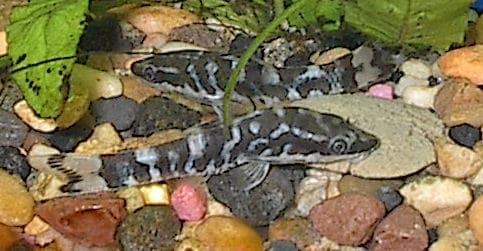
Otocinclus (Otocinclus spp.)

Otocinclus

Otocinclus spp.
freshwatermediumfishpeacefulshrimp-safe
Adult size
1.6 in
Min tank
10 gal
Temp
72–79 °F
pH · GH
6–7.5 · 2–15
Group
6+
Swims
all

Add only to a mature tank with established biofilm, as new arrivals are often underfed. Among the safest fish for shrimp.

Diet: Herbivore: biofilm, soft algae, algae wafers, blanched vegetables
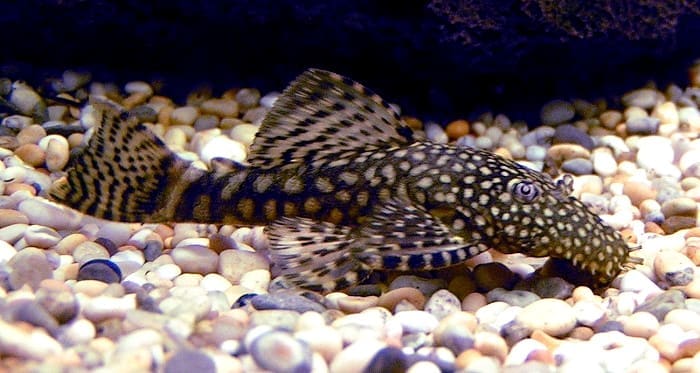
Bristlenose Pleco (Ancistrus spp.)

Bristlenose Pleco

Ancistrus spp.
freshwatereasyfishpeacefulshrimp-safe
Adult size
5 in
Min tank
20 gal
Temp
73–81 °F
pH · GH
6–7.8 · 2–20
Group
1+
Swims
bottom

Provide driftwood and caves; males can be territorial with each other. Produces a lot of waste, so filter well.

Diet: Herbivore: algae wafers, vegetables, driftwood
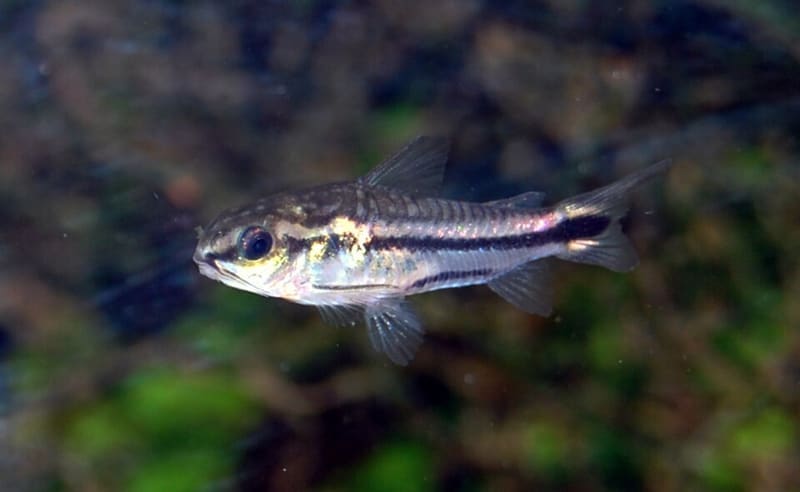
Pygmy Corydoras (Corydoras pygmaeus)

Pygmy Corydoras

Corydoras pygmaeus
freshwatermediumfishpeacefulshrimp-safe
Adult size
1 in
Min tank
10 gal
Temp
72–79 °F
pH · GH
6–7.5 · 2–12
Group
6+
Swims
bottom

Unlike most cories, often schools in midwater as well as on the bottom. Use soft sand and keep in a group.

Diet: Omnivore: micro pellets, small sinking foods, frozen foods
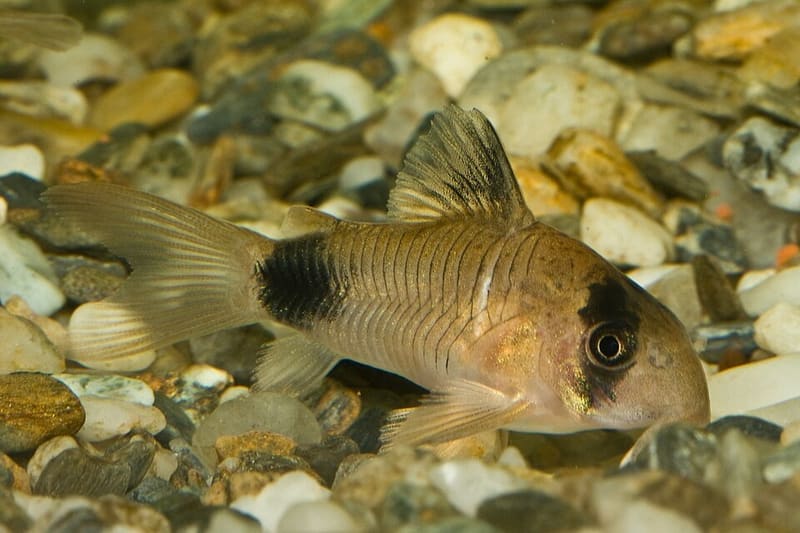
Panda Corydoras (Corydoras panda)

Panda Corydoras

Corydoras panda
freshwatereasyfishpeacefulshrimp-safe
Adult size
2 in
Min tank
20 gal
Temp
68–77 °F
pH · GH
6–7.5 · 2–12
Group
6+
Swims
bottom

Prefers cooler water than many tropical fish. Does not hunt adult shrimp but will eat shrimplets it finds.

Diet: Omnivore: sinking pellets, wafers, frozen foods
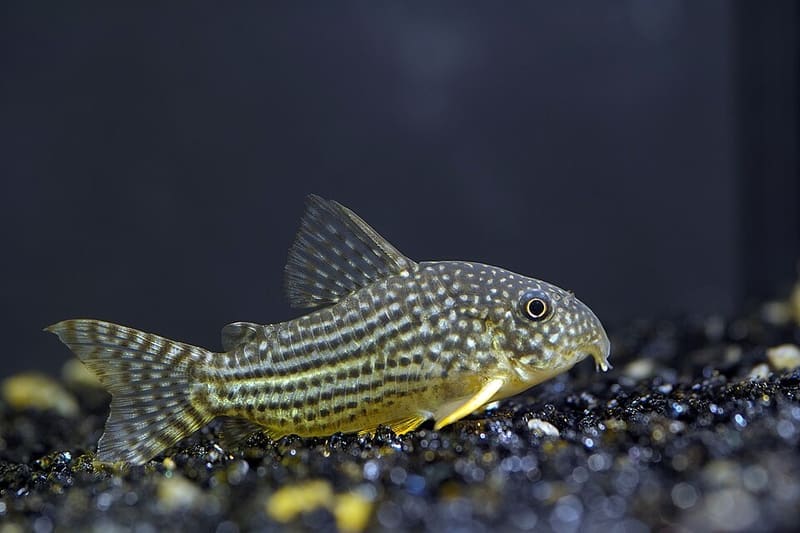
Sterbai Corydoras (Corydoras sterbai)

Sterbai Corydoras

Corydoras sterbai
freshwatereasyfishpeacefulshrimp-safe
Adult size
2.6 in
Min tank
20 gal
Temp
75–82 °F
pH · GH
6–7.5 · 2–15
Group
6+
Swims
bottom

Tolerates warmer water, making it a common companion for rams and discus. Keep on soft sand in a group.

Diet: Omnivore: sinking pellets, wafers, frozen foods
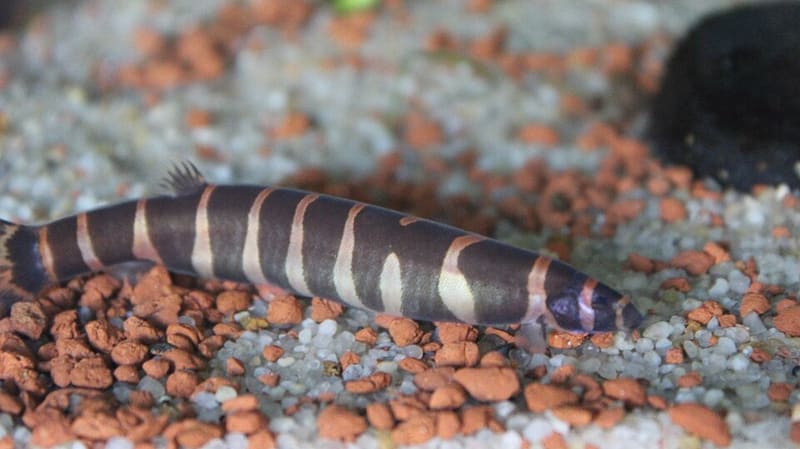
Kuhli Loach (Pangio kuhlii)

Kuhli Loach

Pangio kuhlii
freshwatereasyfishpeacefulshrimp-safe
Adult size
4 in
Min tank
20 gal
Temp
75–84 °F
pH · GH
5.5–7 · 1–10
Group
6+
Swims
bottom

Nocturnal and burrows in soft sand; cover filter intakes. Borderline for shrimp: ignores adults but eats shrimplets. Most sold as kuhli are Pangio semicincta.

Diet: Omnivore: sinking pellets, frozen bloodworms, wafers
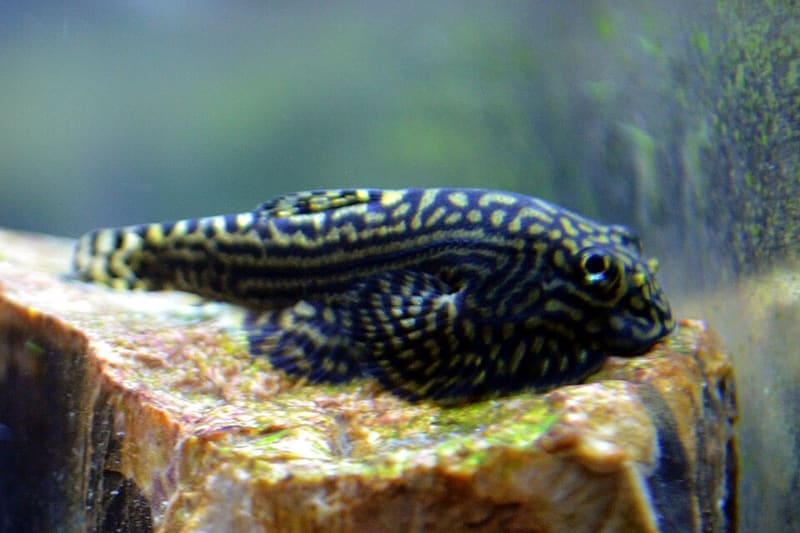
Reticulated Hillstream Loach (Sewellia lineolata)
freshwatermediumfishpeacefulshrimp-safe
Adult size
2.5 in
Min tank
20 gal
Temp
68–75 °F
pH · GH
6.5–7.5 · 5–12
Group
3+
Swims
bottom

Needs cool, highly oxygenated water with strong flow and smooth rocks. Not suited to warm tropical setups.

Diet: Herbivore: biofilm, algae, algae wafers, small frozen foods
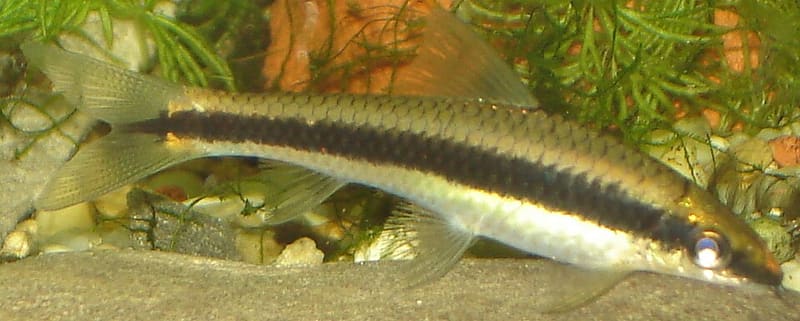
Siamese Algae Eater (Crossocheilus oblongus)

Siamese Algae Eater

Crossocheilus oblongus
freshwatereasyfishpeacefulmay eat shrimp
Adult size
6 in
Min tank
30 gal
Temp
75–80 °F
pH · GH
6.5–7.5 · 5–12
Group
1+
Swims
all

Eats black beard algae mainly when young and grows larger than many expect. Often confused with the aggressive Chinese algae eater; may eat shrimplets.

Diet: Omnivore: algae, wafers, pellets, frozen foods
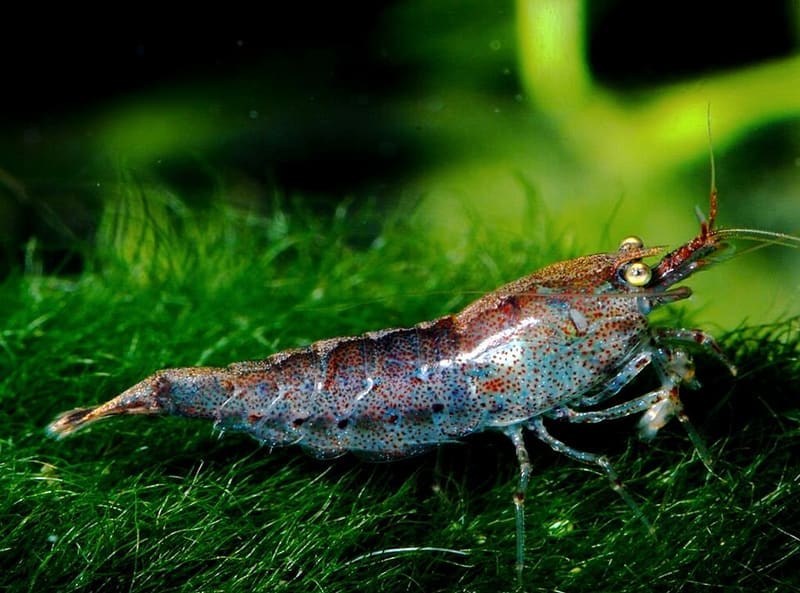
Cherry Shrimp (Neocaridina davidi)

Cherry Shrimp

Neocaridina davidi
freshwatereasyshrimppeaceful
Adult size
1.2 in
Min tank
5 gal
Temp
65–80 °F
pH · GH
6.5–8 · 4–14
Group
10+
Swims
bottom

Hardy and breeds readily in a mature planted tank. Sensitive to copper and sudden changes in water parameters.

Diet: Omnivore: biofilm, algae, shrimp pellets, blanched vegetables
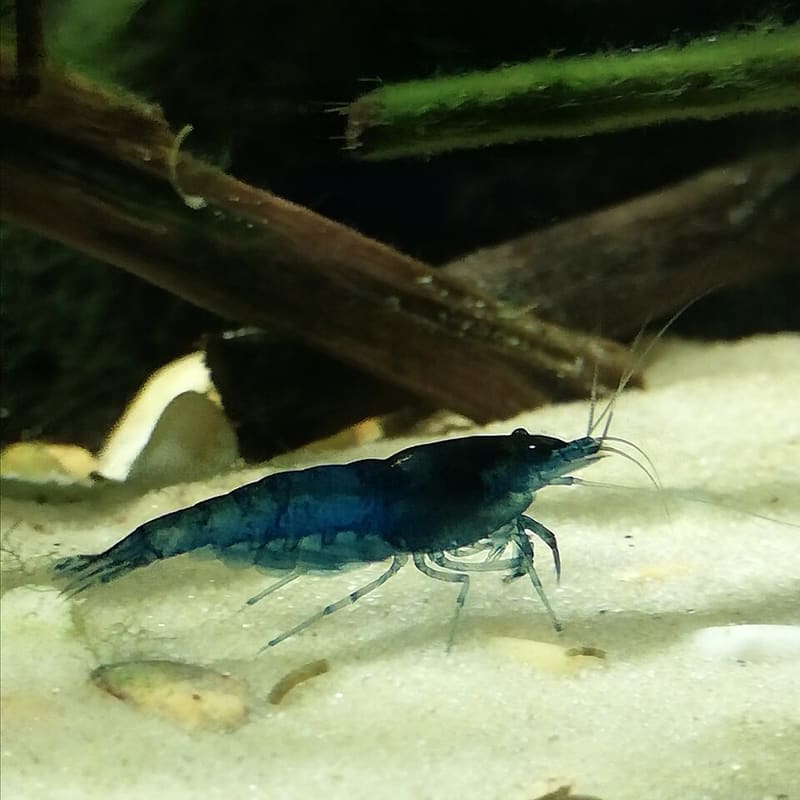
Blue Dream Shrimp (Neocaridina davidi 'Blue Dream')

Blue Dream Shrimp

Neocaridina davidi 'Blue Dream'
freshwatereasyshrimppeaceful
Adult size
1.2 in
Min tank
5 gal
Temp
65–80 °F
pH · GH
6.5–8 · 4–14
Group
10+
Swims
bottom

A color variety of the same species as cherry shrimp. Keep separate from other Neocaridina colors or offspring revert to brown.

Diet: Omnivore: biofilm, algae, shrimp pellets, blanched vegetables
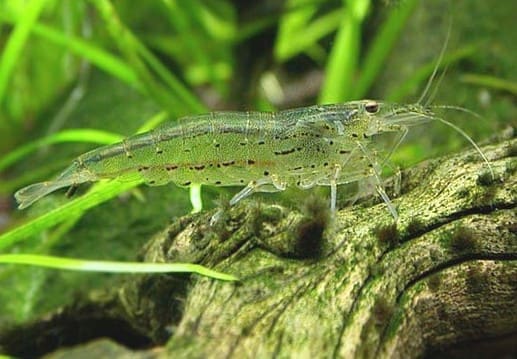
Amano Shrimp (Caridina multidentata)

Amano Shrimp

Caridina multidentata
freshwatereasyshrimppeaceful
Adult size
2 in
Min tank
10 gal
Temp
65–80 °F
pH · GH
6.5–7.8 · 4–14
Group
3+
Swims
bottom

An excellent algae eater that will not breed in freshwater, as larvae need brackish water. May pick at moss if underfed.

Diet: Omnivore: algae, biofilm, pellets, leftovers
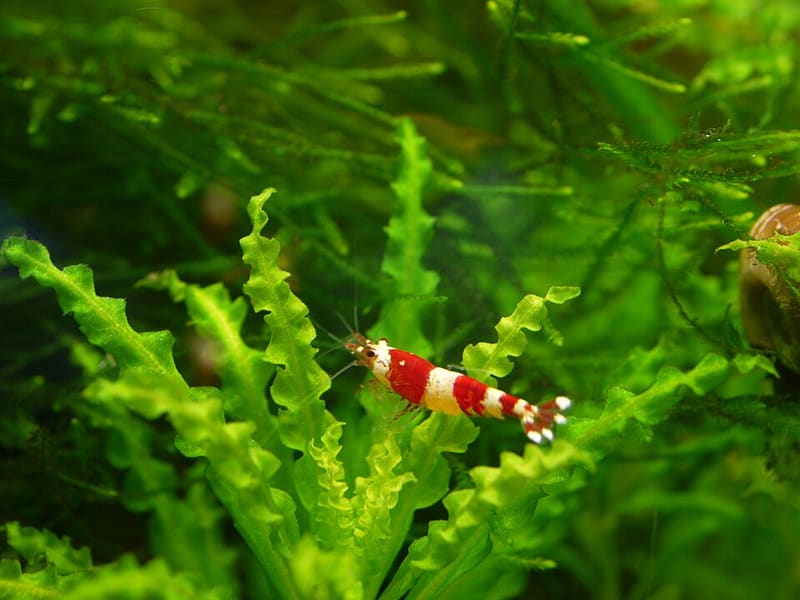
Crystal Red Shrimp (Caridina logemanni)

Crystal Red Shrimp

Caridina logemanni
freshwaterhardshrimppeaceful
Adult size
1 in
Min tank
10 gal
Temp
66–74 °F
pH · GH
5.8–6.8 · 4–6
Group
10+
Swims
bottom

Needs soft, acidic water, usually RO water remineralized and an active buffering substrate. Keep water cool and stable.

Diet: Omnivore: biofilm, specialized shrimp foods, leaf litter
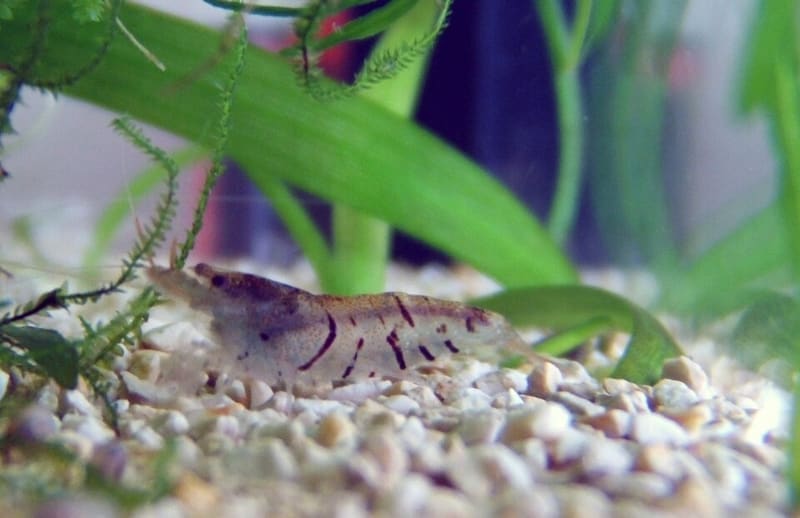
Tiger Shrimp (Caridina mariae)

Tiger Shrimp

Caridina mariae
freshwatermediumshrimppeaceful
Adult size
1 in
Min tank
10 gal
Temp
65–76 °F
pH · GH
6.5–7.5 · 4–8
Group
10+
Swims
bottom

Can hybridize with crystal red shrimp, so keep them apart if breeding pure lines. Prefers stable, moderately soft water.

Diet: Omnivore: biofilm, algae, shrimp pellets
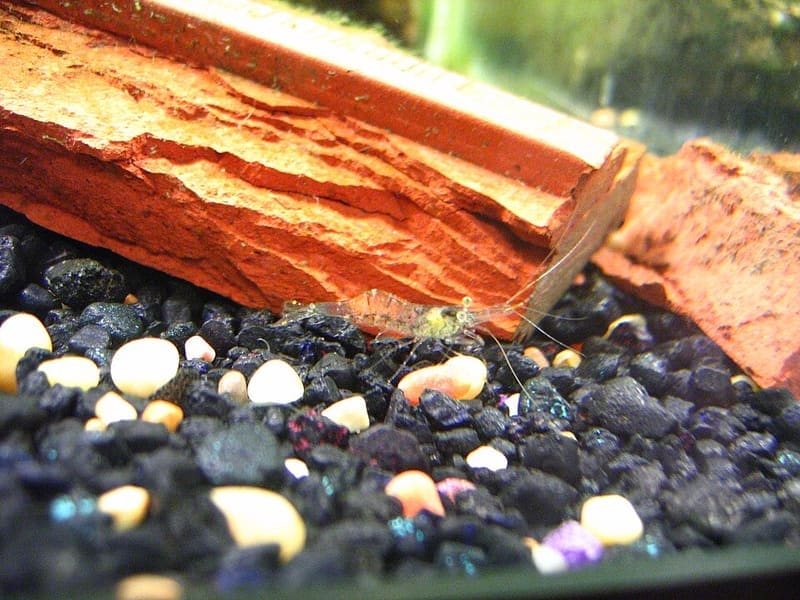
Ghost Shrimp (Palaemonetes paludosus)

Ghost Shrimp

Palaemonetes paludosus
freshwatereasyshrimppeaceful
Adult size
1.5 in
Min tank
5 gal
Temp
65–82 °F
pH · GH
7–8 · 4–15
Group
3+
Swims
bottom

Opportunistic and may prey on dwarf shrimp, shrimplets and fry. Often sold as feeders, so quarantine new arrivals.

Diet: Omnivore: pellets, leftovers, detritus
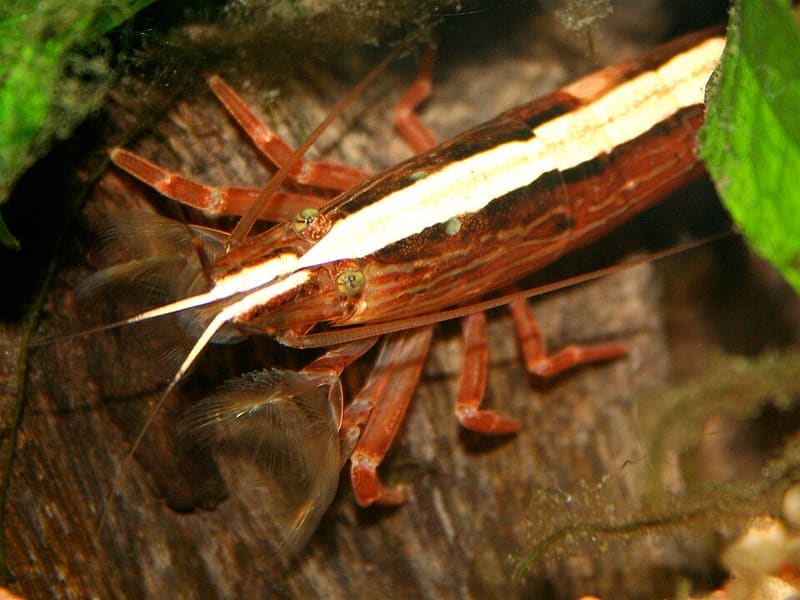
Bamboo Shrimp (Atyopsis moluccensis)

Bamboo Shrimp

Atyopsis moluccensis
freshwatermediumshrimppeaceful
Adult size
3 in
Min tank
20 gal
Temp
72–82 °F
pH · GH
6.5–7.5 · 3–15
Group
1+
Swims
mid

Needs steady current in a mature tank to catch food with its fans. A shrimp constantly picking at the substrate is likely underfed.

Diet: Filter feeder: suspended particles, powdered foods
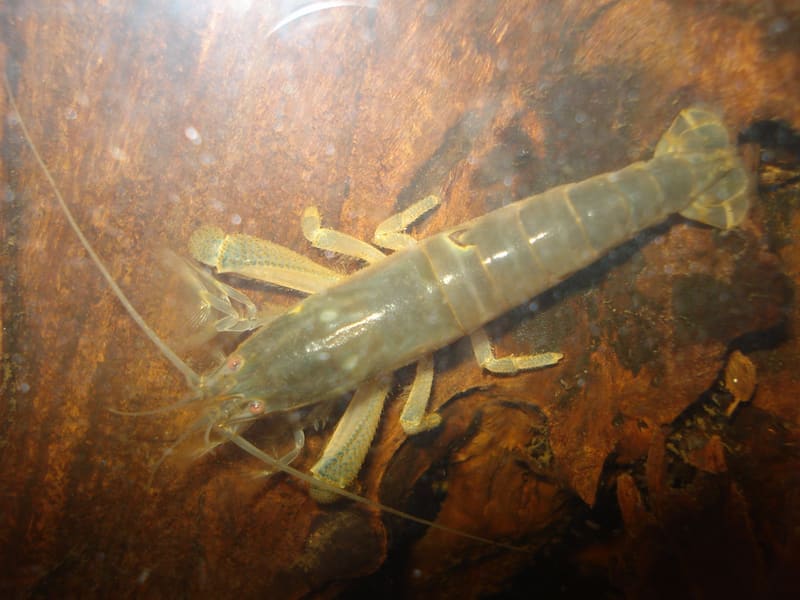
Vampire Shrimp (Atya gabonensis)

Vampire Shrimp

Atya gabonensis
freshwatermediumshrimppeaceful
Adult size
5 in
Min tank
20 gal
Temp
75–84 °F
pH · GH
6.5–7.8 · 6–15
Group
1+
Swims
bottom

Despite the name it is a gentle filter feeder. Provide flow and hiding places; it is shy until settled.

Diet: Filter feeder: suspended particles, powdered foods
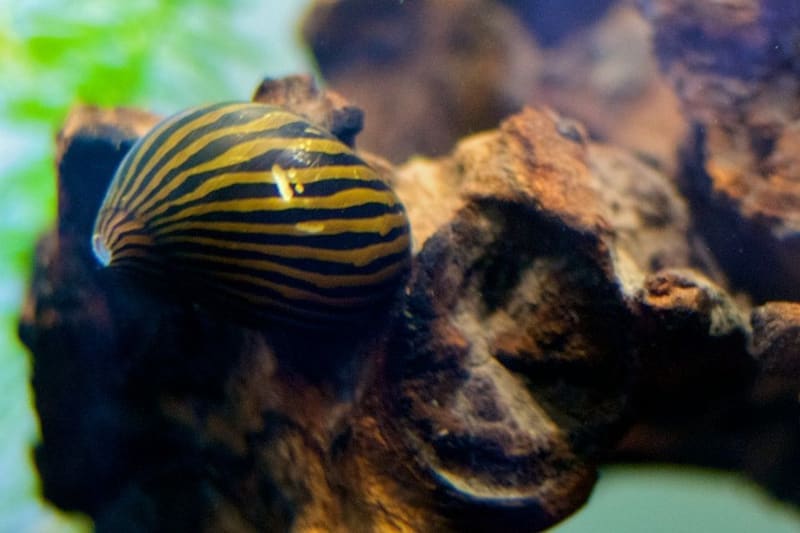
Nerite Snail (Neritina natalensis)

Nerite Snail

Neritina natalensis
freshwatereasysnailpeaceful
Adult size
1 in
Min tank
5 gal
Temp
72–82 °F
pH · GH
7–8.5 · 6–15
Group
1+
Swims
all

A top algae eater that cannot breed in freshwater, though it leaves white eggs on hardscape. Needs hard water for shell health.

Diet: Herbivore: algae, biofilm, algae wafers
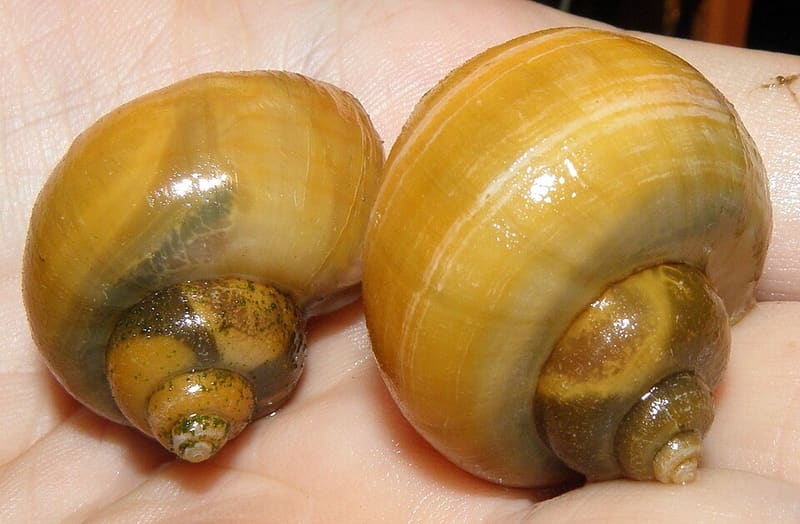
Mystery Snail (Pomacea diffusa)

Mystery Snail

Pomacea diffusa
freshwatereasysnailpeaceful
Adult size
2 in
Min tank
10 gal
Temp
68–82 °F
pH · GH
7–8.2 · 8–18
Group
1+
Swims
all

Lays egg clutches above the waterline; remove them to control numbers. Mostly leaves healthy plants alone if well fed.

Diet: Omnivore: algae, leftovers, wafers, vegetables
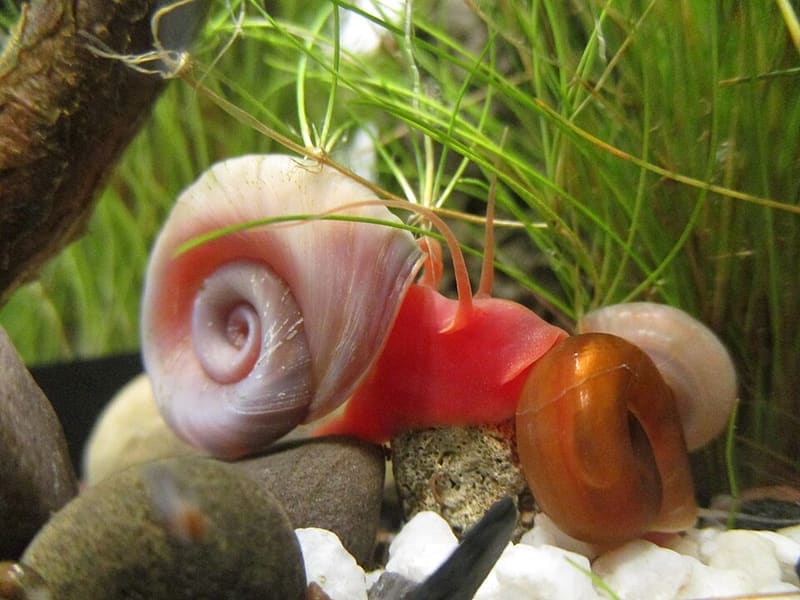
Ramshorn Snail (Planorbella duryi)

Ramshorn Snail

Planorbella duryi
freshwatereasysnailpeaceful
Adult size
1 in
Min tank
5 gal
Temp
65–80 °F
pH · GH
7–8 · 5–15
Group
1+
Swims
all

Breeds quickly when food is plentiful; population size reflects overfeeding. Eats soft algae and dead plant matter.

Diet: Omnivore: algae, detritus, decaying plants, leftovers
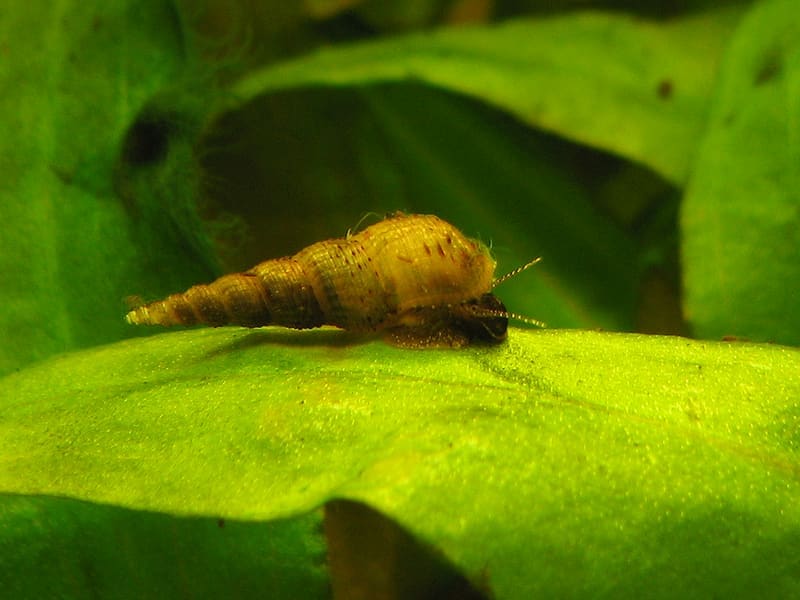
Malaysian Trumpet Snail (Melanoides tuberculata)

Malaysian Trumpet Snail

Melanoides tuberculata
freshwatereasysnailpeaceful
Adult size
1 in
Min tank
5 gal
Temp
65–82 °F
pH · GH
6.5–8 · 5–15
Group
1+
Swims
bottom

Burrows through the substrate and helps prevent anaerobic pockets. Livebearing and prolific, and hard to remove once established.

Diet: Omnivore: detritus, leftovers, algae
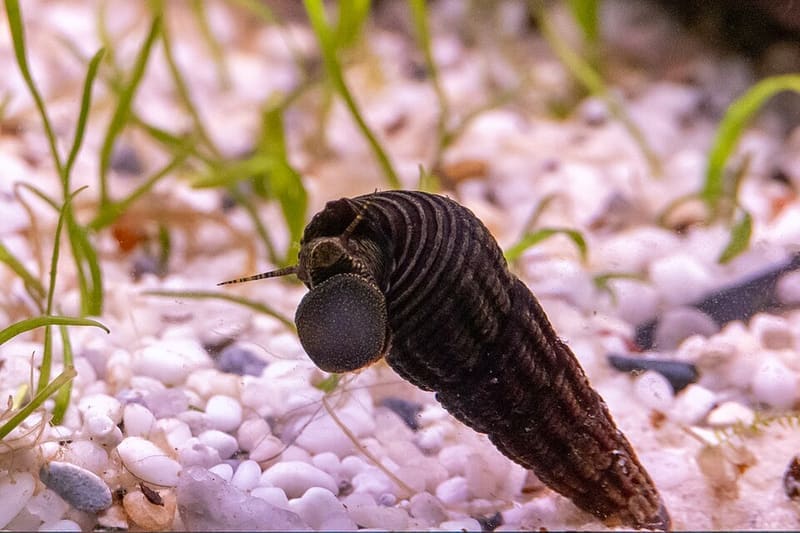
Rabbit Snail (Tylomelania spp.)

Rabbit Snail

Tylomelania spp.
freshwatermediumsnailpeaceful
Adult size
3 in
Min tank
20 gal
Temp
76–84 °F
pH · GH
7.2–8.5 · 4–12
Group
1+
Swims
bottom

Needs warm water with a high pH; breeds slowly, producing one baby at a time. May eat soft or delicate plants if underfed.

Diet: Omnivore: algae, wafers, vegetables, detritus
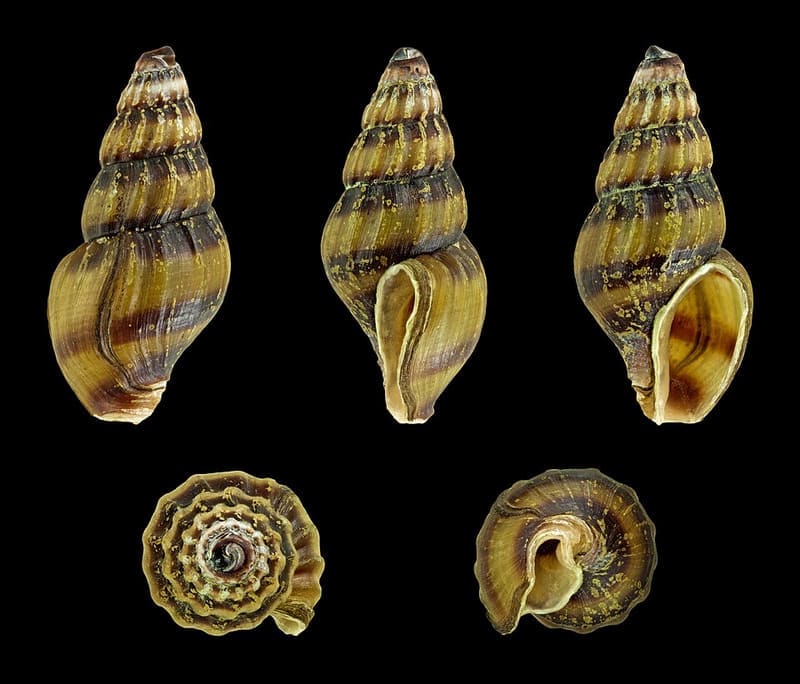
Assassin Snail (Anentome helena)

Assassin Snail

Anentome helena
freshwatereasysnailpeaceful
Adult size
1 in
Min tank
5 gal
Temp
70–82 °F
pH · GH
7–8 · 6–15
Group
1+
Swims
bottom

Hunts and eats other snails, including nerites and mystery snails, so it is useful for pest control. Safe with healthy shrimp but may scavenge weak or dead ones.

Diet: Carnivore: other snails, meaty sinking foods
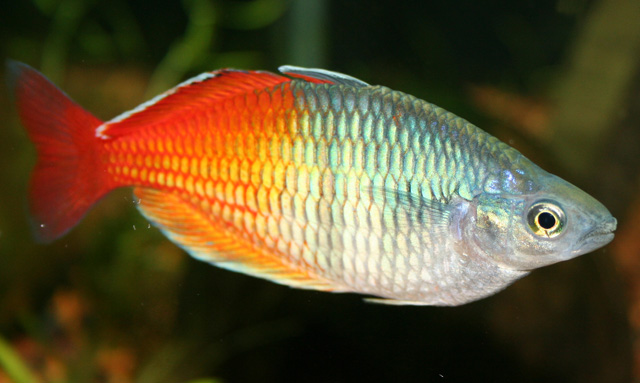
Boesemani Rainbowfish (Melanotaenia boesemani)

Boesemani Rainbowfish

Melanotaenia boesemani
freshwatereasyfishpeacefulmay eat shrimp
Adult size
4 in
Min tank
55 gal
Temp
75–82 °F
pH · GH
7–8 · 8–20
Group
6+
Swims
mid

Active swimmers that need a long tank; the blue-and-orange colours take a year or two to develop. Buy captive-bred: wild populations are endangered.

Diet: Omnivore: flakes, pellets, frozen foods
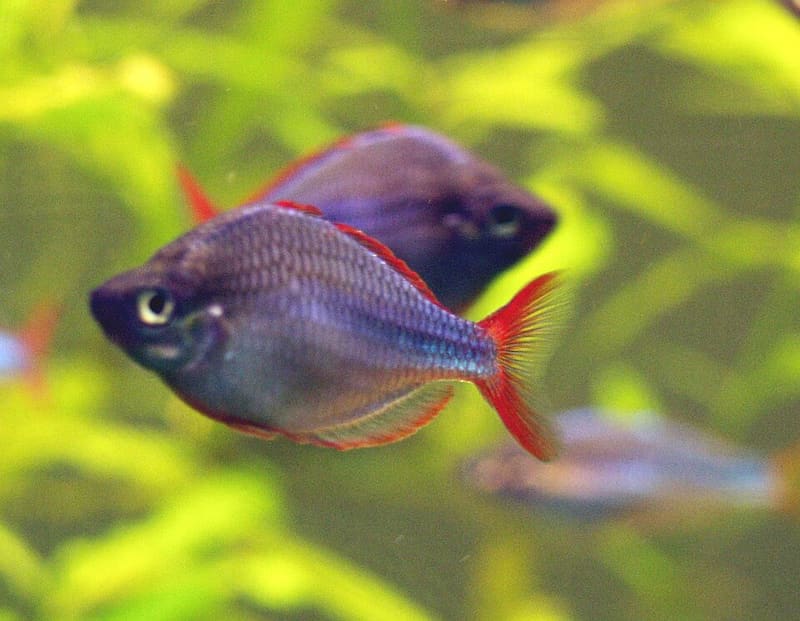
Dwarf Neon Rainbowfish (Melanotaenia praecox)

Dwarf Neon Rainbowfish

Melanotaenia praecox
freshwatereasyfishpeacefulshrimp-safe
Adult size
2.5 in
Min tank
30 gal
Temp
75–82 °F
pH · GH
6.5–7.5 · 5–15
Group
6+
Swims
mid

A small rainbowfish with red fins that suits a planted community. Leaves adult shrimp alone but eats shrimplets.

Diet: Omnivore: flakes, micro pellets, frozen foods
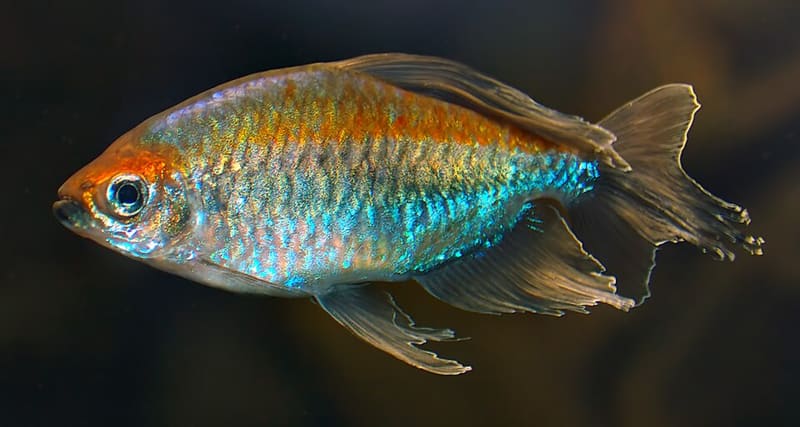
Congo Tetra (Phenacogrammus interruptus)

Congo Tetra

Phenacogrammus interruptus
freshwatereasyfishpeacefulmay eat shrimp
Adult size
3.5 in
Min tank
30 gal
Temp
73–82 °F
pH · GH
6–7.5 · 4–18
Group
6+
Swims
mid

Males grow long, flowing fins and iridescent colour. Shows best against dark substrate and floating plants.

Diet: Omnivore: flakes, pellets, frozen foods
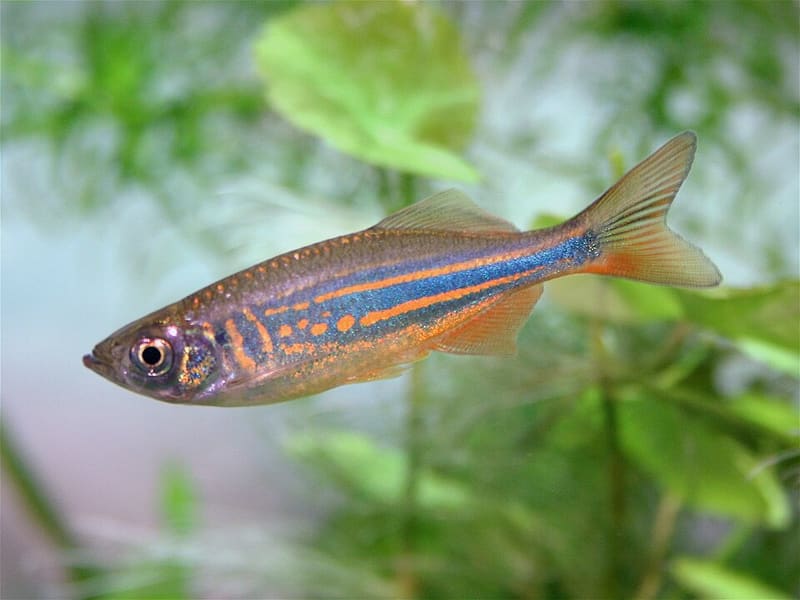
Giant Danio (Devario aequipinnatus)

Giant Danio

Devario aequipinnatus
freshwatereasyfishpeacefulmay eat shrimp
Adult size
4 in
Min tank
55 gal
Temp
72–80 °F
pH · GH
6–8 · 5–19
Group
6+
Swims
top

Fast, tough and always moving, so it needs swimming length and a lid. Can outcompete slow fish at feeding time.

Diet: Omnivore: flakes, pellets, frozen foods
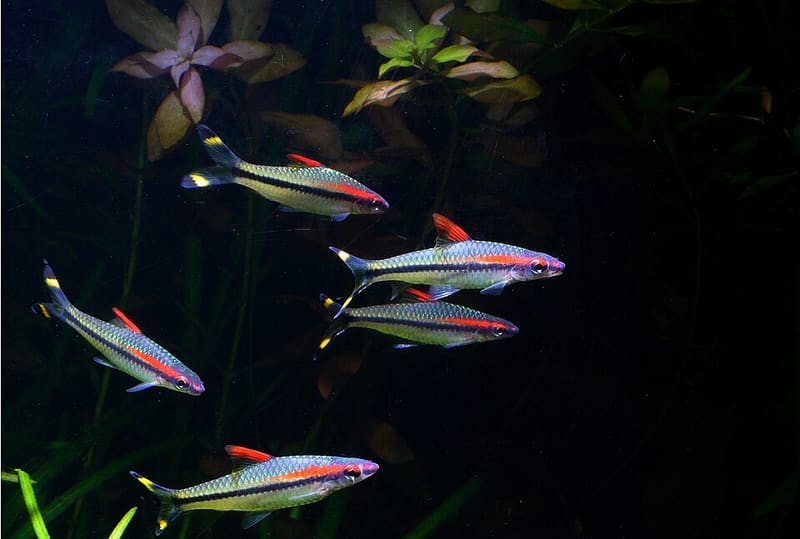
Denison Barb (Sahyadria denisonii)

Denison Barb

Sahyadria denisonii
freshwatermediumfishpeacefulmay eat shrimp
Adult size
5 in
Min tank
75 gal
Temp
64–77 °F
pH · GH
6.8–7.8 · 5–25
Group
6+
Swims
mid

Also sold as the roseline shark. Likes cooler, well-oxygenated water with strong flow. Buy captive-bred; it is endangered in the wild.

Diet: Omnivore: flakes, pellets, frozen foods
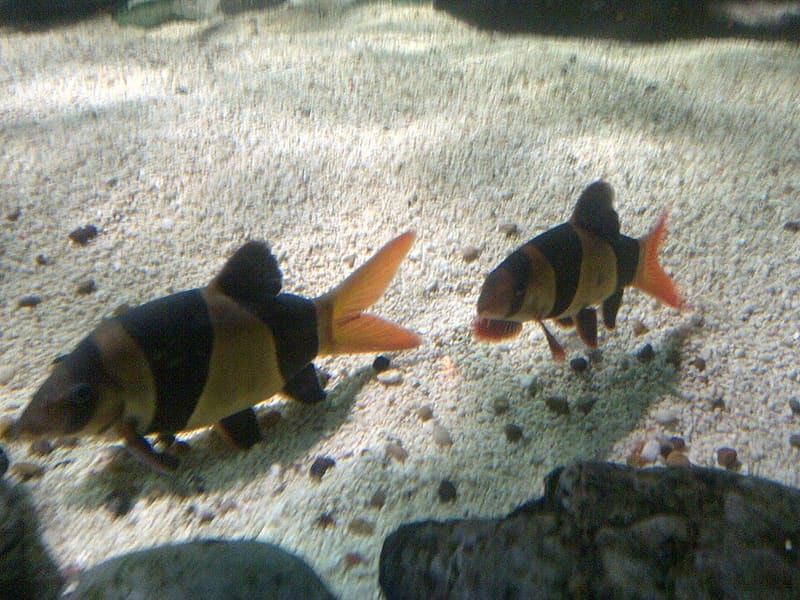
Clown Loach (Chromobotia macracanthus)

Clown Loach

Chromobotia macracanthus
freshwatermediumfishpeacefulmay eat shrimp
Adult size
10 in
Min tank
150 gal
Temp
77–86 °F
pH · GH
6–7.5 · 5–12
Group
5+
Swims
bottom

Sold as small juveniles but grows slowly to 10 inches or more and can live for decades. Very prone to ich; quarantine new ones.

Diet: Omnivore: sinking pellets, frozen foods; eats snails
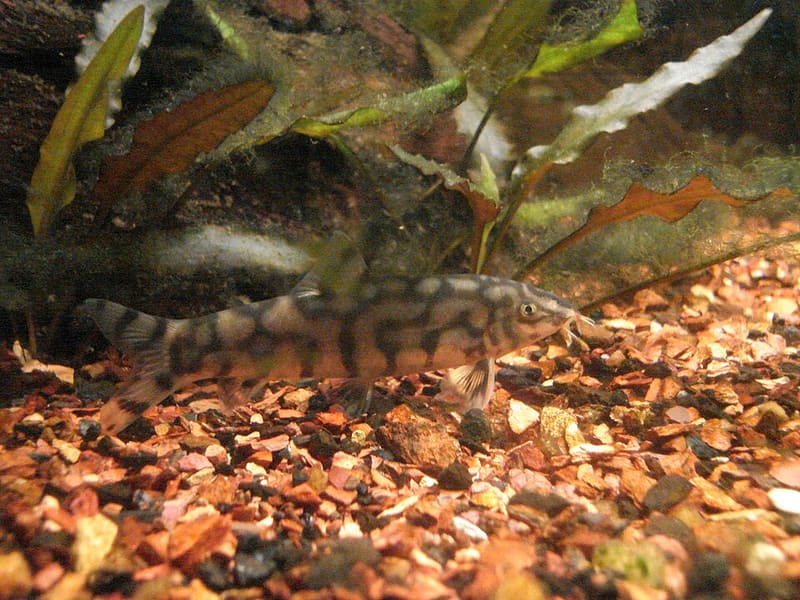
Yoyo Loach (Botia almorhae)

Yoyo Loach

Botia almorhae
freshwatereasyfishsemi-aggressivemay eat shrimp
Adult size
5 in
Min tank
55 gal
Temp
75–86 °F
pH · GH
6–7.5 · 3–12
Group
5+
Swims
bottom

Boisterous and social; keep a group so the squabbling spreads out. A good natural snail control.

Diet: Omnivore: sinking pellets, frozen foods; eats snails
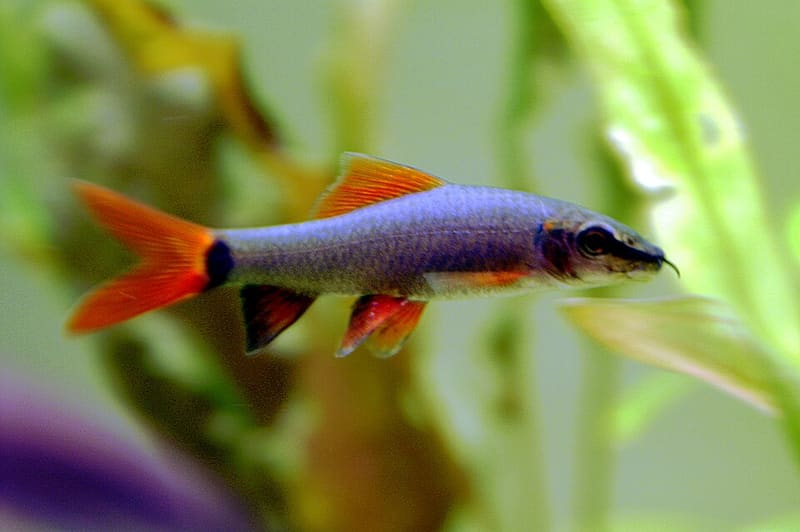
Rainbow Shark (Epalzeorhynchos frenatum)

Rainbow Shark

Epalzeorhynchos frenatum
freshwatereasyfishsemi-aggressivemay eat shrimp
Adult size
6 in
Min tank
55 gal
Temp
75–81 °F
pH · GH
6.5–7.5 · 5–11
Group
1+
Swims
bottom

Territorial toward other bottom fish and anything that looks like it. Keep one per tank, with caves and plants to break sight lines.

Diet: Omnivore: sinking pellets, algae wafers, vegetables
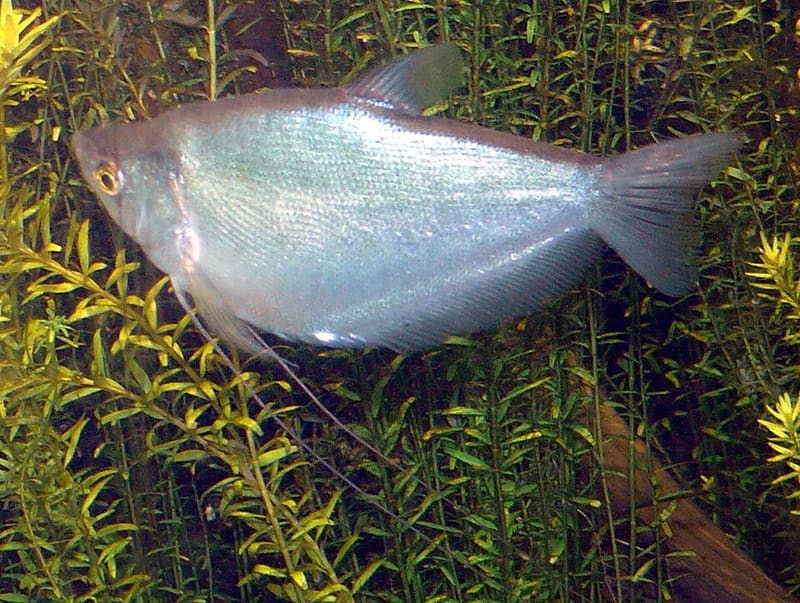
Moonlight Gourami (Trichopodus microlepis)

Moonlight Gourami

Trichopodus microlepis
freshwatereasyfishpeacefulmay eat shrimp
Adult size
6 in
Min tank
40 gal
Temp
79–86 °F
pH · GH
6–7 · 2–15
Group
1+
Swims
top

A calm, silvery gourami, gentler than most of its size. Appreciates floating plants and still water.

Diet: Omnivore: flakes, pellets, frozen foods
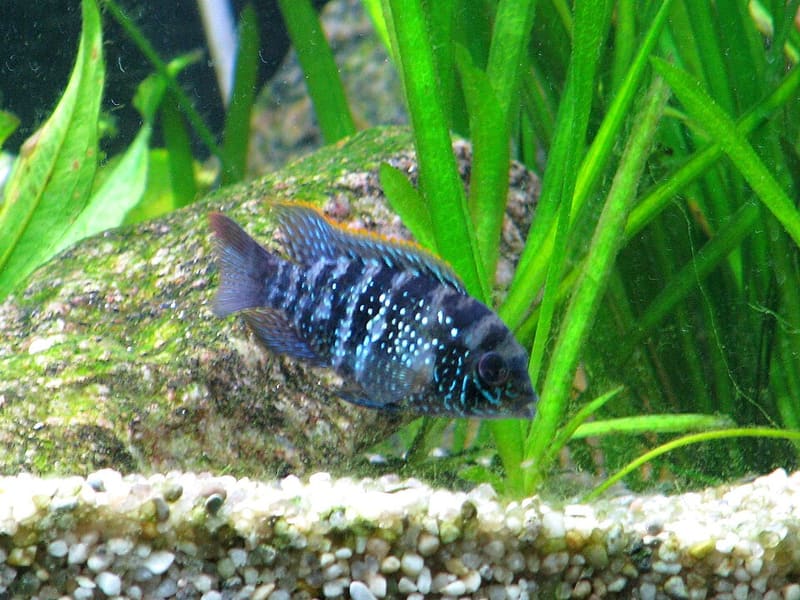
Blue Acara (Andinoacara pulcher)

Blue Acara

Andinoacara pulcher
freshwatereasyfishsemi-aggressivemay eat shrimp
Adult size
6 in
Min tank
55 gal
Temp
72–82 °F
pH · GH
6.5–8 · 5–19
Group
1+
Swims
mid

One of the milder cichlids its size, but defends a territory when breeding. Digs a little; anchor plants well.

Diet: Omnivore: pellets, frozen foods
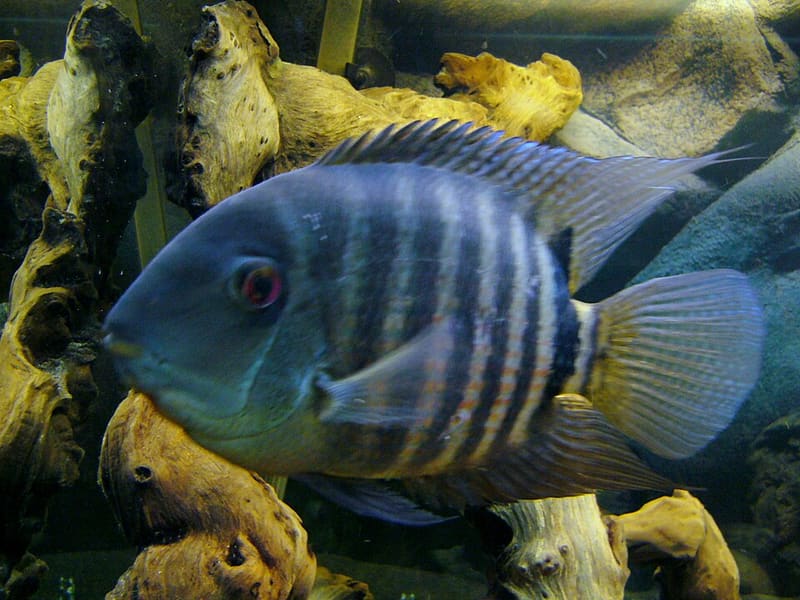
Severum (Heros severus)

Severum

Heros severus
freshwatereasyfishsemi-aggressivemay eat shrimp
Adult size
8 in
Min tank
75 gal
Temp
75–84 °F
pH · GH
6–7.5 · 4–15
Group
1+
Swims
mid

A personable, fairly peaceful cichlid that eats soft plants. Pair with anubias, java fern and other tough-leaved plants.

Diet: Omnivore: cichlid pellets, vegetables; eats soft plants
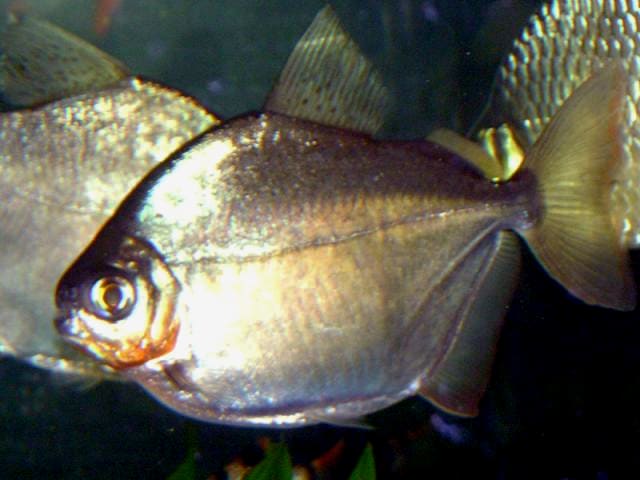
Silver Dollar (Metynnis argenteus)

Silver Dollar

Metynnis argenteus
freshwatereasyfishpeacefulmay eat shrimp
Adult size
6 in
Min tank
75 gal
Temp
75–82 °F
pH · GH
5.5–7.5 · 4–18
Group
5+
Swims
mid

Peaceful and striking in a school, but will eat almost any plant. Use tough epiphytes, or plan a mostly hardscape tank.

Diet: Herbivore: vegetables, spirulina pellets; eats most plants
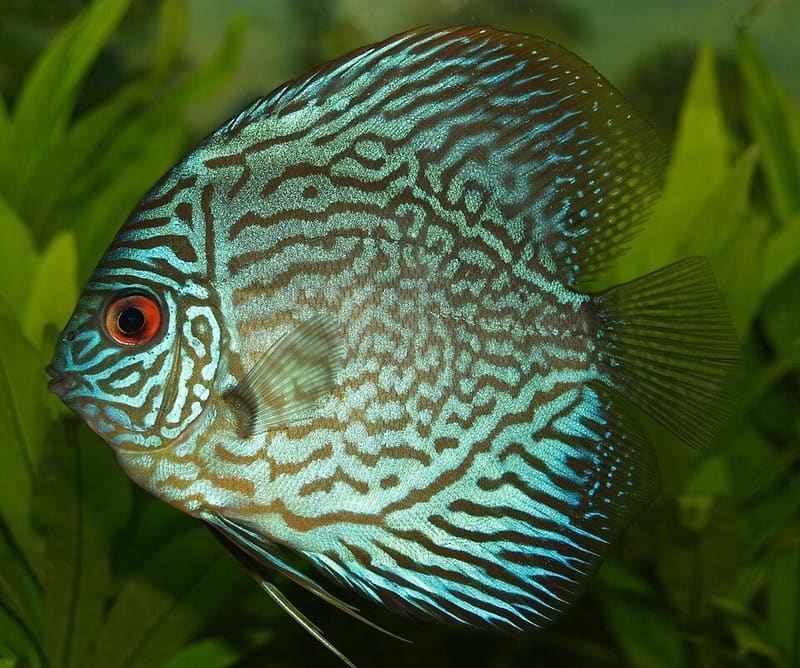
Discus (Symphysodon aequifasciatus)

Discus

Symphysodon aequifasciatus
freshwaterhardfishpeacefulmay eat shrimp
Adult size
6 in
Min tank
75 gal
Temp
82–88 °F
pH · GH
6–7 · 1–8
Group
5+
Swims
mid

Needs very warm, very clean water and large, frequent water changes. The high temperature limits which plants and tank mates will cope.

Diet: Carnivore: discus pellets, frozen bloodworms and beefheart, several times a day
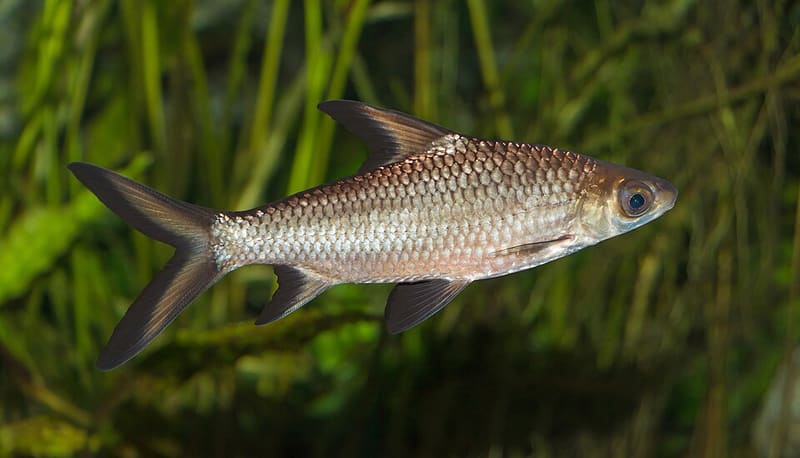
Bala Shark (Balantiocheilos melanopterus)

Bala Shark

Balantiocheilos melanopterus
freshwatermediumfishpeacefulmay eat shrimp
Adult size
12 in
Min tank
180 gal
Temp
72–82 °F
pH · GH
6.5–8 · 5–12
Group
5+
Swims
mid

Sold as 2-inch juveniles, but a school of adults needs a tank six feet long or more. Jumps when startled; keep a tight lid.

Diet: Omnivore: pellets, frozen foods
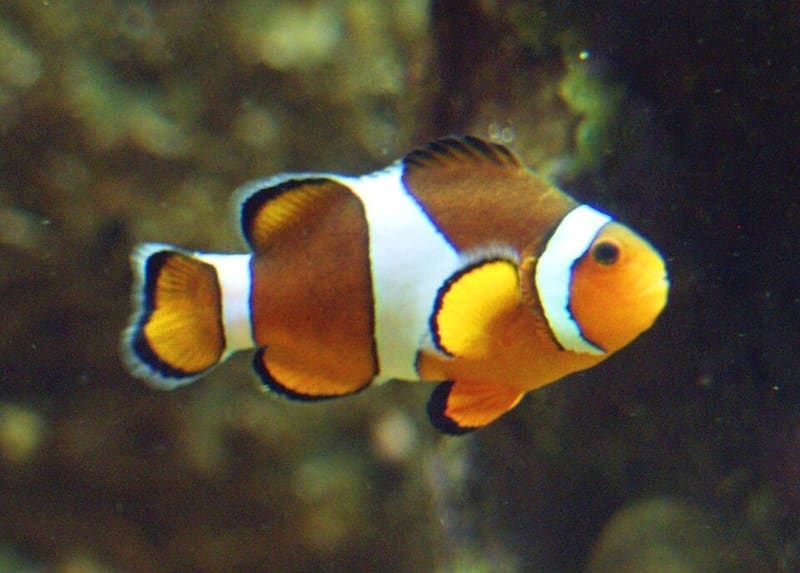
Ocellaris Clownfish (Amphiprion ocellaris)

Ocellaris Clownfish

Amphiprion ocellaris
saltwatereasyfishpeacefulreef-safe
Adult size
3.5 in
Min tank
20 gal
Temp
75–82 °F
pH
8–8.4
Group
1+
Swims
mid

The classic first saltwater fish; captive-bred ones are hardy. Keep one or a pair, and only one clownfish species per tank.

Diet: Omnivore: pellets, frozen mysis and brine
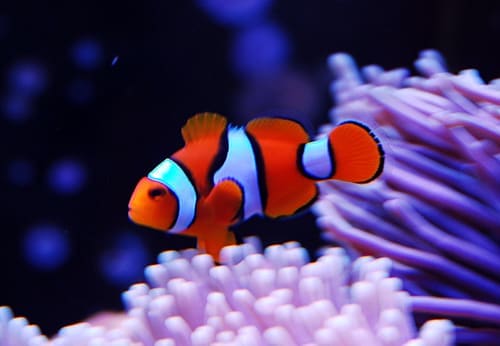
Percula Clownfish (Amphiprion percula)

Percula Clownfish

Amphiprion percula
saltwatereasyfishpeacefulreef-safe
Adult size
3 in
Min tank
20 gal
Temp
75–82 °F
pH
8–8.4
Group
1+
Swims
mid

Nearly identical to the ocellaris, with thicker black edging. Pairs readily; will host in an anemone but does not need one.

Diet: Omnivore: pellets, frozen mysis and brine
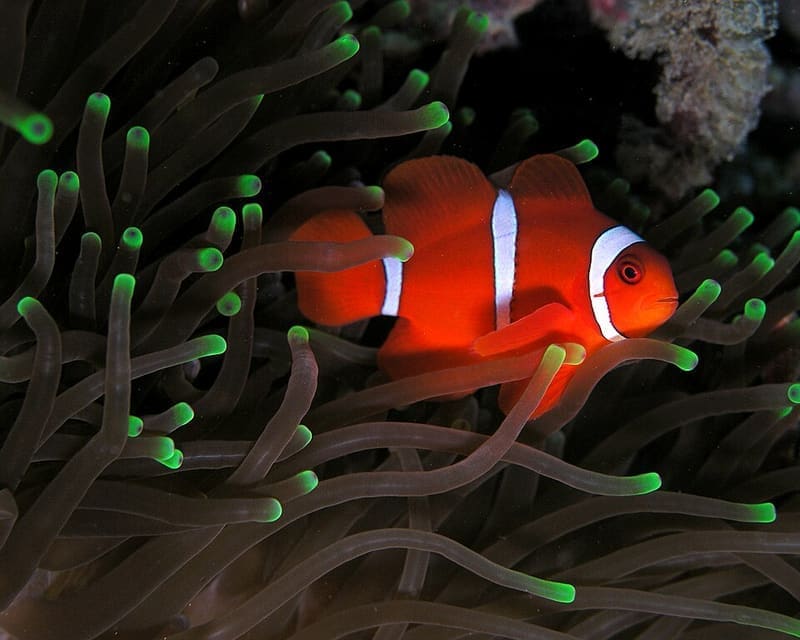
Maroon Clownfish (Premnas biaculeatus)

Maroon Clownfish

Premnas biaculeatus
saltwatereasyfishaggressivereef-safe
Adult size
6 in
Min tank
55 gal
Temp
75–82 °F
pH
8–8.4
Group
1+
Swims
mid

The largest and meanest clownfish; females will bully most tank mates. Add it last, and keep it away from other clowns.

Diet: Omnivore: pellets, frozen mysis
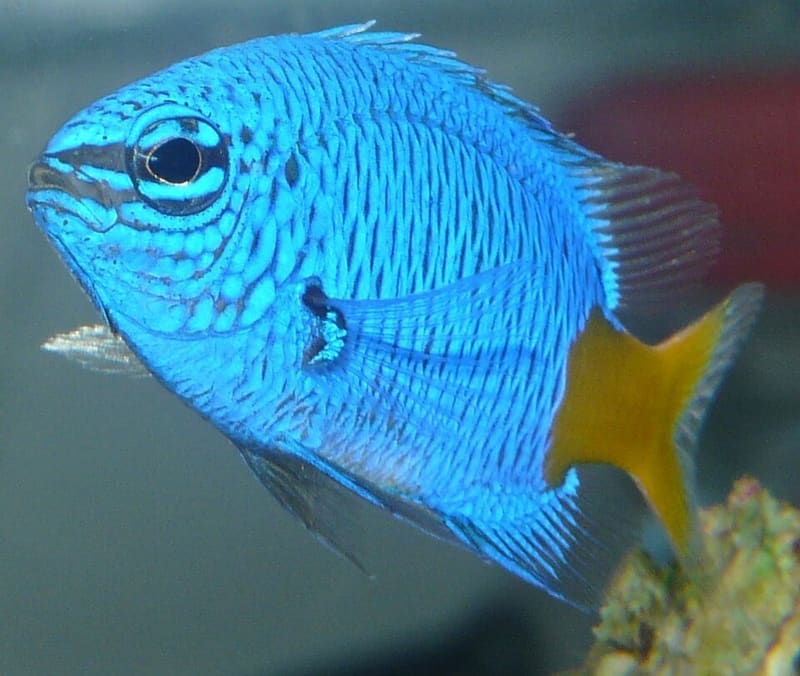
Yellowtail Damselfish (Chrysiptera parasema)

Yellowtail Damselfish

Chrysiptera parasema
saltwatereasyfishsemi-aggressivereef-safe
Adult size
2.5 in
Min tank
20 gal
Temp
74–82 °F
pH
8–8.4
Group
1+
Swims
mid

One of the milder damsels, but still territorial once settled. Very hardy; not a fish to use for cycling a tank.

Diet: Omnivore: pellets, frozen foods
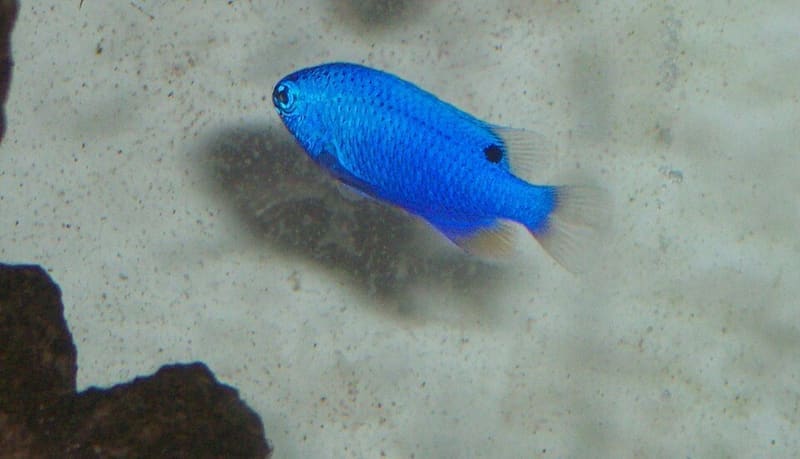
Blue Devil Damselfish (Chrysiptera cyanea)

Blue Devil Damselfish

Chrysiptera cyanea
saltwatereasyfishaggressivereef-safe
Adult size
3 in
Min tank
30 gal
Temp
74–82 °F
pH
8–8.4
Group
1+
Swims
mid

Cheap and tough, and grows nasty with age. Hard to catch once you regret it, so think before adding one to a peaceful reef.

Diet: Omnivore: pellets, frozen foods
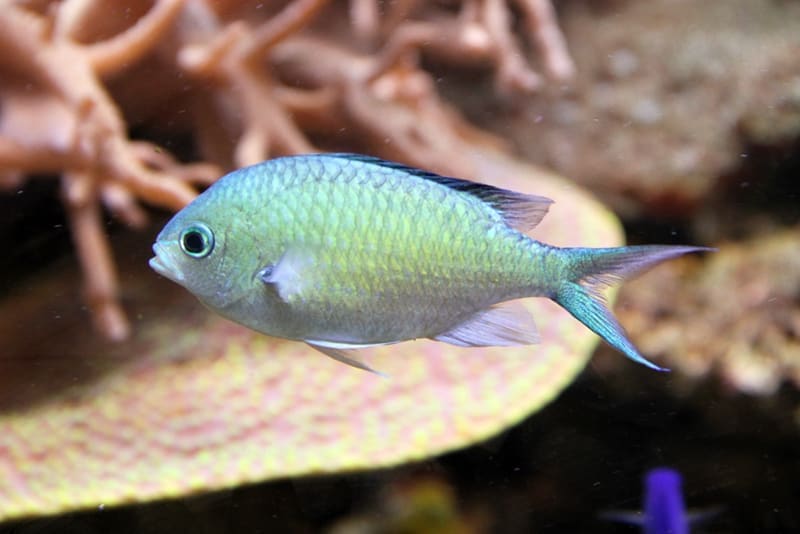
Green Chromis (Chromis viridis)

Green Chromis

Chromis viridis
saltwatereasyfishpeacefulreef-safe
Adult size
3 in
Min tank
30 gal
Temp
74–82 °F
pH
8–8.4
Group
1+
Swims
mid

Groups tend to dwindle as the dominant fish picks off the rest. Keep one, or five or more in a tank of 75 gallons and up.

Diet: Omnivore: pellets, frozen mysis
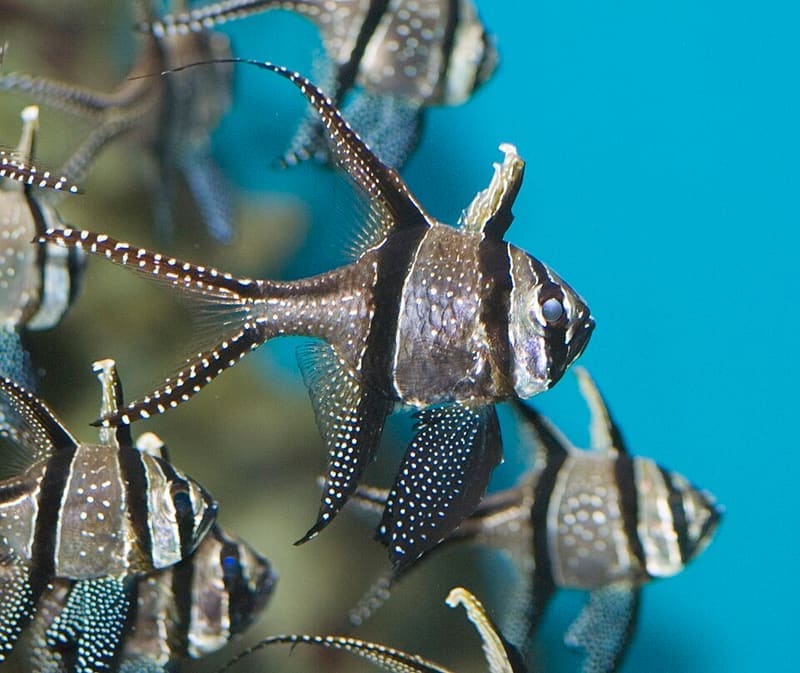
Banggai Cardinalfish (Pterapogon kauderni)

Banggai Cardinalfish

Pterapogon kauderni
saltwatereasyfishpeacefulreef-safe
Adult size
3 in
Min tank
30 gal
Temp
74–82 °F
pH
8–8.4
Group
1+
Swims
mid

Slow and calm. Buy captive-bred: wild populations are endangered. Pairs are fine; adult groups often fight.

Diet: Carnivore: frozen mysis, pellets
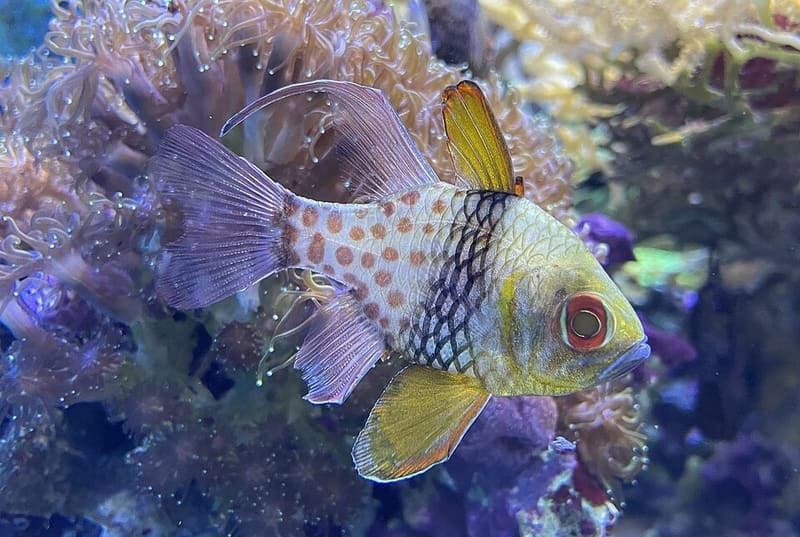
Pajama Cardinalfish (Sphaeramia nematoptera)

Pajama Cardinalfish

Sphaeramia nematoptera
saltwatereasyfishpeacefulreef-safe
Adult size
3.5 in
Min tank
30 gal
Temp
74–82 °F
pH
8–8.4
Group
1+
Swims
mid

Hangs in one spot near cover and comes out more at dusk. Can be kept as a small group in a larger tank.

Diet: Carnivore: frozen mysis, pellets
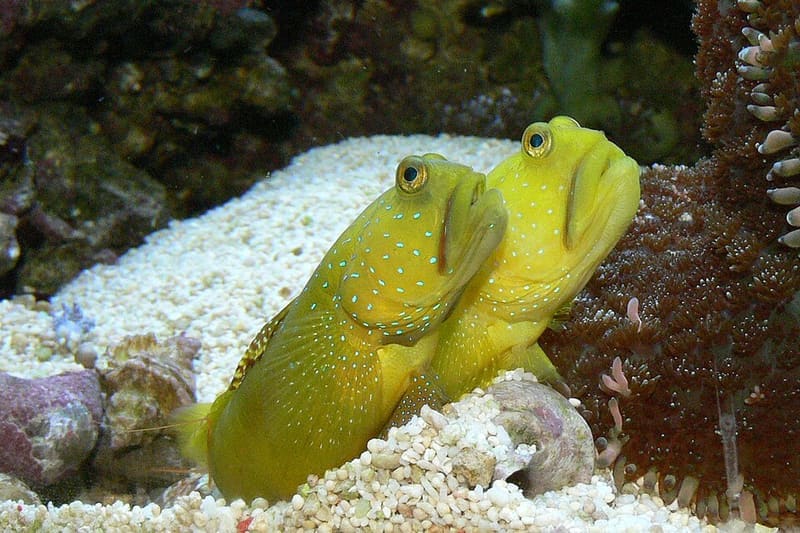
Yellow Watchman Goby (Cryptocentrus cinctus)

Yellow Watchman Goby

Cryptocentrus cinctus
saltwatereasyfishpeacefulreef-safe
Adult size
4 in
Min tank
20 gal
Temp
74–82 °F
pH
8–8.4
Group
1+
Swims
bottom

Perches at a burrow on the sand bed, and often pairs with a pistol shrimp. Territorial toward other bottom gobies.

Diet: Carnivore: frozen mysis, pellets
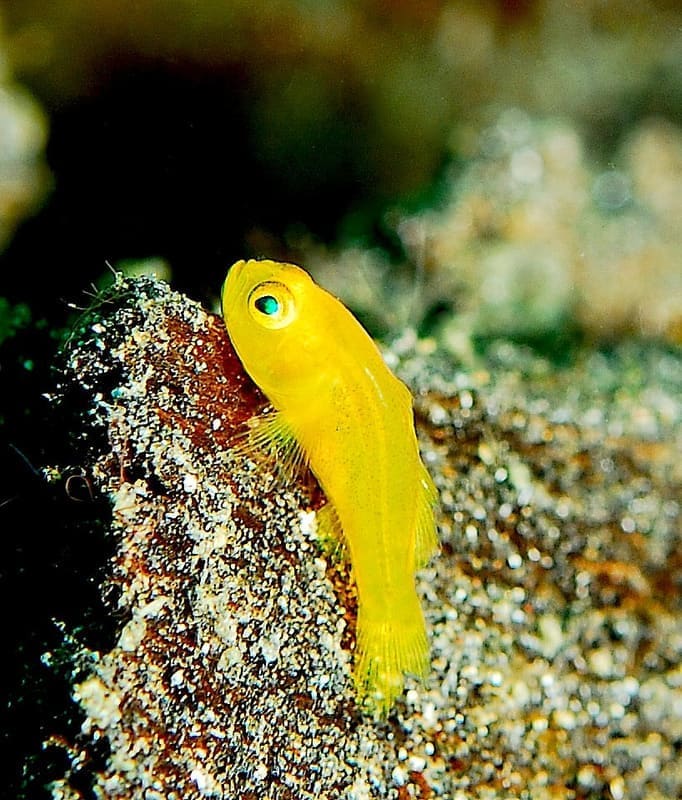
Yellow Clown Goby (Gobiodon okinawae)

Yellow Clown Goby

Gobiodon okinawae
saltwatereasyfishpeacefulreef: caution
Adult size
1.5 in
Min tank
10 gal
Temp
74–82 °F
pH
8–8.4
Group
1+
Swims
mid

A tiny fish that perches among branching corals. Good for nano reefs.

Diet: Carnivore: small frozen foods
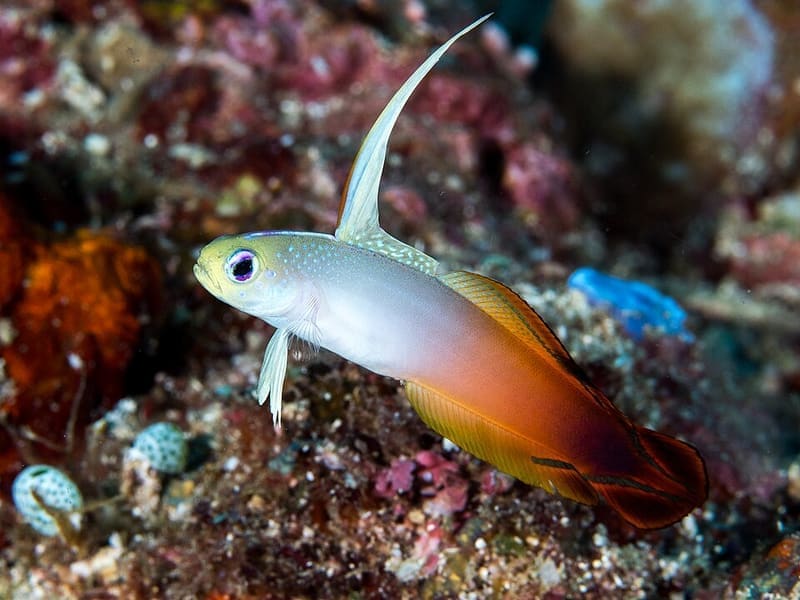
Firefish Goby (Nemateleotris magnifica)

Firefish Goby

Nemateleotris magnifica
saltwatereasyfishpeacefulreef-safe
Adult size
3 in
Min tank
20 gal
Temp
74–82 °F
pH
8–8.4
Group
1+
Swims
mid

Shy and a notorious jumper, so a lid or mesh cover is essential. Keep one per tank unless you have a mated pair.

Diet: Carnivore: frozen mysis and brine
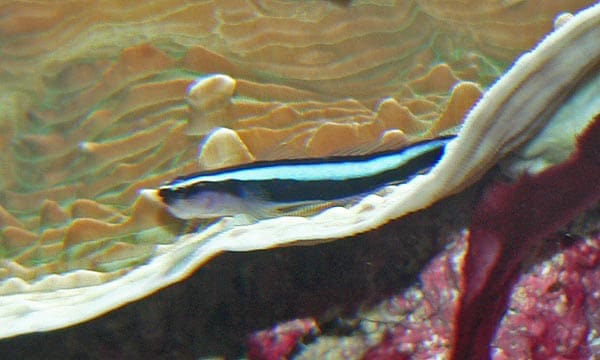
Neon Goby (Elacatinus oceanops)

Neon Goby

Elacatinus oceanops
saltwatereasyfishpeacefulreef-safe
Adult size
2 in
Min tank
10 gal
Temp
74–82 °F
pH
8–8.4
Group
1+
Swims
bottom

A small cleaner fish, usually captive-bred. Short-lived, around two years.

Diet: Carnivore: small frozen foods; picks parasites off other fish
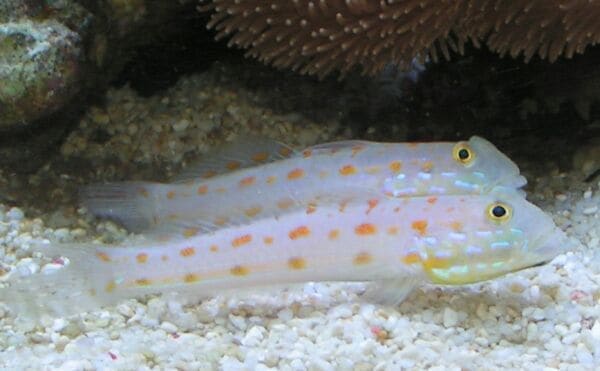
Diamond Watchman Goby (Valenciennea puellaris)

Diamond Watchman Goby

Valenciennea puellaris
saltwatermediumfishpeacefulreef: caution
Adult size
6 in
Min tank
55 gal
Temp
74–82 °F
pH
8–8.4
Group
1+
Swims
bottom

Keeps sand spotless by sifting it constantly. Often starves in a new or small tank without enough life in the sand.

Diet: Carnivore: sifts sand for food; supplement with frozen foods
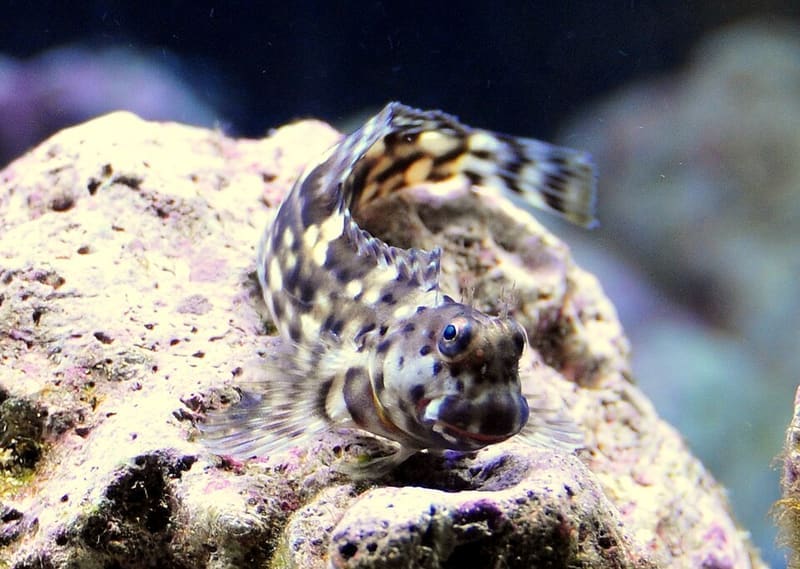
Lawnmower Blenny (Salarias fasciatus)

Lawnmower Blenny

Salarias fasciatus
saltwatermediumfishsemi-aggressivereef-safe
Adult size
5 in
Min tank
30 gal
Temp
74–82 °F
pH
8–8.4
Group
1+
Swims
bottom

Grazes algae off rock and glass. Can starve once the algae is gone, and fights with other blennies.

Diet: Herbivore: film algae; nori once it runs out
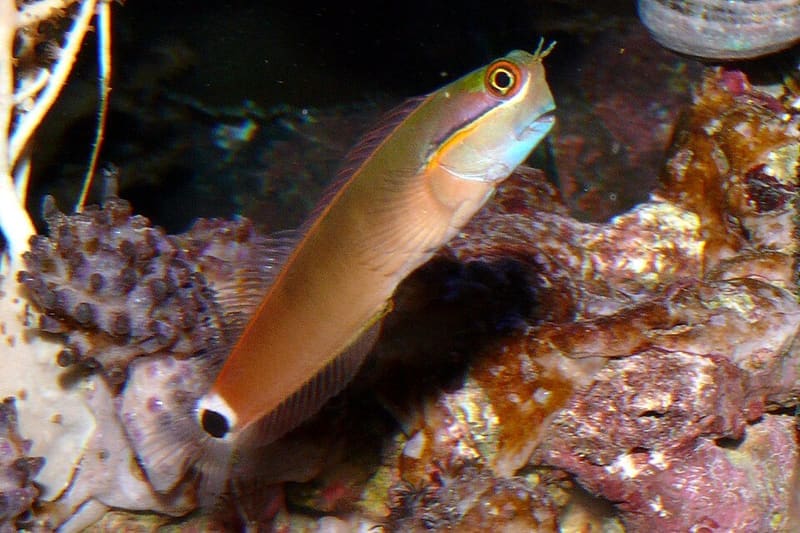
Tailspot Blenny (Ecsenius stigmatura)

Tailspot Blenny

Ecsenius stigmatura
saltwatereasyfishpeacefulreef-safe
Adult size
2.5 in
Min tank
20 gal
Temp
74–82 °F
pH
8–8.4
Group
1+
Swims
bottom

Small, curious and full of personality. A good blenny for a nano reef.

Diet: Omnivore: algae, frozen foods
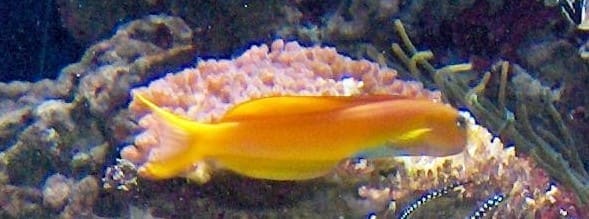
Midas Blenny (Ecsenius midas)

Midas Blenny

Ecsenius midas
saltwatereasyfishsemi-aggressivereef: caution
Adult size
5 in
Min tank
30 gal
Temp
74–82 °F
pH
8–8.4
Group
1+
Swims
all

Swims in open water more than most blennies. Keep one per tank.

Diet: Omnivore: frozen foods, algae
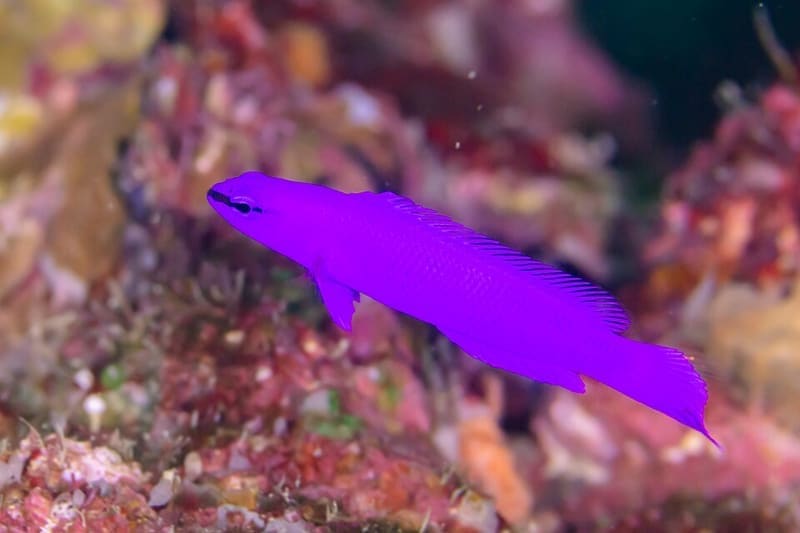
Orchid Dottyback (Pseudochromis fridmani)

Orchid Dottyback

Pseudochromis fridmani
saltwatereasyfishsemi-aggressivereef-safe
Adult size
3 in
Min tank
30 gal
Temp
74–82 °F
pH
8–8.4
Group
1+
Swims
mid

The mildest dottyback, and usually captive-bred. Eats bristleworms and small pests.

Diet: Carnivore: frozen mysis, pellets
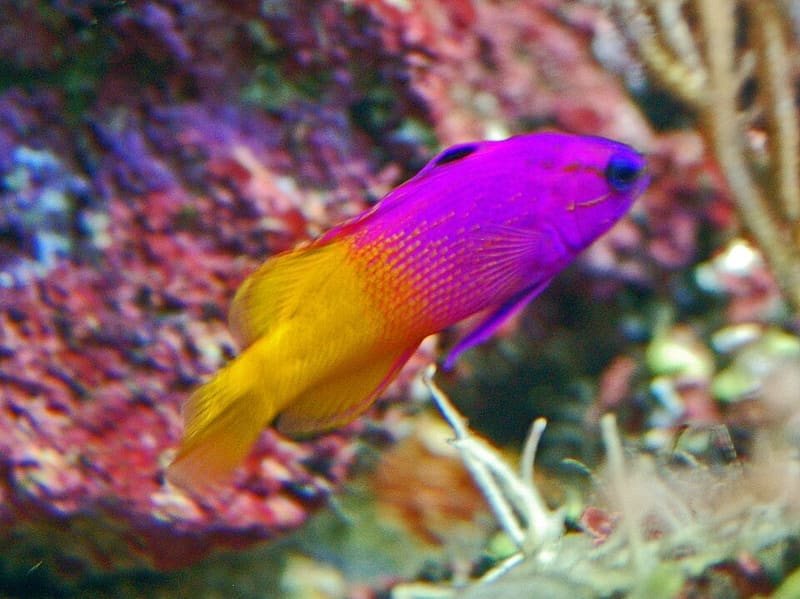
Royal Gramma (Gramma loreto)

Royal Gramma

Gramma loreto
saltwatereasyfishpeacefulreef-safe
Adult size
3 in
Min tank
30 gal
Temp
74–82 °F
pH
8–8.4
Group
1+
Swims
mid

Claims a cave and guards it. Peaceful with other species, territorial with its own.

Diet: Carnivore: frozen mysis, pellets
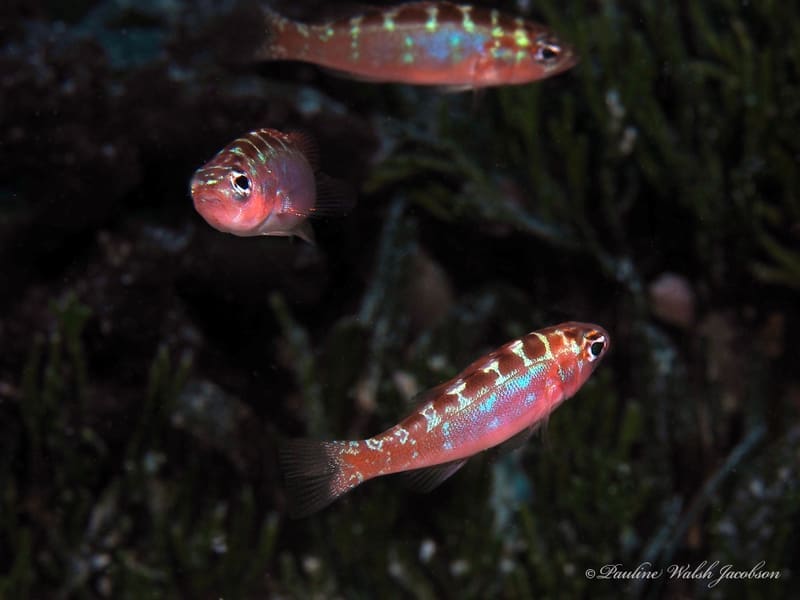
Chalk Basslet (Serranus tortugarum)

Chalk Basslet

Serranus tortugarum
saltwatereasyfishpeacefulreef: caution
Adult size
3 in
Min tank
30 gal
Temp
74–82 °F
pH
8–8.4
Group
1+
Swims
mid

Unusually, can be kept as a small group. Hardy and easy to feed.

Diet: Carnivore: frozen mysis, pellets
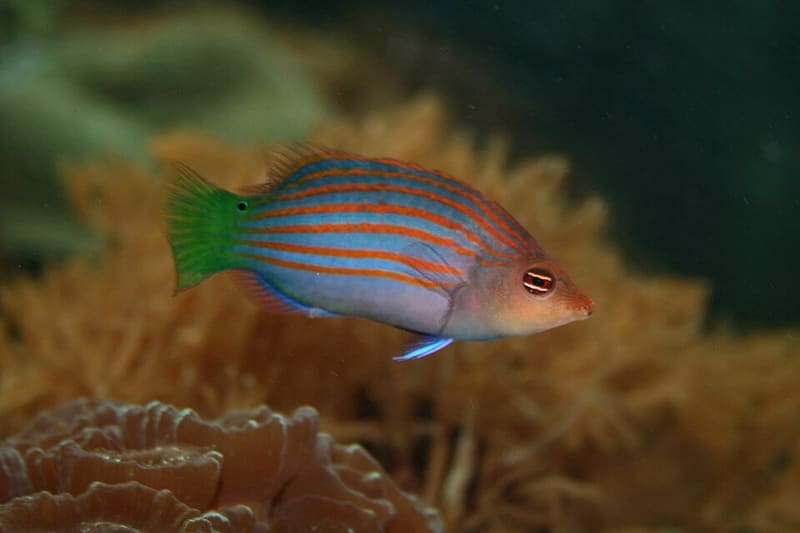
Six-line Wrasse (Pseudocheilinus hexataenia)

Six-line Wrasse

Pseudocheilinus hexataenia
saltwatereasyfishsemi-aggressivereef: caution
Adult size
3 in
Min tank
30 gal
Temp
74–82 °F
pH
8–8.4
Group
1+
Swims
mid

A great pest hunter that can turn bossy toward shy fish added after it. Jumps, so keep a lid on.

Diet: Carnivore: frozen foods; hunts pests like flatworms
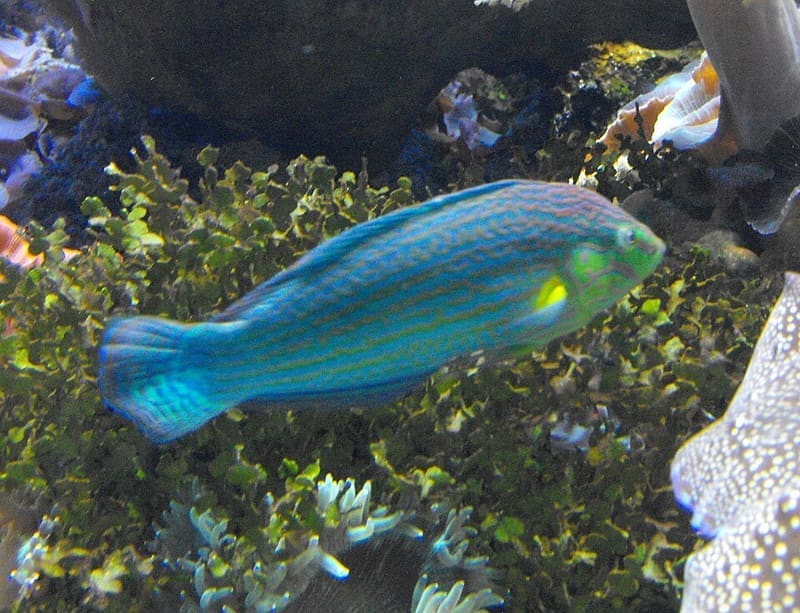
Melanurus Wrasse (Halichoeres melanurus)

Melanurus Wrasse

Halichoeres melanurus
saltwatereasyfishpeacefulreef: caution
Adult size
4.5 in
Min tank
55 gal
Temp
74–82 °F
pH
8–8.4
Group
1+
Swims
mid

Buries itself in sand at night, so it needs a sand bed. Jumps; keep a lid on.

Diet: Carnivore: frozen foods, pellets
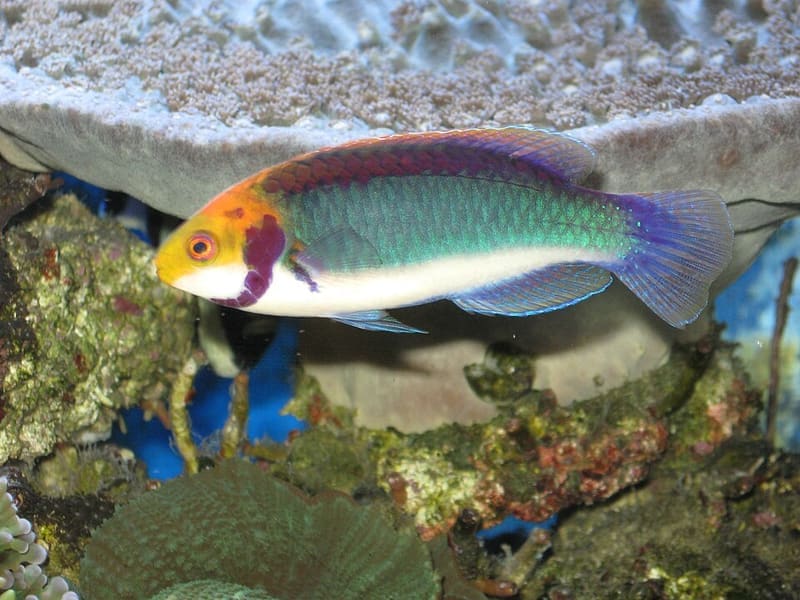
Solar Fairy Wrasse (Cirrhilabrus solorensis)

Solar Fairy Wrasse

Cirrhilabrus solorensis
saltwatermediumfishpeacefulreef-safe
Adult size
5 in
Min tank
70 gal
Temp
74–82 °F
pH
8–8.4
Group
1+
Swims
mid

An active open-water swimmer that needs length to swim. A notorious jumper, so a lid is essential.

Diet: Carnivore: frozen mysis, pellets, several times a day
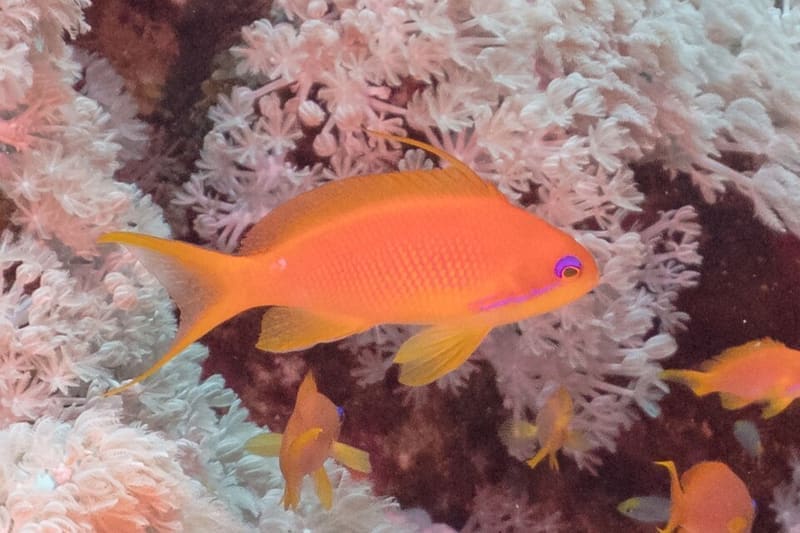
Lyretail Anthias (Pseudanthias squamipinnis)

Lyretail Anthias

Pseudanthias squamipinnis
saltwatermediumfishpeacefulreef-safe
Adult size
5 in
Min tank
125 gal
Temp
74–82 °F
pH
8–8.4
Group
1+
Swims
mid

Needs frequent small feedings, so an auto-feeder helps. Keep one male with several females.

Diet: Carnivore: small frozen foods at least three times a day
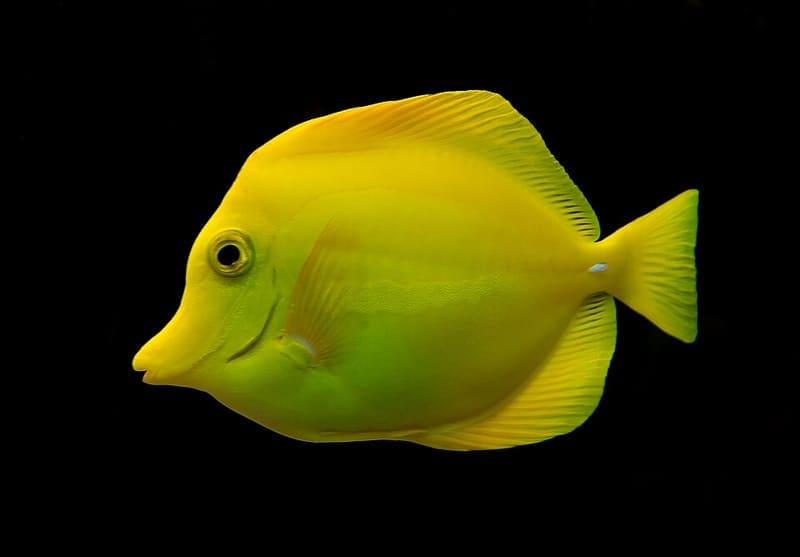
Yellow Tang (Zebrasoma flavescens)

Yellow Tang

Zebrasoma flavescens
saltwatereasyfishsemi-aggressivereef-safe
Adult size
8 in
Min tank
100 gal
Temp
74–82 °F
pH
8–8.4
Group
1+
Swims
all

Often sold into small tanks, but needs a long one: about six feet. Aggressive toward other tangs of similar shape.

Diet: Herbivore: nori and algae sheets daily, plus frozen foods
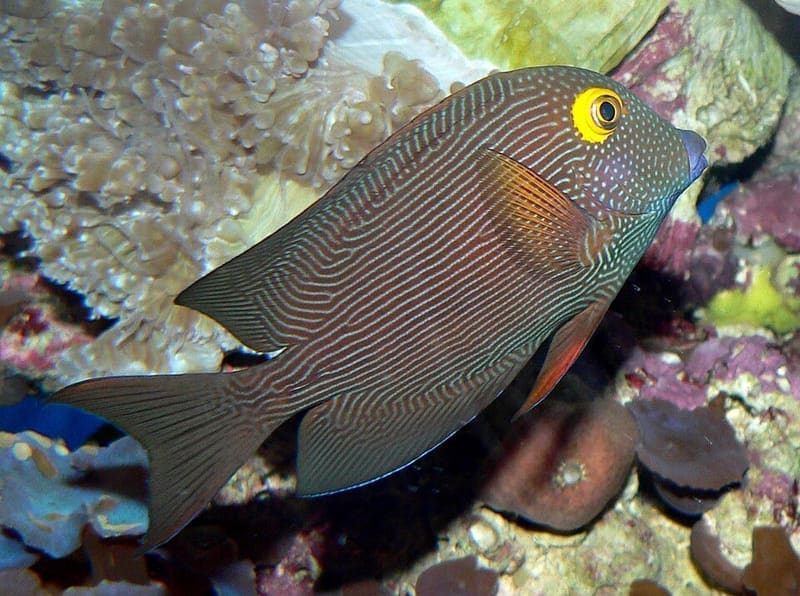
Kole Tang (Ctenochaetus strigosus)

Kole Tang

Ctenochaetus strigosus
saltwatereasyfishpeacefulreef-safe
Adult size
7 in
Min tank
75 gal
Temp
74–82 °F
pH
8–8.4
Group
1+
Swims
all

One of the best algae grazers and milder than most tangs. Still needs plenty of swimming room.

Diet: Herbivore: grazes film algae; supplement with nori
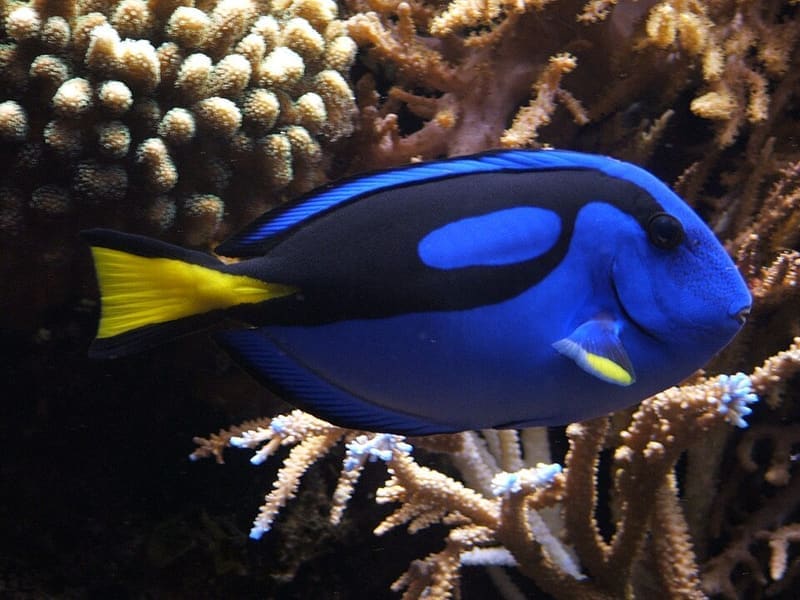
Blue Hippo Tang (Paracanthurus hepatus)

Blue Hippo Tang

Paracanthurus hepatus
saltwatermediumfishsemi-aggressivereef-safe
Adult size
12 in
Min tank
180 gal
Temp
74–82 °F
pH
8–8.4
Group
1+
Swims
all

Sold as small juveniles for tanks it will quickly outgrow. Very prone to ich, so quarantine it first.

Diet: Omnivore: nori, frozen foods
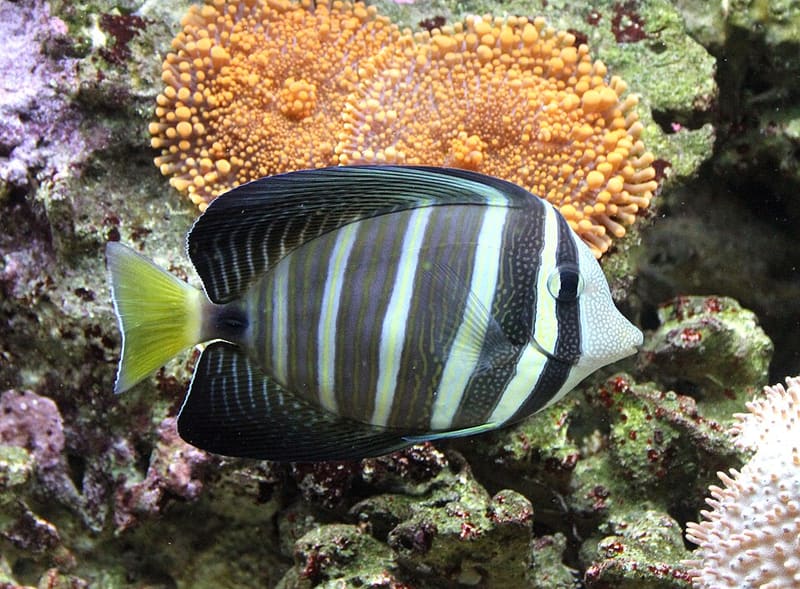
Sailfin Tang (Zebrasoma veliferum)

Sailfin Tang

Zebrasoma veliferum
saltwatereasyfishsemi-aggressivereef-safe
Adult size
15 in
Min tank
180 gal
Temp
74–82 °F
pH
8–8.4
Group
1+
Swims
all

Grows far larger than the juveniles in shops suggest. Plan for a very large tank from the start.

Diet: Herbivore: nori and algae sheets daily
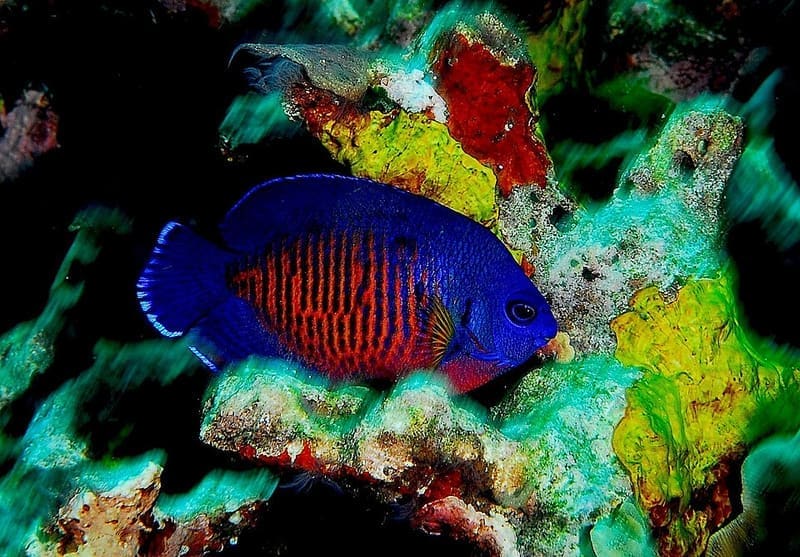
Coral Beauty Angelfish (Centropyge bispinosa)

Coral Beauty Angelfish

Centropyge bispinosa
saltwatermediumfishsemi-aggressivereef: caution
Adult size
4 in
Min tank
70 gal
Temp
74–82 °F
pH
8–8.4
Group
1+
Swims
all

The most reef-friendly dwarf angel, but individuals vary. Keep one dwarf angel per tank.

Diet: Omnivore: algae, frozen foods, angel formula
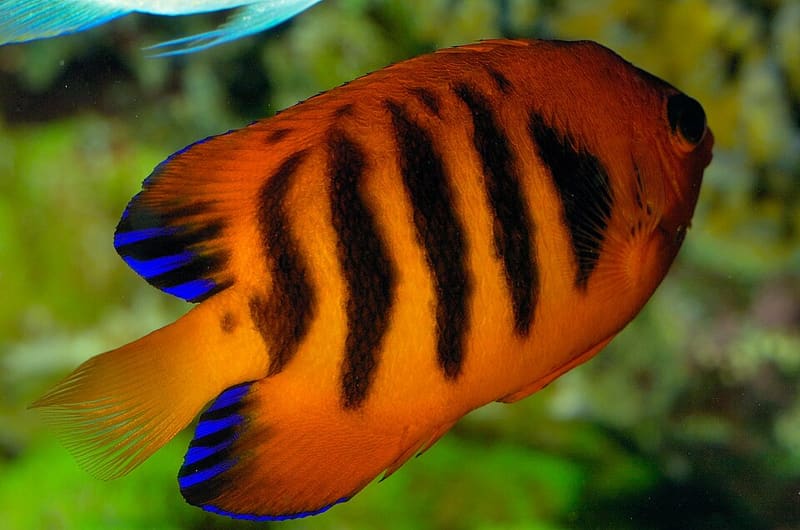
Flame Angelfish (Centropyge loricula)

Flame Angelfish

Centropyge loricula
saltwatermediumfishsemi-aggressivereef: caution
Adult size
4 in
Min tank
70 gal
Temp
74–82 °F
pH
8–8.4
Group
1+
Swims
all

Stunning, and a gamble in a reef: some never touch corals, some pick at them constantly.

Diet: Omnivore: algae, frozen foods, angel formula
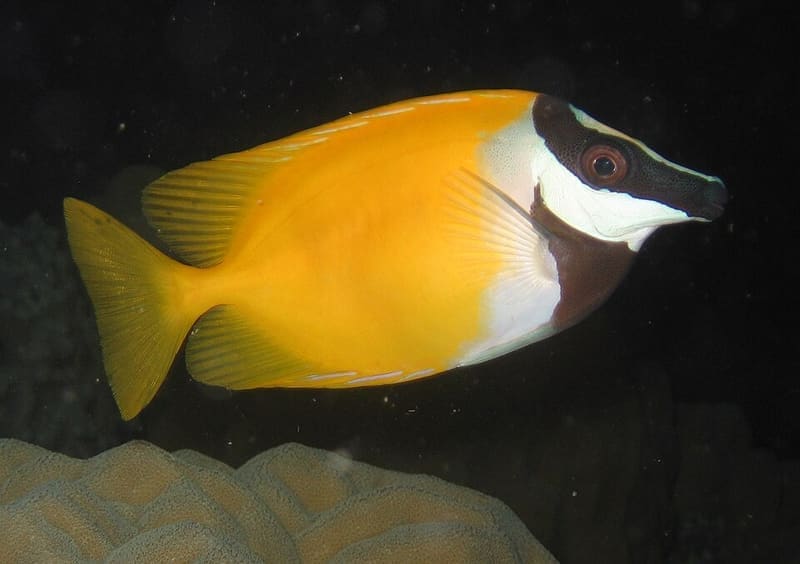
Foxface Rabbitfish (Siganus vulpinus)

Foxface Rabbitfish

Siganus vulpinus
saltwatereasyfishpeacefulreef: caution
Adult size
9 in
Min tank
125 gal
Temp
74–82 °F
pH
8–8.4
Group
1+
Swims
all

Its fin spines are venomous, so net it rather than handling it. Peaceful and hardy.

Diet: Herbivore: nori, algae; eats nuisance algae
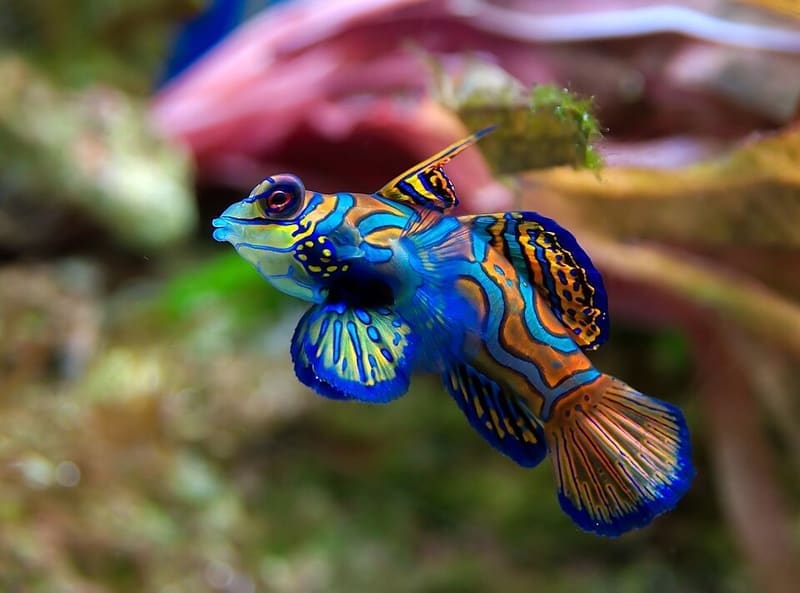
Mandarin Dragonet (Synchiropus splendidus)

Mandarin Dragonet

Synchiropus splendidus
saltwaterhardfishpeacefulreef-safe
Adult size
3 in
Min tank
55 gal
Temp
74–82 °F
pH
8–8.4
Group
1+
Swims
bottom

Usually starves in a new tank. Add it only to a tank at least six months old with a healthy copepod population, or buy one already eating frozen food.

Diet: Carnivore: live copepods; captive-bred ones may take frozen foods
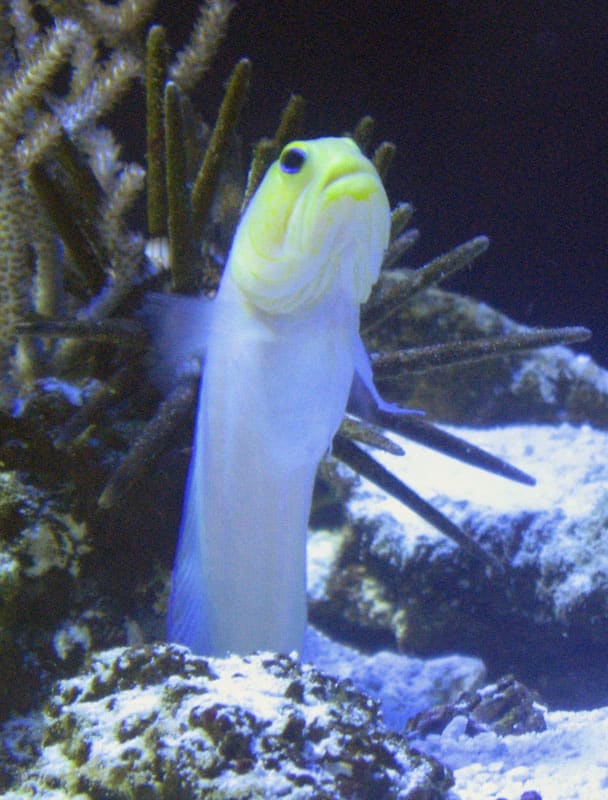
Yellowhead Jawfish (Opistognathus aurifrons)

Yellowhead Jawfish

Opistognathus aurifrons
saltwatermediumfishpeacefulreef-safe
Adult size
4 in
Min tank
30 gal
Temp
74–82 °F
pH
8–8.4
Group
1+
Swims
bottom

Digs a burrow, so it needs at least 3 inches of mixed sand and rubble. One of the worst jumpers; a lid is essential.

Diet: Carnivore: frozen mysis and brine
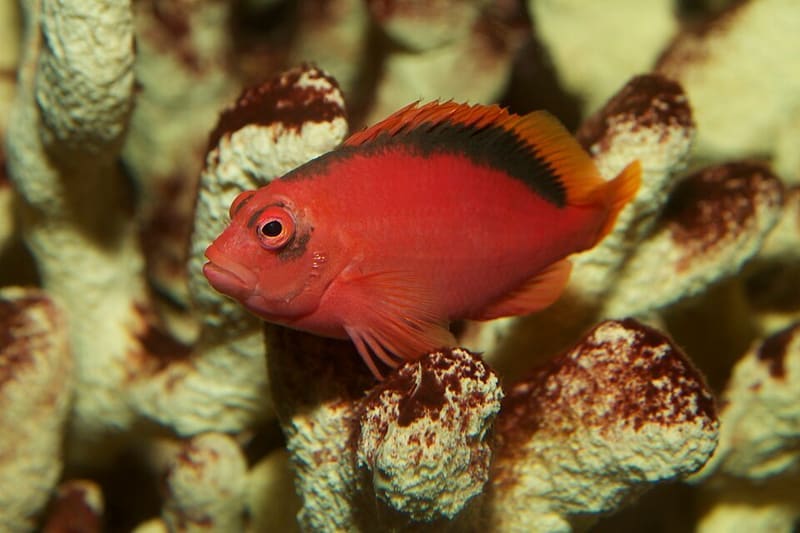
Flame Hawkfish (Neocirrhites armatus)

Flame Hawkfish

Neocirrhites armatus
saltwatereasyfishsemi-aggressivereef: caution
Adult size
3.5 in
Min tank
30 gal
Temp
74–82 °F
pH
8–8.4
Group
1+
Swims
bottom

Perches on rock and watches everything. Fine with corals, but ornamental shrimp are at risk.

Diet: Carnivore: frozen foods, pellets
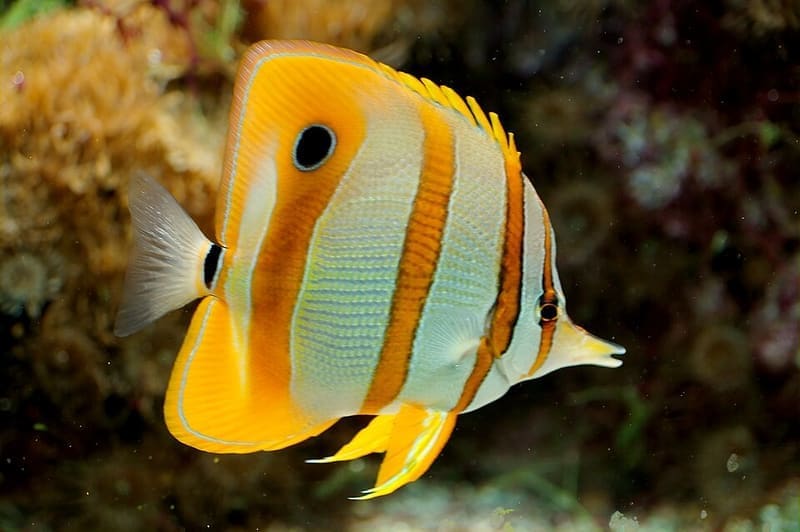
Copperband Butterflyfish (Chelmon rostratus)

Copperband Butterflyfish

Chelmon rostratus
saltwaterhardfishpeacefulreef: caution
Adult size
7 in
Min tank
100 gal
Temp
74–82 °F
pH
8–8.4
Group
1+
Swims
mid

Bought to eat Aiptasia anemones, which it often does. Can be hard to get eating, so ask the shop to show you it feeding.

Diet: Carnivore: frozen mysis, clams on the half shell; often slow to start eating
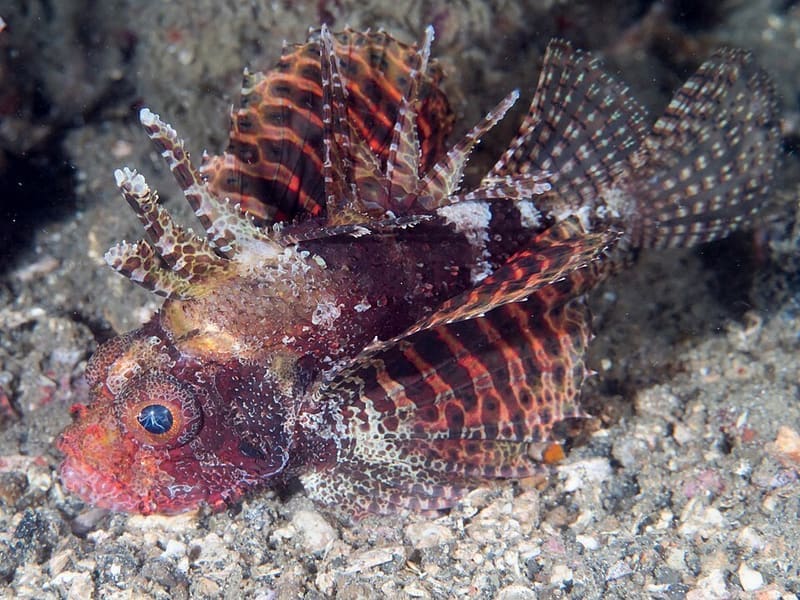
Dwarf Fuzzy Lionfish (Dendrochirus brachypterus)

Dwarf Fuzzy Lionfish

Dendrochirus brachypterus
saltwatermediumfishaggressivereef: caution
Adult size
7 in
Min tank
50 gal
Temp
74–82 °F
pH
8–8.4
Group
1+
Swims
bottom

Leaves corals alone, but not small fish or shrimp. Its spines are venomous.

Diet: Carnivore: frozen meaty foods; wean off live food
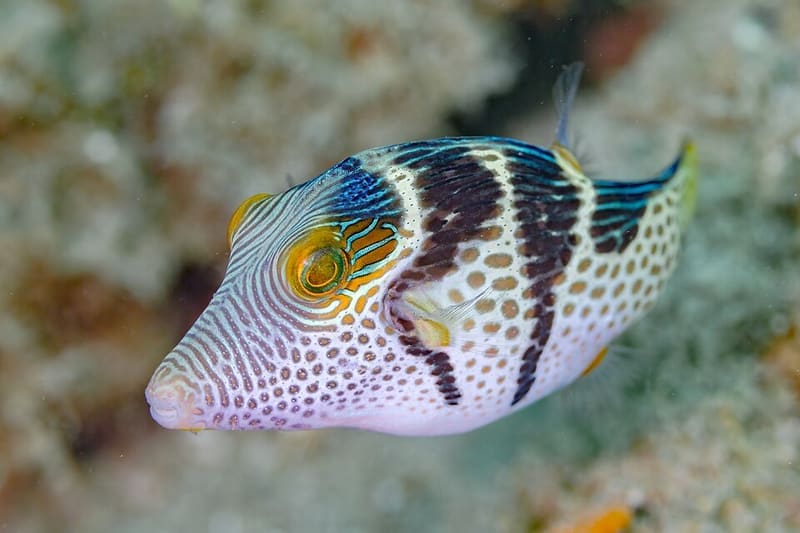
Valentini Puffer (Canthigaster valentini)

Valentini Puffer

Canthigaster valentini
saltwatereasyfishsemi-aggressivenot reef-safe
Adult size
4 in
Min tank
30 gal
Temp
74–82 °F
pH
8–8.4
Group
1+
Swims
mid

Full of character and suited to a fish-only tank. May nip slow, long-finned fish.

Diet: Carnivore: frozen shellfish, snails; hard foods keep its teeth worn
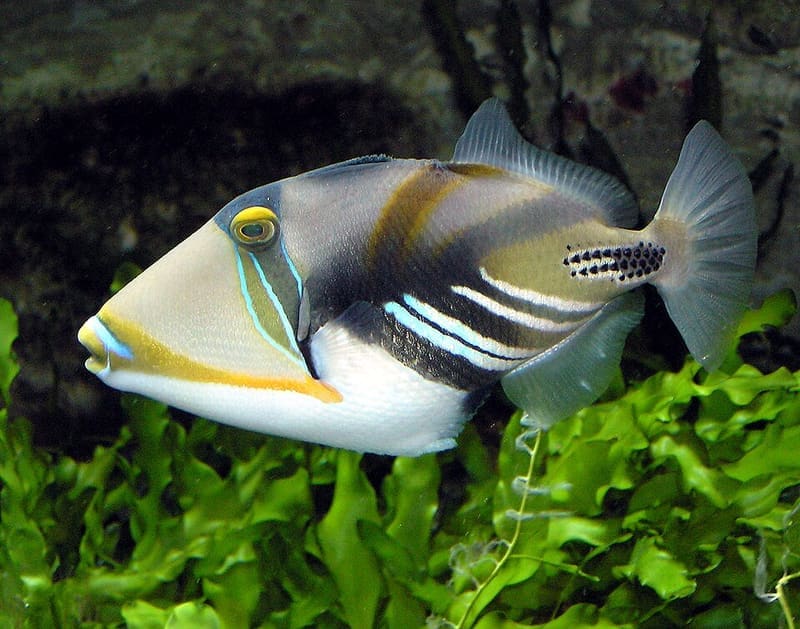
Picasso Triggerfish (Rhinecanthus aculeatus)

Picasso Triggerfish

Rhinecanthus aculeatus
saltwatereasyfishaggressivenot reef-safe
Adult size
10 in
Min tank
125 gal
Temp
74–82 °F
pH
8–8.4
Group
1+
Swims
all

A fish-only tank centrepiece. Keep only with other robust, similar-sized fish.

Diet: Carnivore: frozen shellfish, krill, squid
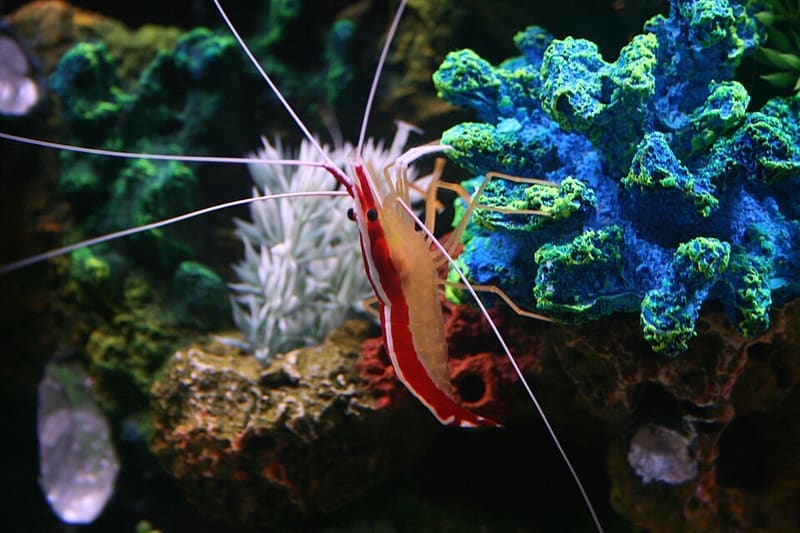
Skunk Cleaner Shrimp (Lysmata amboinensis)

Skunk Cleaner Shrimp

Lysmata amboinensis
saltwatereasyshrimppeacefulreef-safe
Adult size
2 in
Min tank
10 gal
Temp
74–82 °F
pH
8–8.4
Group
1+
Swims
bottom

Sensitive to sudden salinity swings, so acclimate it slowly. Molts every few weeks; leave the shell for it to eat.

Diet: Scavenger: leftovers; cleans parasites off fish
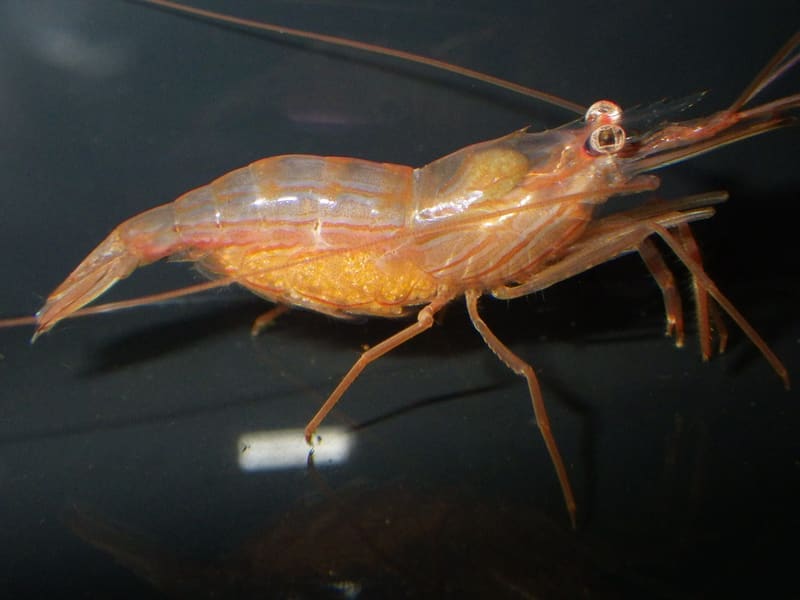
Peppermint Shrimp (Lysmata wurdemanni)

Peppermint Shrimp

Lysmata wurdemanni
saltwatereasyshrimppeacefulreef: caution
Adult size
2 in
Min tank
10 gal
Temp
74–82 °F
pH
8–8.4
Group
1+
Swims
bottom

Bought to eat Aiptasia, though many sold are look-alikes that ignore it. Nocturnal.

Diet: Scavenger: leftovers; may eat Aiptasia anemones
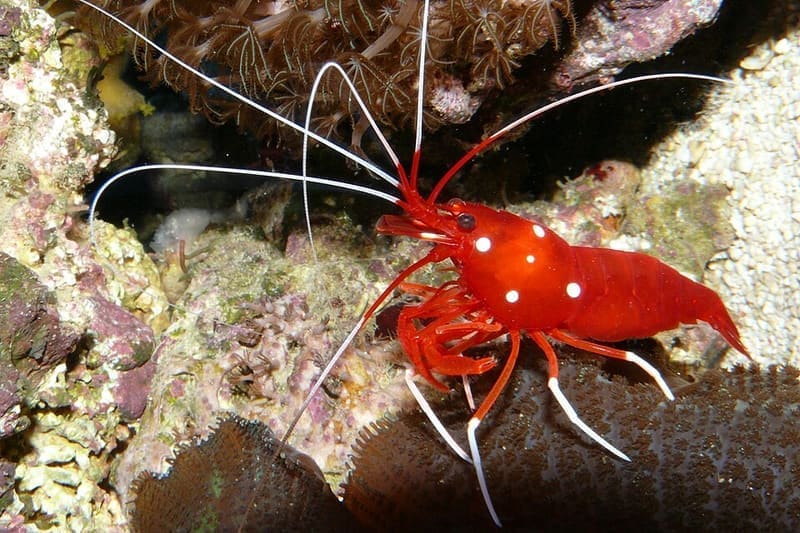
Fire Shrimp (Lysmata debelius)

Fire Shrimp

Lysmata debelius
saltwatereasyshrimppeacefulreef-safe
Adult size
2 in
Min tank
10 gal
Temp
74–82 °F
pH
8–8.4
Group
1+
Swims
bottom

Shyer than the skunk cleaner and spends the day in caves. Acclimate slowly.

Diet: Scavenger: leftovers, small frozen foods
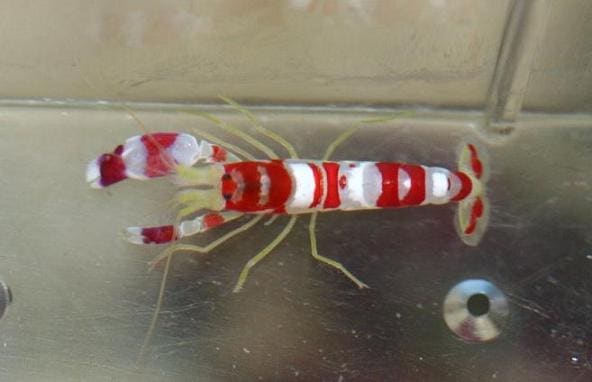
Emerald Crab (Mithraculus sculptus)

Emerald Crab

Mithraculus sculptus
saltwatereasycrabpeacefulreef: caution
Adult size
2 in
Min tank
10 gal
Temp
74–82 °F
pH
8–8.4
Group
1+
Swims
bottom

Bought to eat bubble algae. Feed it once the algae runs out, or it starts looking at corals.

Diet: Omnivore: eats bubble algae; supplement with nori
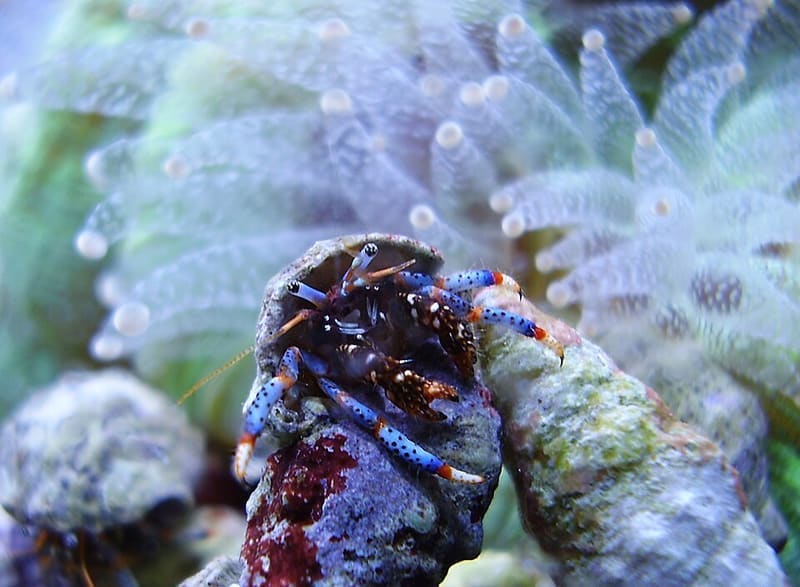
Blue-leg Hermit Crab (Clibanarius tricolor)

Blue-leg Hermit Crab

Clibanarius tricolor
saltwatereasycrabpeacefulreef: caution
Adult size
1 in
Min tank
10 gal
Temp
74–82 °F
pH
8–8.4
Group
1+
Swims
bottom

A cheap clean-up crab. Add a few empty shells of larger sizes so it does not take them from your snails.

Diet: Scavenger: algae, leftovers
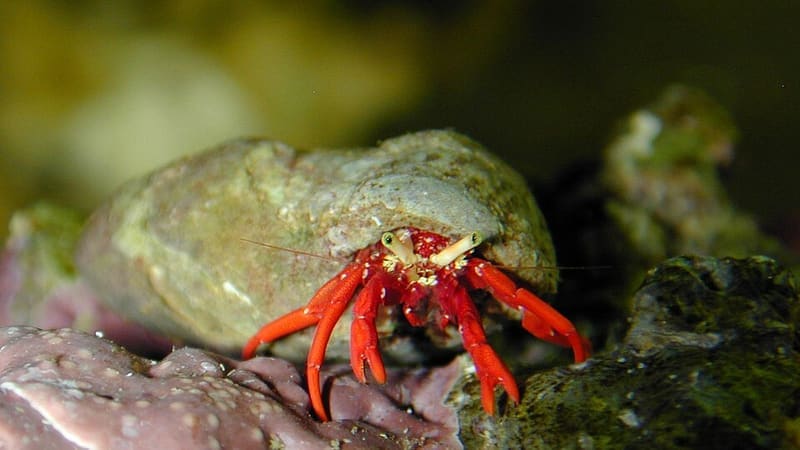
Scarlet Reef Hermit Crab (Paguristes cadenati)

Scarlet Reef Hermit Crab

Paguristes cadenati
saltwatereasycrabpeacefulreef: caution
Adult size
1.5 in
Min tank
10 gal
Temp
74–82 °F
pH
8–8.4
Group
1+
Swims
bottom

One of the better algae-eating hermits and gentler than most. Still provide spare shells.

Diet: Scavenger: algae including hair algae
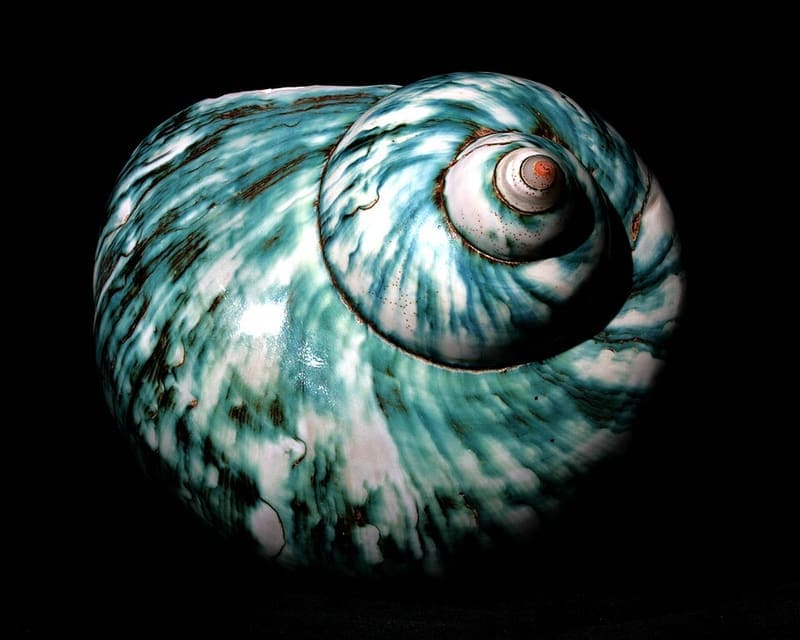
Turbo Snail (Turbo fluctuosa)

Turbo Snail

Turbo fluctuosa
saltwatereasysnailpeacefulreef-safe
Adult size
2 in
Min tank
10 gal
Temp
74–82 °F
pH
8–8.4
Group
1+
Swims
bottom

A strong algae eater that bulldozes loose frags off rock. Glue corals down.

Diet: Herbivore: hair and film algae
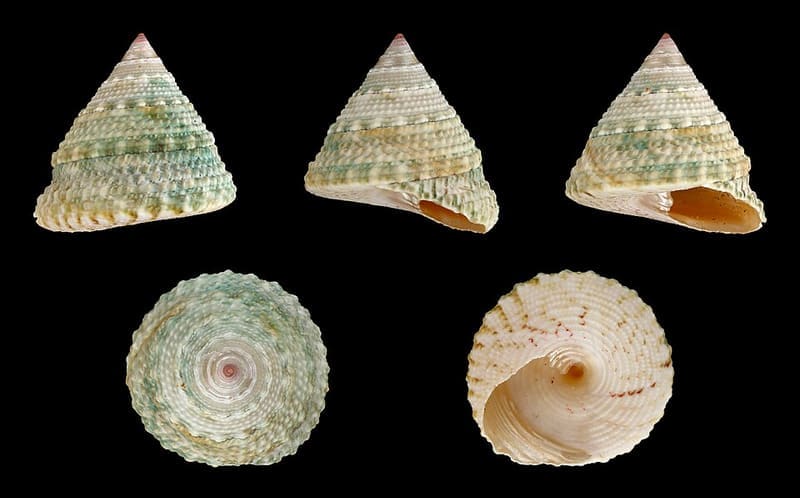
Trochus Snail (Trochus spp.)

Trochus Snail

Trochus spp.
saltwatereasysnailpeacefulreef-safe
Adult size
1.5 in
Min tank
10 gal
Temp
74–82 °F
pH
8–8.4
Group
1+
Swims
bottom

Can right itself when it falls over, unlike astreas. Breeds in the tank.

Diet: Herbivore: film and diatom algae
Nassarius Snail (Nassarius vibex)

Nassarius Snail

Nassarius vibex
saltwatereasysnailpeacefulreef-safe
Adult size
1 in
Min tank
10 gal
Temp
74–82 °F
pH
8–8.4
Group
1+
Swims
bottom

Lives buried in sand and pops up at feeding time. Needs a sand bed.

Diet: Scavenger: leftover meaty food in the sand
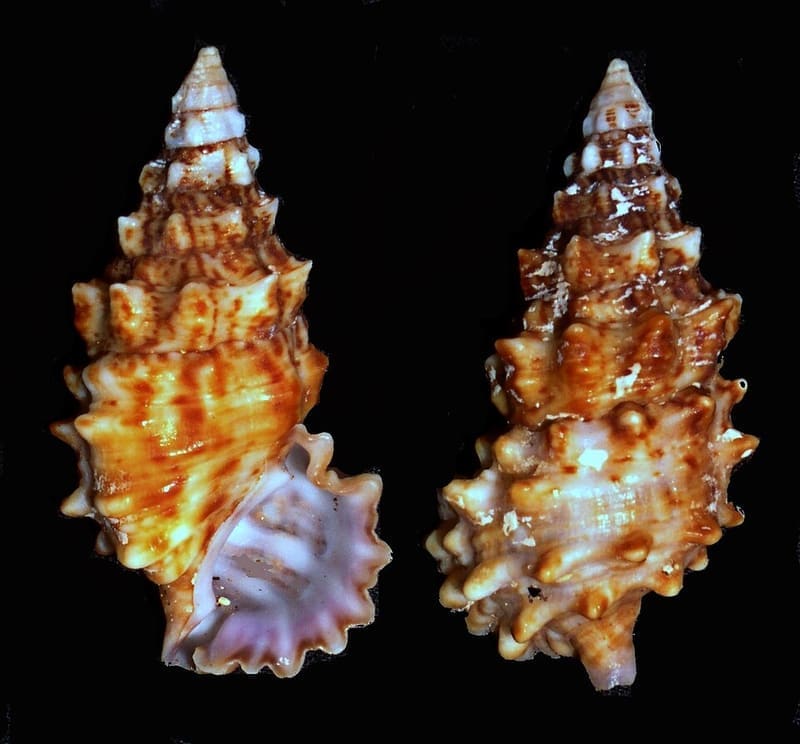
Cerith Snail (Cerithium spp.)

Cerith Snail

Cerithium spp.
saltwatereasysnailpeacefulreef-safe
Adult size
1 in
Min tank
5 gal
Temp
74–82 °F
pH
8–8.4
Group
1+
Swims
bottom

Small and good at getting into gaps in rockwork. Turns sand over as it feeds.

Diet: Herbivore: film algae, cyanobacteria, detritus
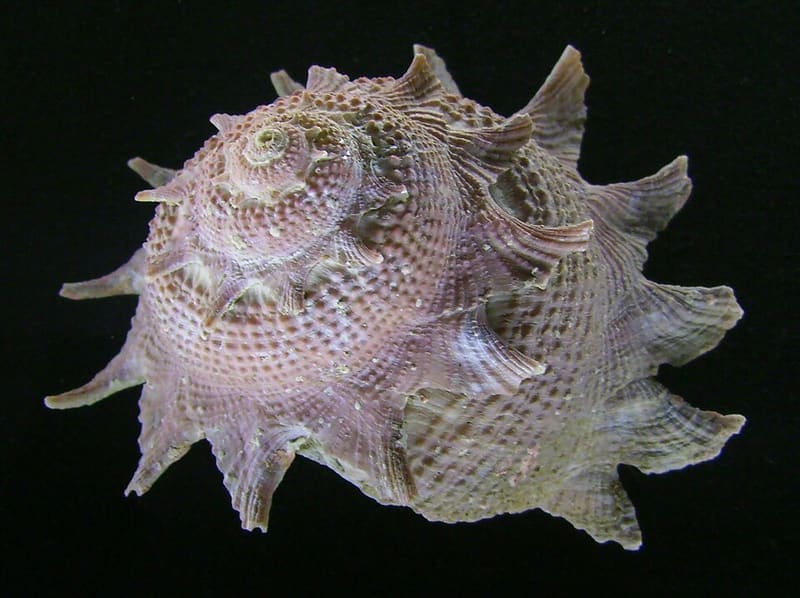
Astrea Snail (Astraea tecta)

Astrea Snail

Astraea tecta
saltwatereasysnailpeacefulreef-safe
Adult size
1 in
Min tank
10 gal
Temp
74–82 °F
pH
8–8.4
Group
1+
Swims
bottom

Cannot right itself if it falls on its back; flip it over if you see it stuck.

Diet: Herbivore: film and hair algae
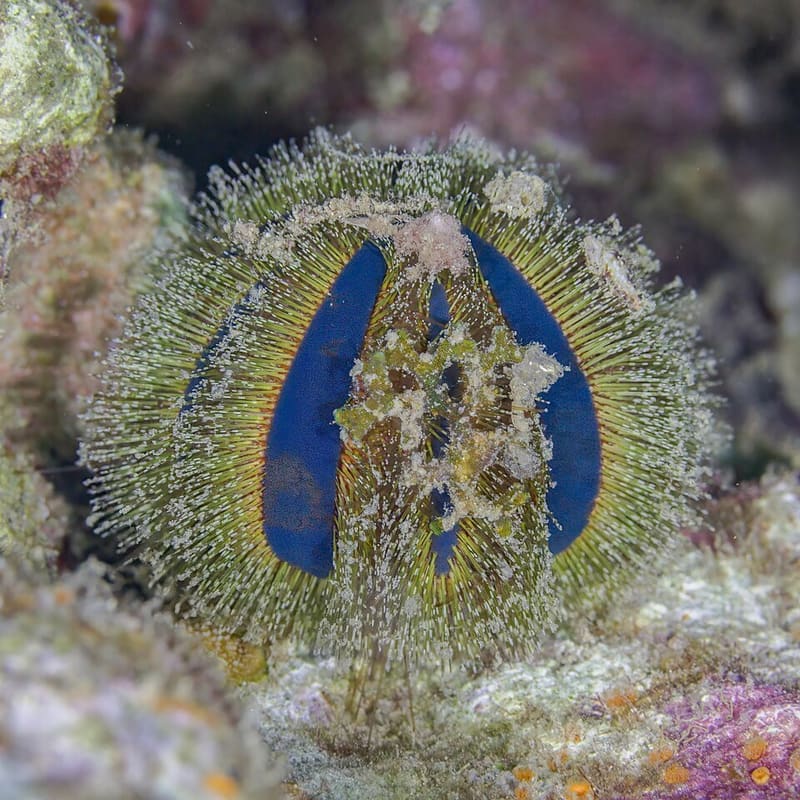
Tuxedo Urchin (Mespilia globulus)

Tuxedo Urchin

Mespilia globulus
saltwatermediumurchinpeacefulreef: caution
Adult size
2.5 in
Min tank
20 gal
Temp
74–82 °F
pH
8–8.4
Group
1+
Swims
bottom

Carries bits of shell and rubble on its back. Needs plenty of algae to graze.

Diet: Herbivore: coralline and film algae; supplement with nori
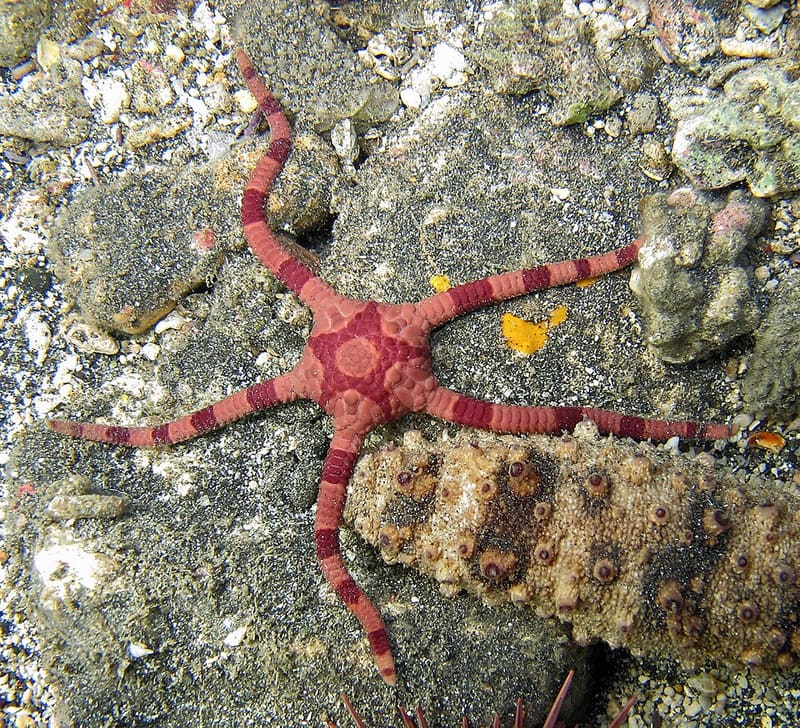
Banded Brittle Star (Ophiolepis superba)

Banded Brittle Star

Ophiolepis superba
saltwatereasystarpeacefulreef-safe
Adult size
6 in
Min tank
30 gal
Temp
74–82 °F
pH
8–8.4
Group
1+
Swims
bottom

A nocturnal scavenger that hides under rock. Avoid the green brittle star, which catches fish.

Diet: Scavenger: leftovers under the rock
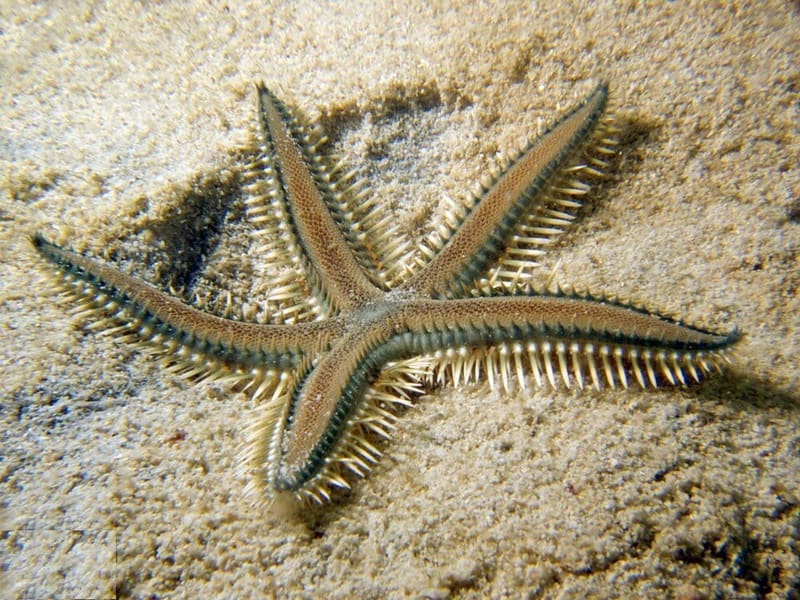
Sand-sifting Starfish (Astropecten polyacanthus)

Sand-sifting Starfish

Astropecten polyacanthus
saltwaterhardstarpeacefulreef: caution
Adult size
8 in
Min tank
100 gal
Temp
74–82 °F
pH
8–8.4
Group
1+
Swims
bottom

Usually starves within months in most home tanks. Generally better left in the shop.

Diet: Carnivore: small animals in the sand
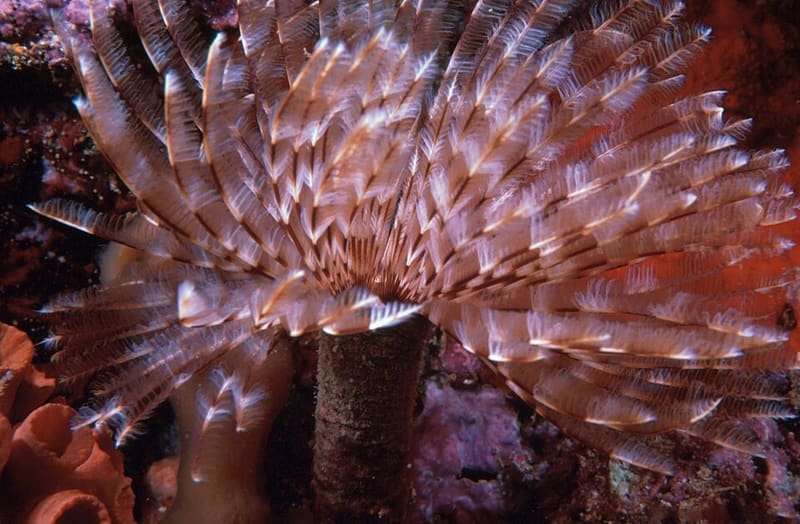
Feather Duster Worm (Sabellastarte spp.)

Feather Duster Worm

Sabellastarte spp.
saltwatermediumwormpeacefulreef-safe
Adult size
4 in
Min tank
10 gal
Temp
74–82 °F
pH
8–8.4
Group
1+
Swims
bottom

Can drop its crown after moving or stress, then grow a new one. Needs fine food in the water.

Diet: Filter feeder: phytoplankton, fine particulate food
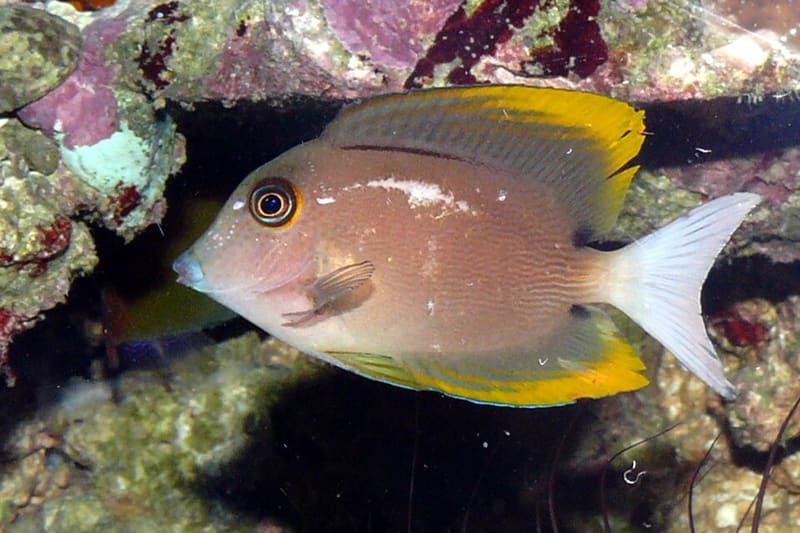
Tomini Tang (Ctenochaetus tominiensis)

Tomini Tang

Ctenochaetus tominiensis
saltwatereasyfishpeacefulreef-safe
Adult size
6 in
Min tank
75 gal
Temp
74–82 °F
pH
8–8.4
Group
1+
Swims
all

One of the smaller, calmer tangs and a good grazer. Still wants a tank at least four feet long.

Diet: Herbivore: grazes film algae; supplement with nori
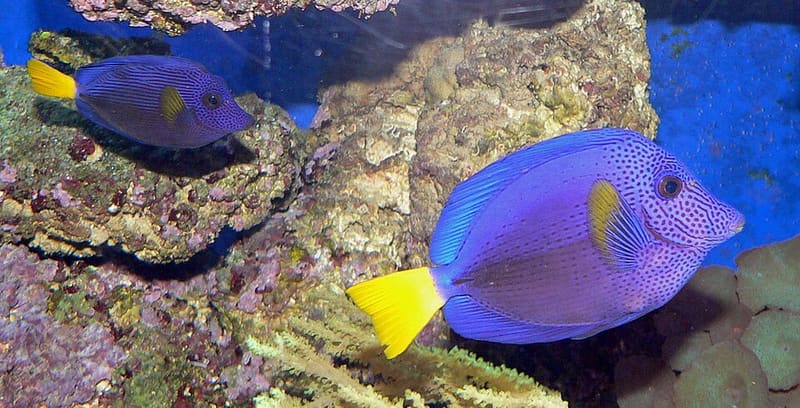
Purple Tang (Zebrasoma xanthurum)

Purple Tang

Zebrasoma xanthurum
saltwatermediumfishsemi-aggressivereef-safe
Adult size
10 in
Min tank
125 gal
Temp
74–82 °F
pH
8–8.4
Group
1+
Swims
all

Striking and hardy, but one of the more aggressive Zebrasoma tangs, especially toward other tangs. Add it last.

Diet: Herbivore: nori and algae sheets daily
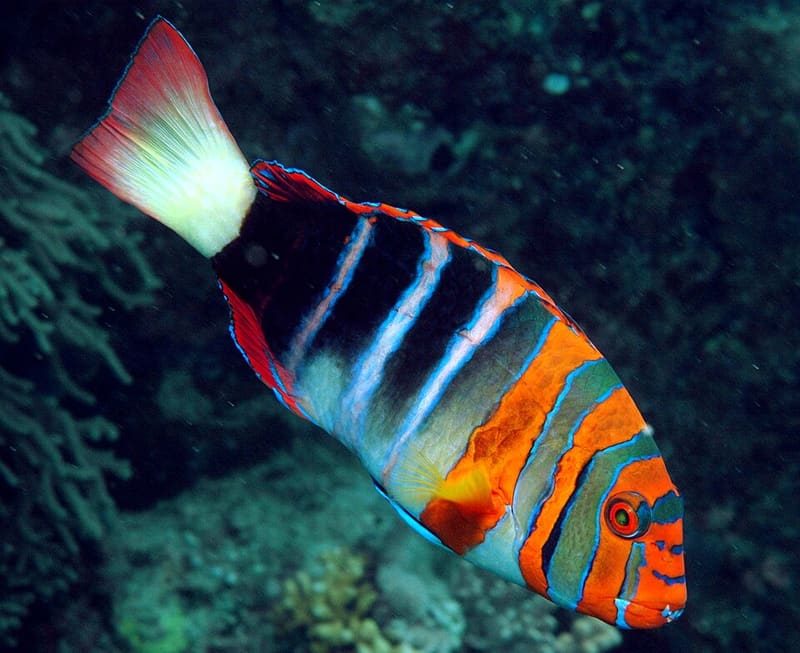
Harlequin Tuskfish (Choerodon fasciatus)

Harlequin Tuskfish

Choerodon fasciatus
saltwatereasyfishsemi-aggressivereef: caution
Adult size
10 in
Min tank
125 gal
Temp
74–82 °F
pH
8–8.4
Group
1+
Swims
mid

Banded orange and blue with bright blue teeth. Fine with corals, but the clean-up crew becomes food.

Diet: Carnivore: frozen shellfish, krill, pellets
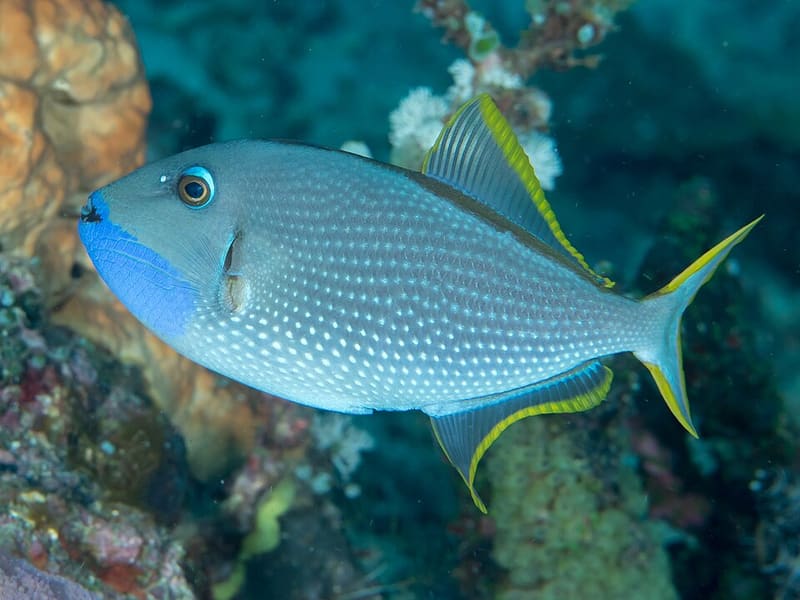
Bluejaw Triggerfish (Xanthichthys auromarginatus)

Bluejaw Triggerfish

Xanthichthys auromarginatus
saltwatereasyfishsemi-aggressivereef: caution
Adult size
9 in
Min tank
125 gal
Temp
74–82 °F
pH
8–8.4
Group
1+
Swims
mid

One of the few triggerfish usually kept in reefs: it feeds in open water rather than tearing up rock.

Diet: Carnivore: frozen mysis, krill, pellets
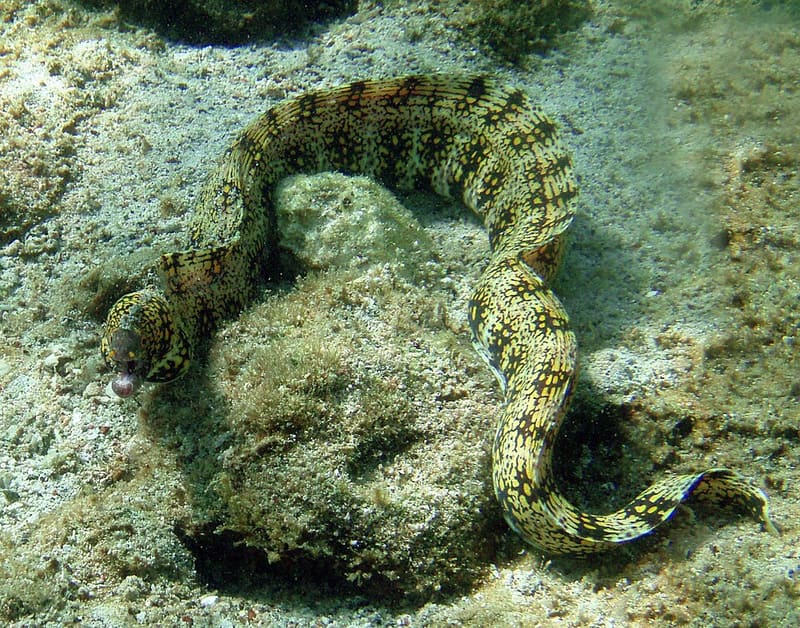
Snowflake Moray Eel (Echidna nebulosa)

Snowflake Moray Eel

Echidna nebulosa
saltwatermediumfishsemi-aggressivenot reef-safe
Adult size
24 in
Min tank
75 gal
Temp
74–82 °F
pH
8–8.4
Group
1+
Swims
bottom

A hardy, fairly calm eel for a fish-only tank with plenty of rock caves. Escape artist: every gap in the lid must be closed.

Diet: Carnivore: frozen shellfish, squid, silversides