How to set up an aquarium, step by step
From empty glass to a stocked, settled tank: what to buy, what order to do it in, how long each step takes and what it costs.
Setting up an aquarium is mostly ordinary work — filling, rinsing, planting, waiting — done in the right order. The order is what separates a tank that settles quietly into clear water from one that turns cloudy and loses fish in the first fortnight.
Here is the whole job from empty glass to a stocked tank, with the reason behind each step. Plan as you read: the planner checks your water, tank size and the animals you pick against each other as you go.
Start with your tank size
Pick one and the planner opens with that tank set up, ready for plants, fish and a gear list.
1. Choose the tank
Bigger is easier. That sounds backwards, but more water dilutes mistakes. A missed water change or an overfeeding barely moves the needle in 20 gallons and can be fatal in 3. Small tanks aren't beginner tanks; they're just cheap.
- 5 gallons — one
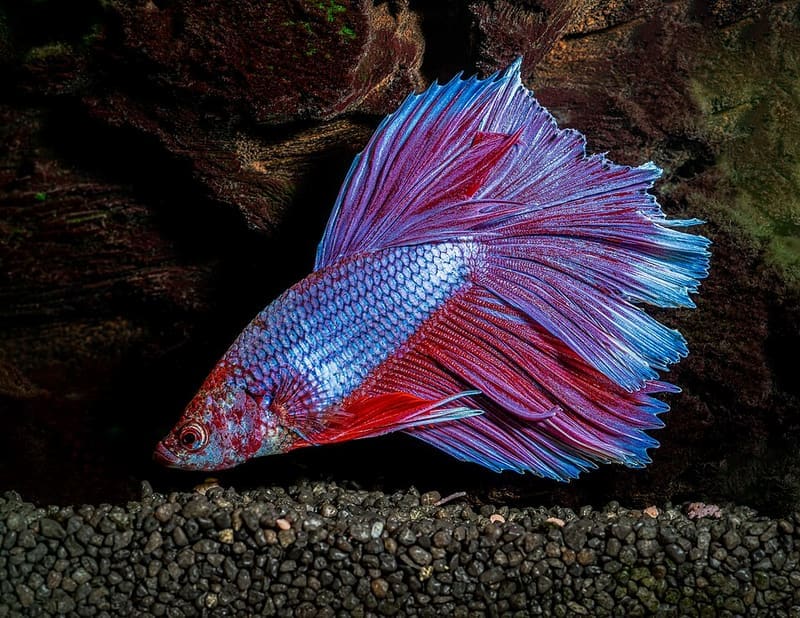 betta, or a shrimp colony. Needs a heater and a gentle filter.
 - 10 gallons — a small school of
 chili rasboras or
 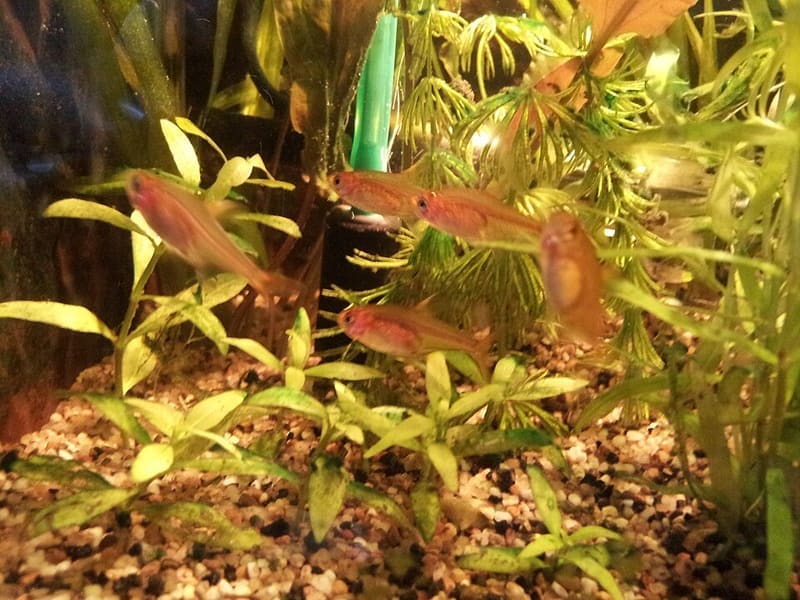 ember tetras plus shrimp.
 - 20 long — the sweet spot. Long and shallow, so plants get light, fish get swimming room, and it's easy to reach into.
- 29 to 40 gallons — room for a centrepiece fish and two or three schools.
- 75 gallons and up — wonderful, but check the floor first: see big tanks and weight.
Where it goes matters as much as the size. Pick a spot out of direct sunlight, which drives algae, near a socket, on furniture that can take the weight: water alone is about 10 lb per gallon, so a filled 20 gallon is roughly 225 lb with everything in it.
2. What to buy
Everything below is needed on day one, except the test kit, which you need before the fish.
- Filter. A sponge filter with an air pump is cheap, quiet and shrimp-safe; a hang-on-back filter is tidier and stronger.
- Heater. Roughly 3 to 5 watts per gallon. Tropical fish want 76–80 °F, and room temperature swings more than you think.
- Light on a timer. Six hours a day to start: plenty for easy plants, and the single best defence against algae.
- Substrate. Inert sand or gravel for a simple tank, or aquasoil if you want demanding plants. Plan on about 1.5 inches at the front, deeper at the back.
- Hardscape. Wood and stone. Buy more than looks sensible; it always shrinks once it's in the tank.
- Dechlorinator. Tap water contains chlorine or chloramine, which kills the bacteria you're about to grow.
- A liquid test kit for ammonia, nitrite and nitrate. Paper strips are too vague for cycling.
- A lid, unless you enjoy finding fish on the carpet.
3. Day one: build it
- Rinse the substrate until the water runs almost clear, unless it's aquasoil, which is never rinsed.
- Put the tank in place, empty. Once there's water in it, it isn't moving. Check it's level.
- Add substrate, sloping it up toward the back so the tank looks deeper than it is.
- Place wood and stone while it's dry, so you can shuffle things around. Odd numbers and off-centre look more natural.
- Fill it a third of the way, pouring onto a plate or a bag so you don't blast a crater in the substrate.
- Plant it with the water shallow: plants go in far more easily wet, and you can reach the bottom.
- Fill the rest, add dechlorinator, fit the filter and heater, and switch everything on.
- Leave the light off for a few days, then start at six hours on a timer.
Cloudy water in the first few days is normal: fine dust from the substrate, then often a bacterial bloom. Both clear on their own.
4. Cycle it, before any fish
This is the step people skip, and the reason most first tanks go wrong. A new tank can't process waste yet: you have to grow the bacteria that turn ammonia into nitrite and nitrite into nitrate. It takes three to six weeks with no fish in the tank.
The short version: add ammonia to about 2 ppm, keep the water warm, and test every few days until the tank can clear a 2 ppm dose to zero ammonia and zero nitrite within 24 hours. The full method, including the shortcut with used filter media, is in how to cycle a new aquarium.
5. Choose plants and fish that suit the tank
Two rules cover most beginner mistakes: match the fish to the water you actually have, and check the adult size, not the size in the shop.
Easy plants that grow under a basic light
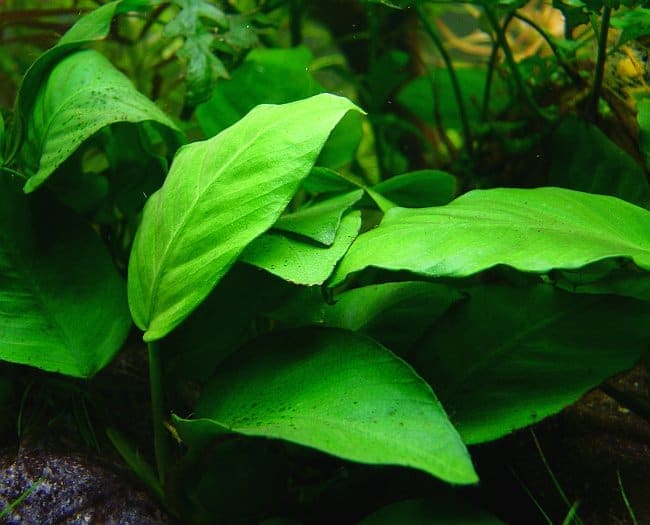 Anubias
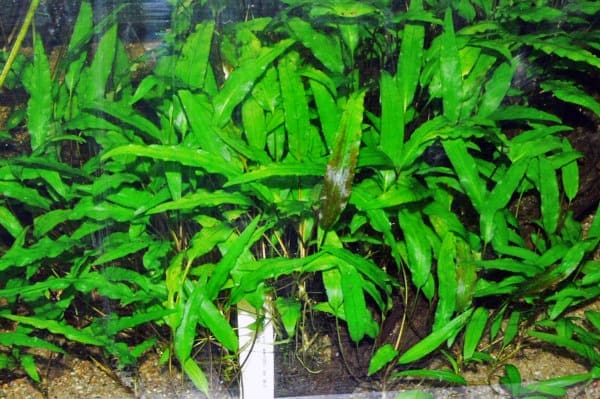 Cryptocoryne wendtii
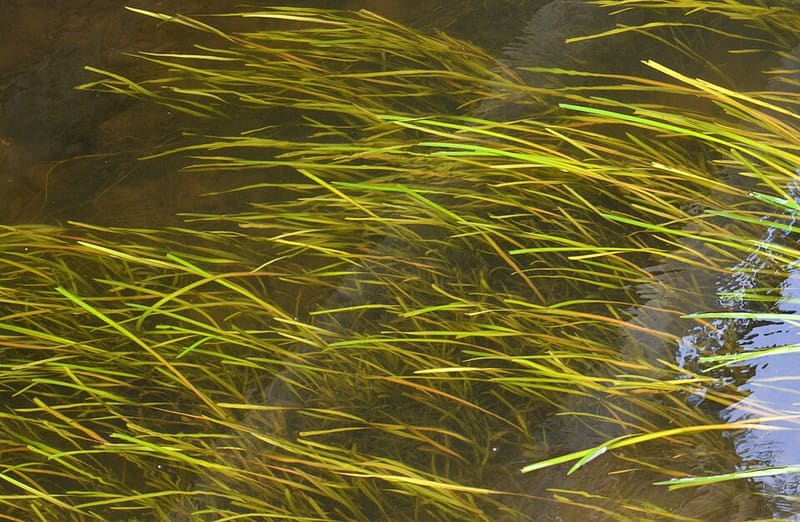 Vallisneria
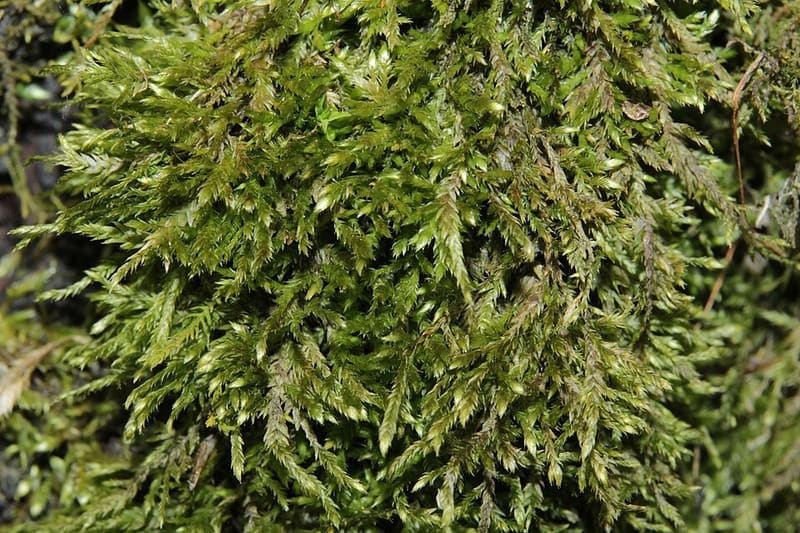 Java moss
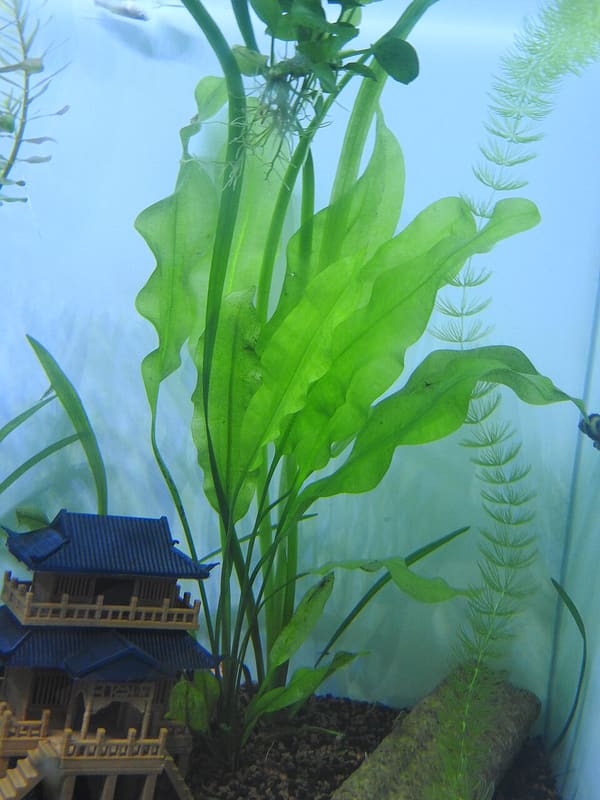 Amazon sword
Java fern, anubias and moss attach to wood or stone rather than being buried — bury their rhizomes and they rot. See plants for a low-tech tank for the full list.
Fish that forgive a new tank
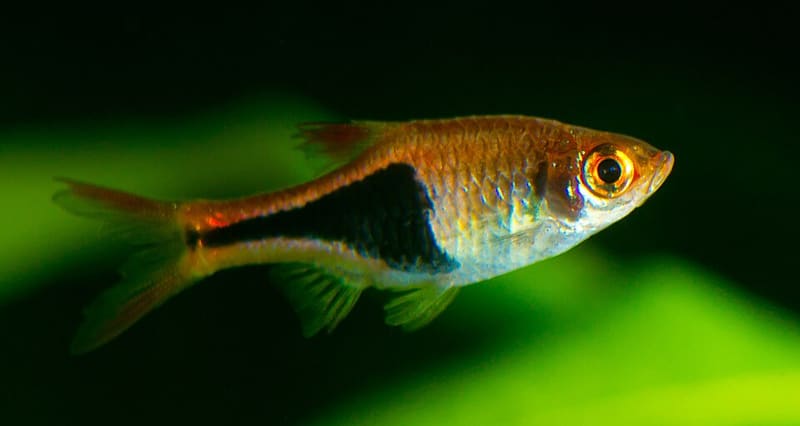 Harlequin rasbora Ember tetra
 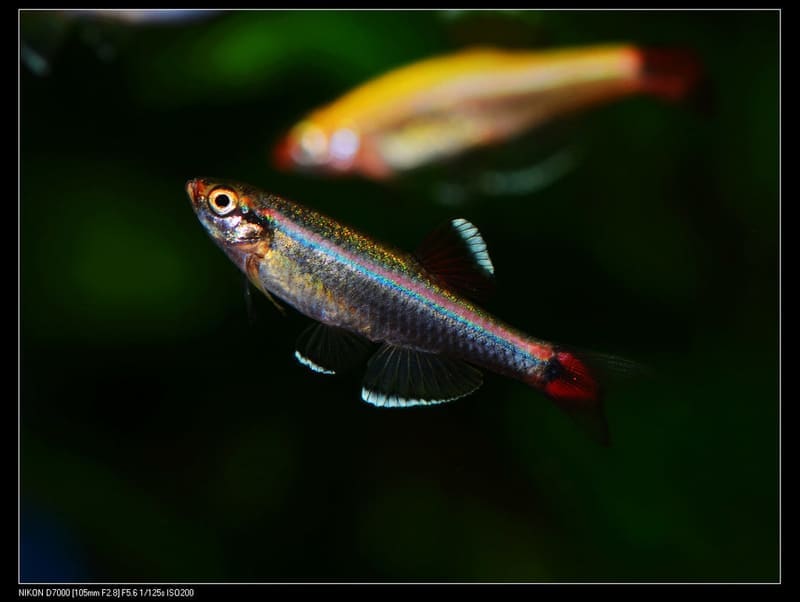 White cloud minnow
 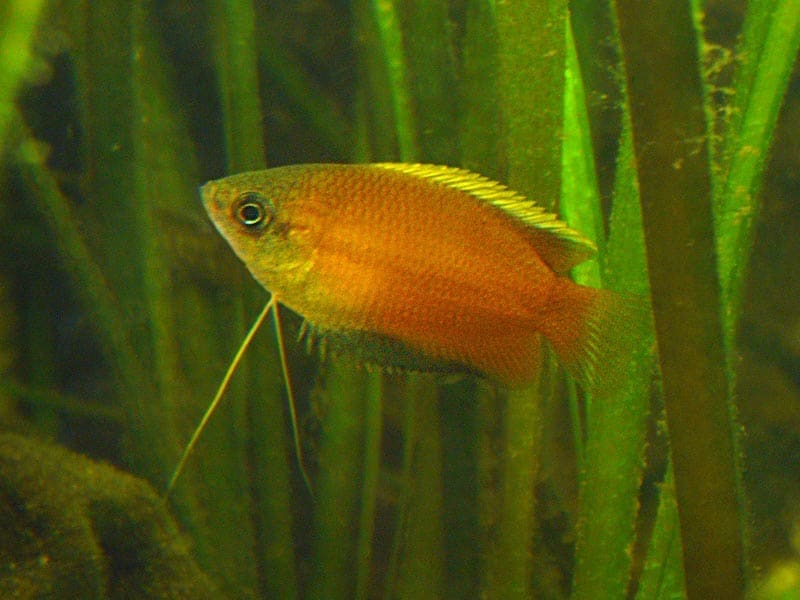 Honey gourami
 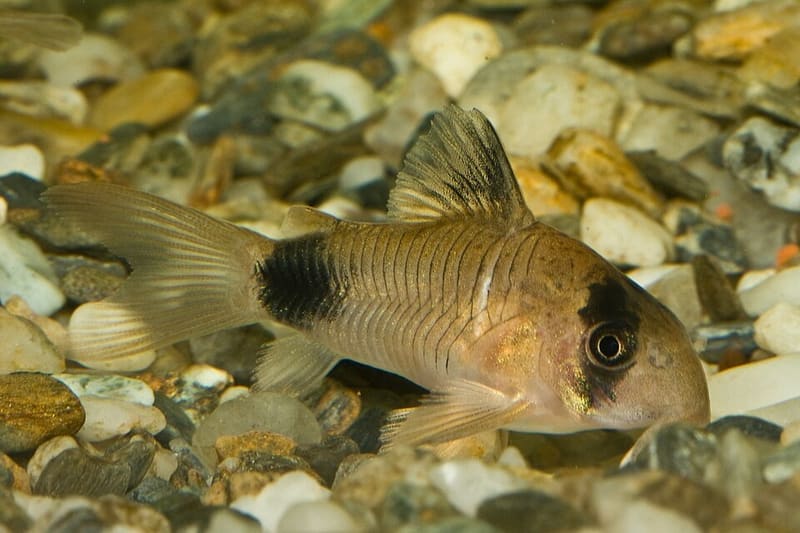 Panda cory
 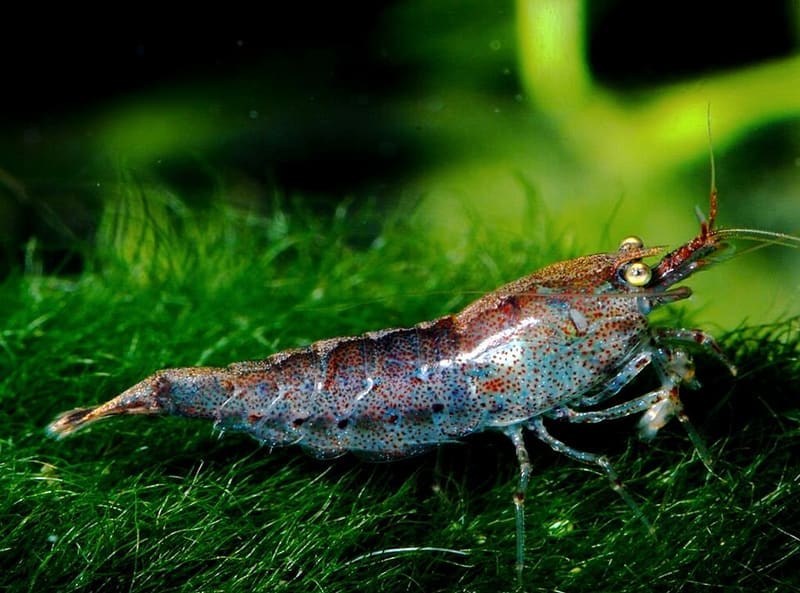 Cherry shrimp
 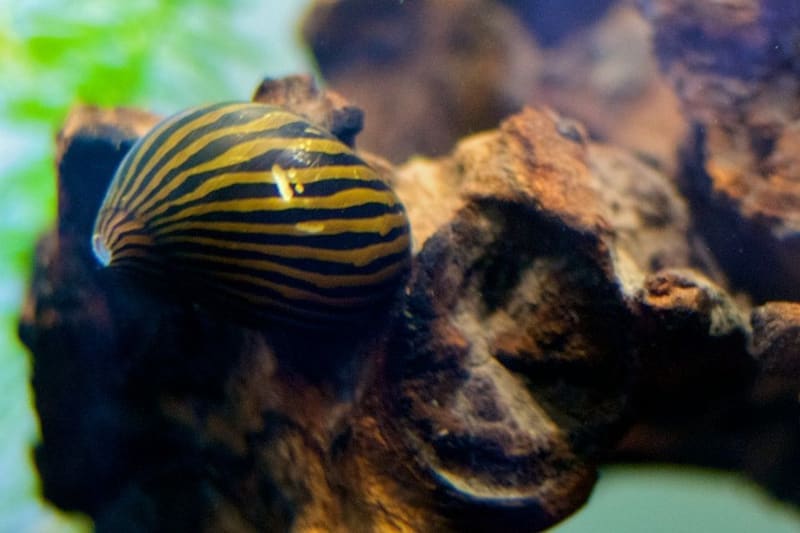 Nerite snail
Most small fish are schooling fish, and a school means six or more of one species — fewer and they hide, nip each other and lose their colour. Six of one kind beats two each of three kinds, every time. How many fit is a question of surface area and waste, not the "inch per gallon" rule: how many fish fit in my tank explains it.
6. Adding the fish
- Add a few at a time, a week or two apart. One school first, then the next. Each addition is a new load of waste, and the bacteria need a few days to catch up.
- Float the bag for 15 minutes to match temperature, then add a little tank water to the bag every few minutes for half an hour. Shrimp and snails need this done slowly.
- Net the fish into the tank and pour the shop water away. It's been full of waste since they were bagged.
- Lights off for the evening and no food until the next day. Nobody eats while they're frightened anyway.
- Test the water for the next few days. Any ammonia or nitrite reading means a water change now, and no more fish yet.
7. The first month
- Feed once a day, only what's eaten in a minute or two. Overfeeding is behind most cloudy water, algae and dead fish.
- Change 25–30% of the water weekly, with dechlorinator and matched temperature. Siphon the substrate where food collects.
- Test weekly until it's boringly consistent: ammonia 0, nitrite 0, nitrate under about 40 ppm.
- Expect brown dust (diatoms) in weeks two to four. It's normal in a new tank and passes.
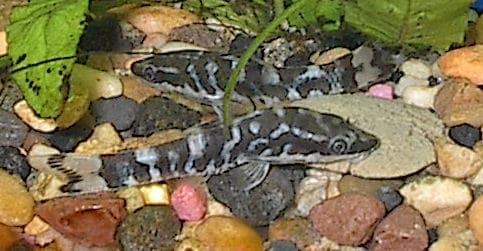 Otocinclus and nerite snails eat it.
 - Top up evaporation with plain dechlorinated water. Salt and minerals stay behind when water evaporates, so topping up with more tap water slowly hardens the tank.
If algae takes hold, it's almost always light: shorten the photoperiod before you buy anything. Algae: what causes it and how to fix it covers each type.
What it costs
Rough US prices for a planted 20 long, buying new. Second-hand tanks and stands cut this by half.
| Item | Typical |
|---|---|
| Tank and lid | $40–70 |
| Light on a timer | $35–90 |
| Filter | $15–40 |
| Heater | $20–35 |
| Substrate | $20–60 |
| Wood and stone | $20–50 |
| Plants | $25–60 |
| Test kit, dechlorinator, net, siphon | $40–60 |
| Fish and shrimp | $30–80 |
| Total | $245–545 |
Running costs are small: a heater and light for a 20 gallon come to a few dollars a month, plus food and the occasional plant.
The mistakes worth avoiding
- Adding fish on day one. The single biggest cause of dead first fish.
- Buying a tank that's too small because it's cheap, then fighting the water quality for a year.
- Too much light. Ten hours on a bright light in a new tank is an algae farm.
- Too many fish, too fast. Stock over weeks, not in one trip.
- Not checking compatibility. Temperature ranges, adult size and temperament all have to line up. The planner checks all three.
- Washing filter media in tap water. Chlorine kills the bacteria living in it. Rinse it in old tank water instead.
Where to go next
- How to cycle a new aquarium — the detail behind step 4.
- Plants for a low-tech tank — what grows without CO₂.
- How many fish fit in my tank — stocking, properly.
- Will my fish eat my shrimp? — before you mix them.
- Your first saltwater tank — if you'd rather start with a reef.
Then plan the tank before you buy it. Set the size, drop in plants and hardscape, add the fish you're considering, and the checks tell you what will and won't work — while changing your mind is still free.
Plan the layout, pick the fish and see the checks as you go.
General hobby guidance, not veterinary or engineering advice. Sources disagree on specifics, so watch your own tank.
More guides
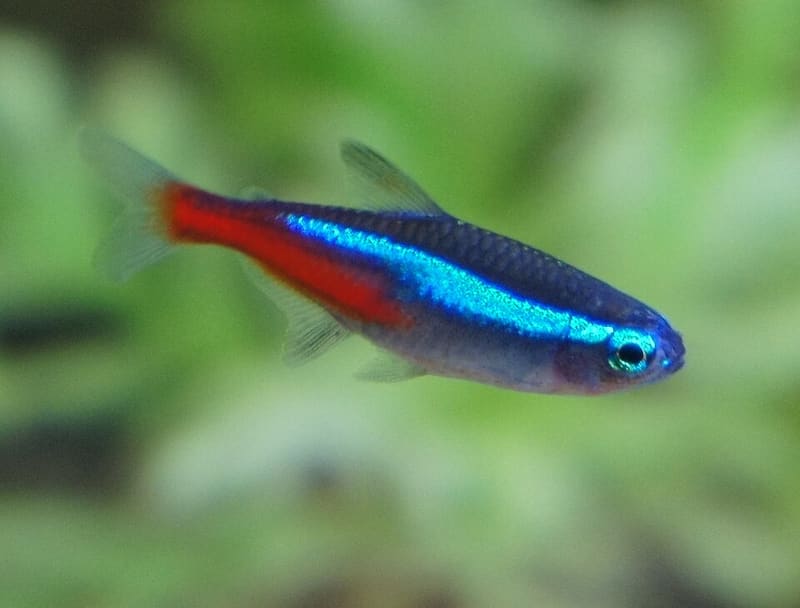
How to cycle a new aquarium
What the nitrogen cycle is, how to start one before you buy fish, and what your test kit should show each week.
6 min read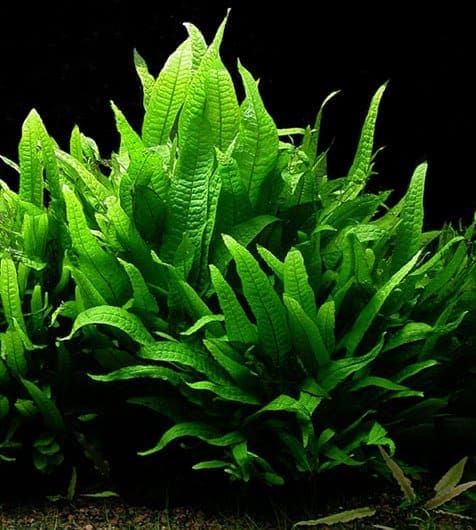
The best plants for a low-tech tank
Plants that grow in a plain tank with a basic light, no CO₂ and no fertiliser routine — and the ones that will only disappoint you.
5 min readWill my fish eat my shrimp?
Which fish are safe with cherry shrimp, which will eat the babies, and how to keep a colony going in a community tank.
4 min read